Beijing Money & Internet
Cash and ATMs in Beijing: Getting Yuan and Where You Still Need It
How much cash a Beijing trip really needs, which ATMs take foreign cards and what a withdrawal costs, exchanging money, breaking ¥100 notes, and the 2026 rules on refusing cash.
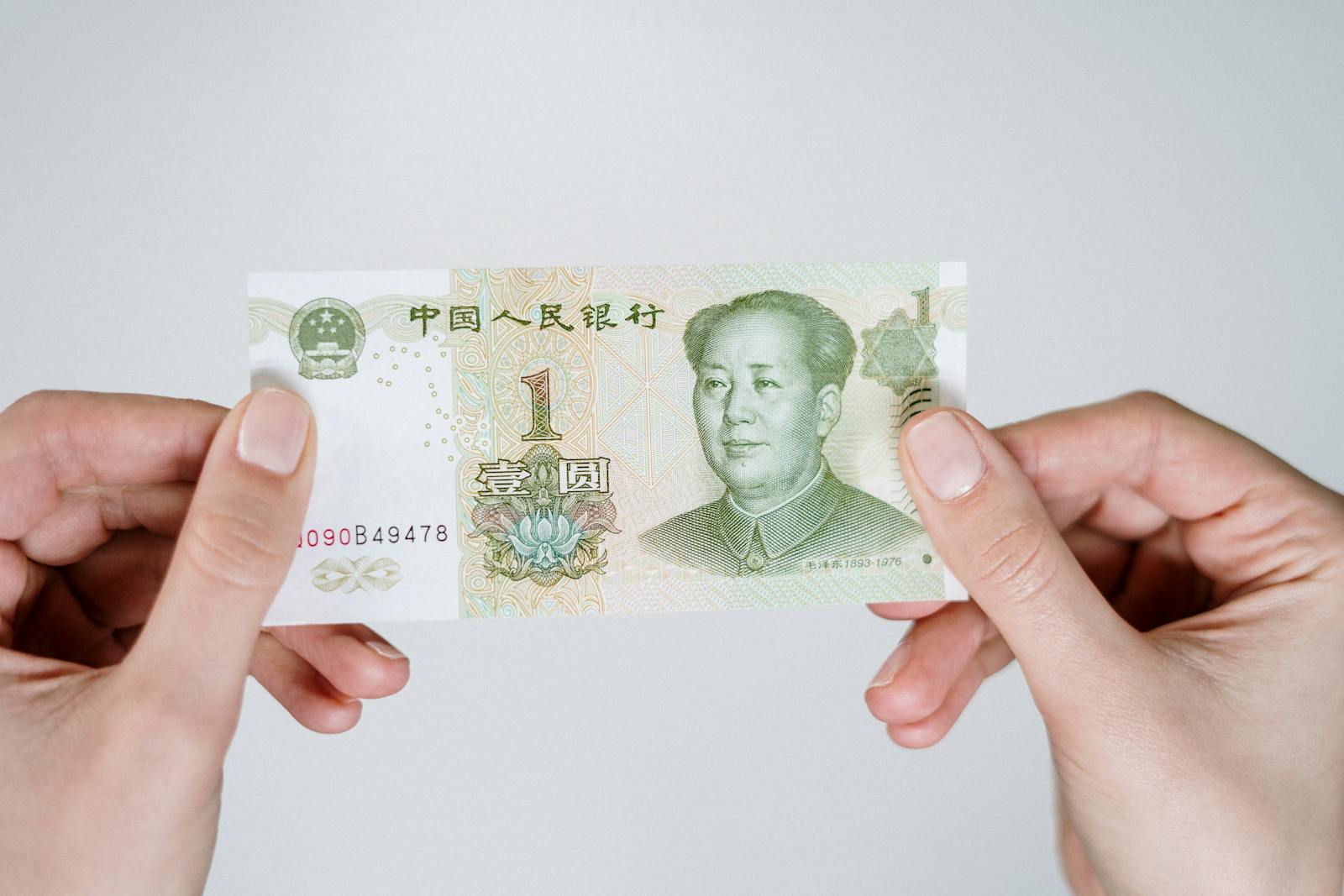
A lot of visitors to Beijing take out cash once, spend about a third of it, and fly home with a small stack of red ¥100 notes that sits in a drawer until the next trip. That is not really an argument against cash. It is an argument for knowing how much you need and what it is for, and ATMs in Beijing make that easy: the big banks’ machines take foreign cards, both airports have them in arrivals, and a withdrawal takes two minutes once you know which buttons to press and which offer to refuse.
This guide covers how much cash is sensible, the situations where it still beats a phone, which machines to use and how to use them, what a withdrawal really costs, changing money instead, the notes you will handle, and what to do when a shop will not take your cash, which since February 2026 is against the rules. Fees and figures were checked in September 2026; treat them as the right order of magnitude, since both Chinese banks and your own change their charges.
Cash in Beijing at a glance
| Question | Short answer |
|---|---|
| Do I need cash at all? | A little. ¥200–500 covers most city trips |
| Best ATMs for foreign cards | Bank of China, ICBC, China Construction Bank |
| Most you can take per withdrawal | Usually ¥2,000–3,000 |
| What the Chinese bank charges | Typically ¥20–30 per withdrawal, shown on screen |
| What your bank charges | Anything from nothing to a flat fee plus up to 3% |
| Offer to convert to your home currency? | Always decline |
| Notes you will get | Mostly ¥100s |
| Exchanging cash | Bank of China branches with your passport; airport desks cost more |
| Can a shop refuse cash? | Not at a staffed till. It has been against the rules since 1 February 2026 |
| Declare at customs if carrying | More than ¥20,000, or foreign cash worth over US$5,000 |
How much cash you actually need
China’s central bank sums up its own policy for foreign visitors in one line: cards for large payments, QR codes for small ones, and cash as a fallback. That is a good description of how the money side of a trip actually goes. You pay the hotel by card, tap your card at subway gates, pay for almost everything else through Alipay or WeChat Pay, and keep a modest amount of cash for the moments when none of those works.
| Your trip | Cash to carry |
|---|---|
| Two to four days in the city, payment apps working | ¥300–500 |
| A week, including the Great Wall and a day trip | ¥500–800 |
| Wild Wall hikes, village stays, rural day trips | ¥800–1,200 |
| No payment apps at all | ¥300–500 a day, plus a card for the hotel and the subway |
The mistake is not running short, because you can always find another ATM. The mistake is taking out ¥3,000 on the first morning because the fee is per withdrawal, then spending the week trying to break ¥100 notes at stalls that have no change, and flying home with most of it. Take what the table suggests, top up once if you need to, and change nothing back.
Your first hour: cash on arrival
You do not need yuan to get from either airport into the city. The Airport Express from Capital costs ¥25 and from Daxing ¥35, and the ticket machines take a foreign contactless card as well as Alipay and WeChat codes. Once you are on the subway, the same card taps you through every gate on the network. So there is no need to queue at an exchange desk before you have even found the train.
That said, the arrivals hall is a good place to get your cash sorted, because the machines there are reliable with foreign cards and you are not yet in a hurry. A sensible sequence:
- Clear immigration and collect your bags.
- Withdraw what you need for the trip from a bank ATM in arrivals, charged in yuan.
- Buy a bottle of water or a snack at a terminal shop and pay with a ¥100, so that you leave the airport with some ¥20s and ¥10s in your pocket.
- Check that Alipay and WeChat both open and show your card as linked, now that you are in China and on a roaming connection.
- Ignore anyone in the arrivals hall offering a taxi or a money exchange. The official taxi rank and the train are both clearly signed.
If you are travelling as a family or a group, have two adults each carry half of the cash reserve rather than one person carrying all of it. It halves the damage if a wallet goes missing, and it means someone can still pay for the children’s drinks when the group splits up in a crowded market.
Where cash still beats a phone
These are the situations in which visitors actually reach for notes, roughly in order of how often it happens:
- Tiny businesses with a personal QR code. The fruit seller, the man mending shoes, some street food carts. Payments from foreign cards into personal collection codes often fail, and cash is the quick answer.
- A dead phone or a dead signal. Your phone is your wallet, map and ticket at once. When the battery goes, or the basement food court has no reception, the notes in your pocket are the whole of your purchasing power.
- A payment app having a bad day. A new account frozen by a risk check, a card blocked by your bank’s fraud team. It is rarely permanent, and cash covers the gap.
- The Great Wall’s rural edges. Water and snacks at the trailheads, farmhouse lunches in the villages below the wild sections, and the occasional small fee collected by a villager at a path. The Jiankou guide covers what to expect on that kind of day.
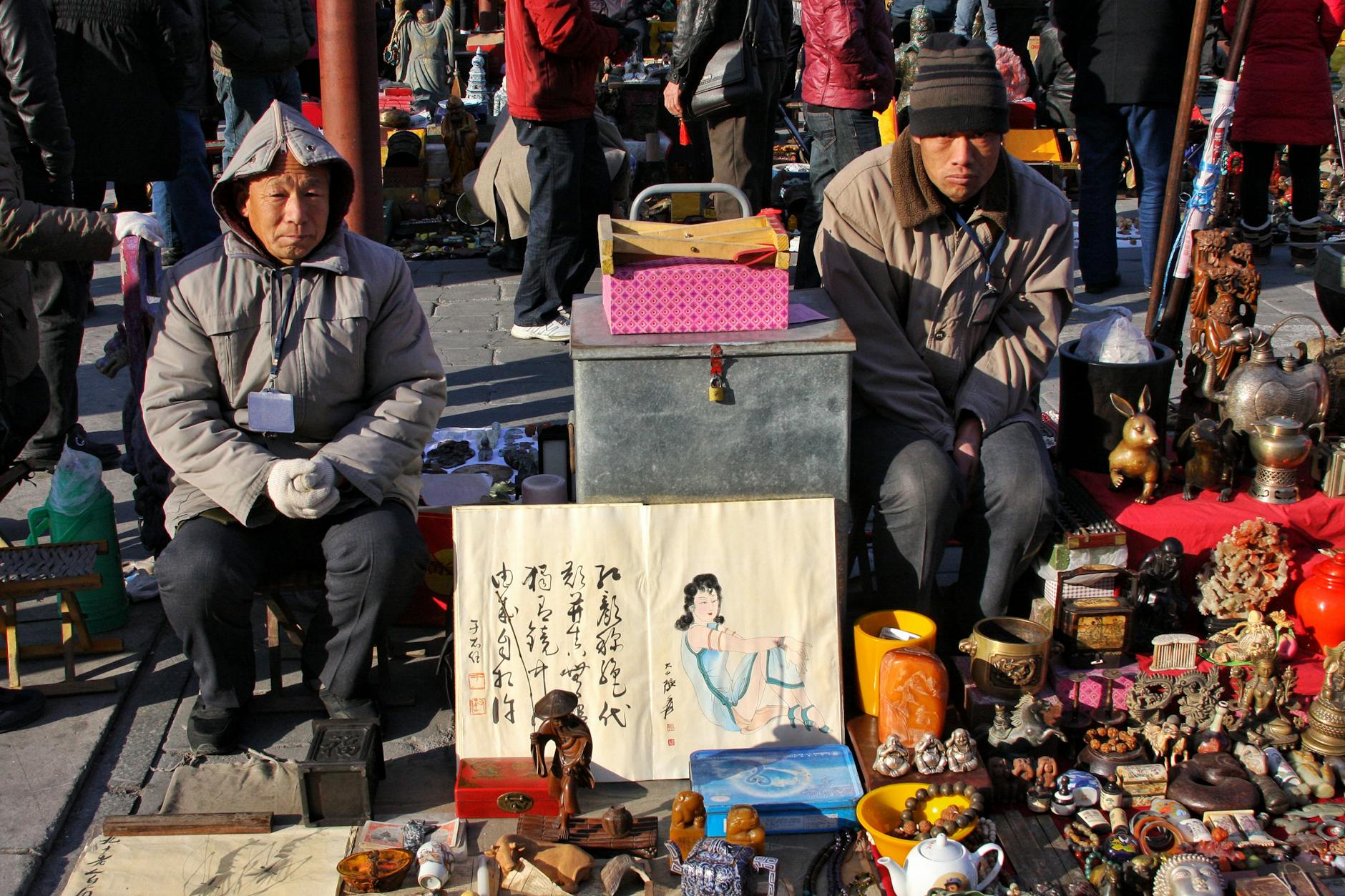
- Markets where you bargain. At Panjiayuan and the Silk Market, having the right notes lets you pay the agreed price exactly, and a seller looking at real money is a seller more inclined to close. Our bargaining guide explains the rest.
- Hutong rickshaws. Agree the price before you sit down, and pay exactly that in cash at the end. It removes a whole category of argument, which the rickshaw guide covers in some detail.
- Tips for a private guide or driver. Tipping is not customary in China, but ¥50–100 a day is expected for a private guide or driver, and it is given in cash.
- Temple donation boxes. The Lama Temple hands out a free bundle of incense at the entrance; what you leave in the boxes inside is up to you.
- Hotel deposits. Most hotels take a refundable incidentals deposit, and some take it in cash with a receipt. Keep the receipt, because you will need it to get the money back.
Which ATMs take foreign cards
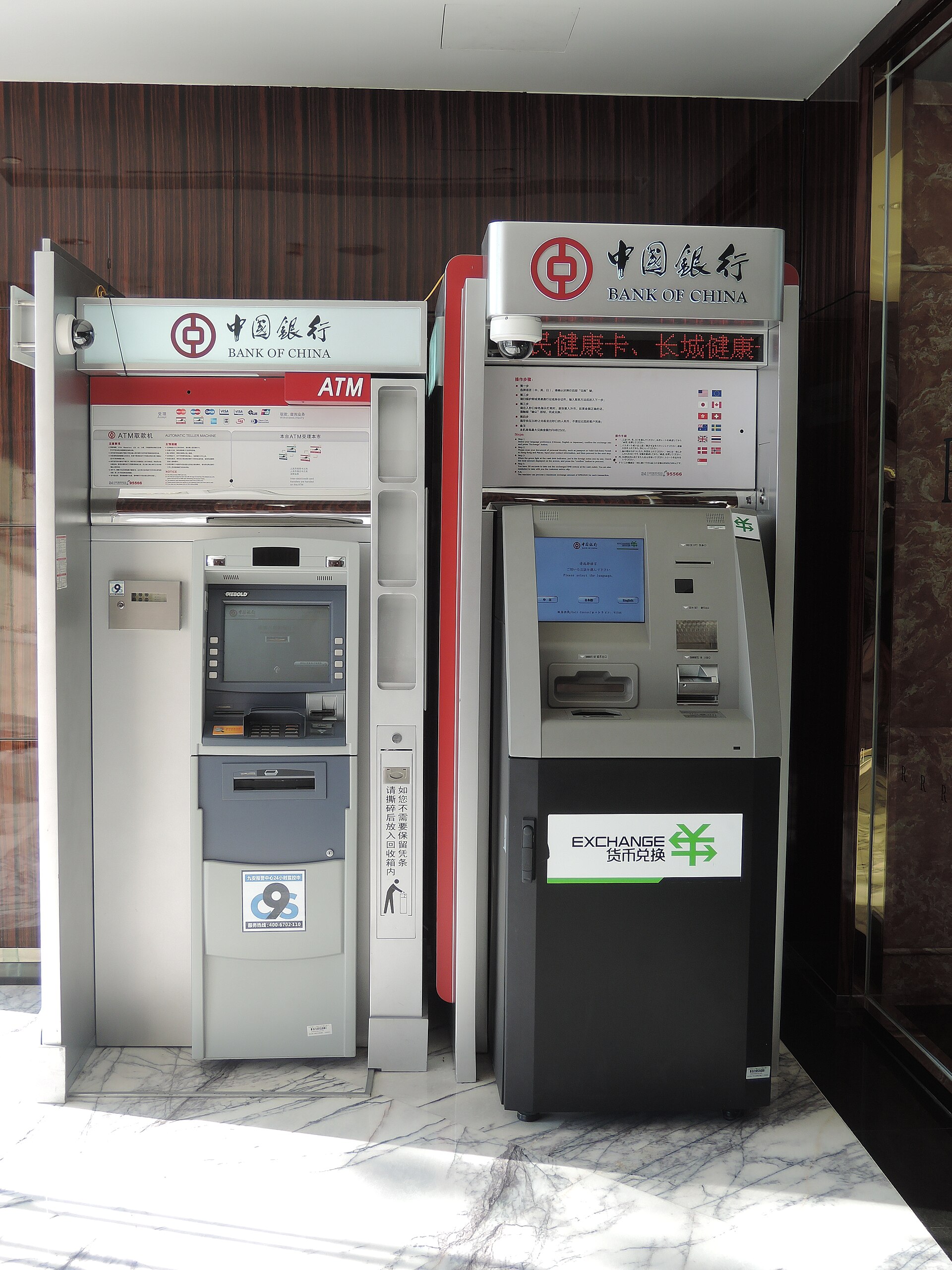
Nearly every ATM belonging to one of the big state banks will take a foreign Visa or Mastercard, and many take JCB, American Express and the Plus and Cirrus networks as well. Bank of China is the most foreigner-friendly, with clear English menus and the most consistent acceptance, and it is the one to look for first. ICBC and China Construction Bank are close behind. The card logos printed on the machine’s panel tell you whether it takes your network.
| Bank | Chinese | Pinyin | How to spot it | Hotline |
|---|---|---|---|---|
| Bank of China | 中国银行 | Zhōngguó Yínháng | Red circle with a square-holed coin inside | 95566 |
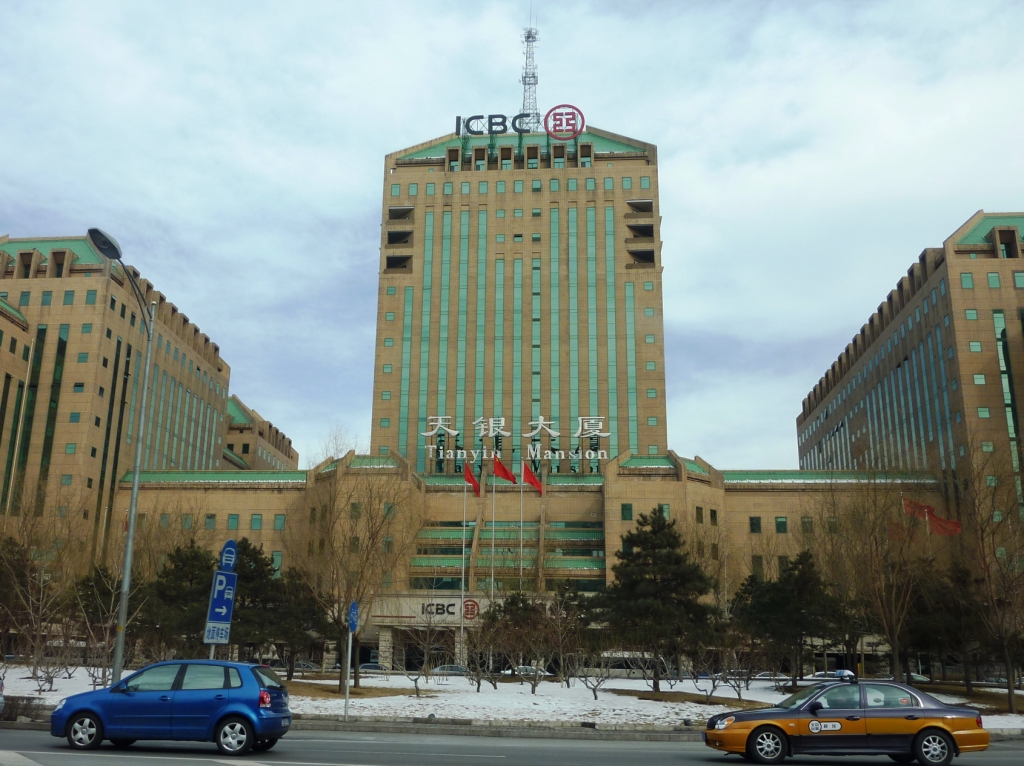
| ICBC | 中国工商银行 | Zhōngguó Gōngshāng Yínháng | Red coin-shaped logo, often with the letters ICBC | 95588 |
| China Construction Bank | 中国建设银行 | Zhōngguó Jiànshè Yínháng | Blue logo | 95533 |
| Agricultural Bank of China | 中国农业银行 | Zhōngguó Nóngyè Yínháng | Green logo; often works too | 95599 |
Where to find them
- Bank branches. Most have a self-service room with several machines, signed 自助银行 (zìzhù yínháng, self-service bank), and many are open around the clock. Using a machine inside a branch during opening hours is the safest choice, because if something goes wrong the staff are a few metres away.
- The airports. Both Capital and Daxing have ATMs in the arrivals areas, and airport machines are reliable with foreign cards. The Capital Airport guide and the Daxing guide cover the rest of the arrivals routine.
- Shopping districts. Wangfujing, Sanlitun, Xidan and the big malls all have bank machines within a short walk.
Be wary of standalone machines in small shops or on unfamiliar bank networks that show no foreign card logos. They may only accept Chinese cards, and a failed attempt can occasionally mean a declined transaction that still shows as pending on your statement for a few days.
Using the machine, step by step
- Insert the card and choose English. Bank of China, ICBC and CCB machines all offer it on the first screen.
- Enter your PIN. Chinese cards use six-digit PINs, so the screen may show six boxes. A four-digit foreign PIN normally works: enter the four digits and press confirm.
- Choose withdrawal. If the machine asks for an account type, choose checking or savings for a debit card. Choosing credit on a credit card makes it a cash advance, with a fee and interest from the first day.
- Enter the amount in multiples of ¥100. Most machines cap a single withdrawal at ¥2,000–3,000, and the notes will mostly be ¥100s.
- Read the fee notice and accept it if you are happy. This is the Chinese bank’s charge, separate from anything your own bank adds.
- Refuse the conversion. If the machine offers to charge you in your home currency at a “guaranteed” rate, decline and choose yuan. That offer is dynamic currency conversion, and its rate is always worse than your bank’s.
- Take the card, the cash and the slip, and do not walk away until you have all three. Count the notes before you leave the machine.
If the machine keeps your card
ATMs retain cards if you are too slow to take them or if a transaction fails in a certain way. If it happens inside a branch during opening hours, go to the counter with your passport; the card can usually be returned the same day, with some patience. Outside hours, call the hotline printed on the machine, then call your own bank and, if you are leaving Beijing soon, cancel the card rather than waiting. This is the best argument for travelling with a second card from a different bank.
What a withdrawal really costs
| Charge | Who takes it | Typical size |
|---|---|---|
| ATM fee for a foreign card | The Chinese bank that owns the machine | About ¥20–30 per withdrawal, shown on screen |
| Foreign ATM fee | Your own bank | From nothing to a flat fee per withdrawal |
| Exchange-rate margin | Your own bank | 0–3% |
| Dynamic currency conversion | The ATM, if you accept it | Several percent worse. Always decline |
| Cash advance on a credit card | Your card issuer | A fee plus interest from day one. Use a debit card |
Because the Chinese bank’s fee is a flat amount, small withdrawals are proportionally expensive. A ¥25 fee on ¥1,000 is 2.5%; the same fee on ¥300 is more than 8%. The sensible pattern is one withdrawal of roughly what the table above suggests for your trip, rather than several small ones or one enormous one.
If you travel often, a card that refunds or waives foreign ATM fees and uses the network exchange rate makes all of this almost free on your side. Many visitors use a travel money card from a service such as Wise or Revolut for exactly this. Check its current allowance for free withdrawals before you rely on it, because those allowances change.
Changing money instead
Before you leave home, changing into yuan is usually a poor deal, because renminbi is a thinly traded currency outside China and the margins are wide. If you like to land with some local cash in your pocket, a small amount is fine; otherwise, carry a little of your own currency as an emergency reserve and use an ATM on arrival.
At a bank in Beijing, Bank of China branches exchange the major currencies, including US dollars, euros, sterling, yen and Hong Kong dollars, at the day’s published rate. Bring your passport; you will fill in a form and wait for a queue number, so allow half an hour. Branch hours are roughly office hours on weekdays, and many branches are shorter or closed at weekends, so check before you set out. Bring clean, undamaged notes, since banks can refuse torn or heavily marked ones. Some branches and the airports also have currency-exchange machines that do the same job without the queue.
Airport exchange desks are convenient and give a worse rate, which is fine for a small amount and poor value for a large one. Hotel desks at international hotels will sometimes change money for guests, at rates that reward convenience rather than you. People offering to change money on the street should be ignored: it is not legal, and counterfeit notes are the usual product.
To change leftover yuan back at the end, go to a bank or the airport exchange desk before security. Keep your ATM slips and exchange receipts in case you are asked how you came by the cash. Or simply keep a few hundred yuan for next time, which is what most repeat visitors do.
Carrying cash in and out
You must declare cash to Chinese customs if you are carrying more than ¥20,000 in renminbi, or foreign currency worth more than US$5,000, when you enter or leave. Almost no visitor comes near either figure.
The notes, and how to break a ¥100
| Note | Colour | Where you will use it |
|---|---|---|
| ¥100 | Red | What the ATM gives you. Break it in a supermarket |
| ¥50 | Green | Taxis, restaurant bills |
| ¥20 | Brown | The most useful note in the city |
| ¥10 | Blue | Snacks, drinks, tips for small services |
| ¥5 | Purple | Street breakfast, bottled water |
| ¥1 | Olive note, or a coin | Vending machines, small change |
Every current note carries Mao Zedong’s portrait on the front. Below a yuan there are jiao, ten to the yuan, which come as coins and are mostly given as change. Nobody will expect you to know the difference between the 1 jiao and 5 jiao coins.
The problem with a stack of ¥100s is that the places where you most need cash are the places least able to change one. A taxi driver at seven in the morning, a jianbing cart, a man renting bicycles at a lake: none of them has ¥90 in change. Break your notes early, at a supermarket, a convenience store or a fast-food counter, and keep the ¥20s and ¥10s for the street.
Change purses
Beijing’s banks now offer foreign visitors a língqián bāo (零钱包), literally a change purse: a pack of small notes, ¥1, ¥5, ¥10 and ¥20, prepared for people who would otherwise be stuck with ¥100s. The Beijing branch of the People’s Bank of China has said that all of the city’s roughly 3,800 bank outlets offer them. Ask at the counter, with your passport, and you can exchange a ¥100 or two for exactly the kind of cash that is useful on the street.
Checking a ¥100
Counterfeits are far rarer than they were, simply because so little cash changes hands, but the ¥100 is still the note to check when it is handed to you as change. Hold it to the light for the watermark portrait, tilt it to see the large numeral change colour, and run a finger over Mao’s collar, where the print is raised. If a note feels flat or looks wrong, hand it back and ask for another. Notes straight from a bank ATM are not the worry.
When someone will not take your cash
Refusing renminbi has long been against the rules in China, and it became considerably more explicit on 1 February 2026, when the Regulations on RMB Cash Acceptance and Services came into force. Shops, restaurants, government bodies and public institutions must not refuse cash or put worse terms on it, must accept it at staffed tills and face-to-face counters, and are expected to keep enough change. Complaints go to the local branch of the People’s Bank of China.
That is the law. The reality has more texture. Self-service kiosks, unstaffed shops, vending machines, bike-share docks and many restaurants’ table-ordering systems simply have nowhere to put a note. A small vendor may genuinely have no float. And some staff will sigh at a ¥100 even when they are obliged to take it.
| You want to say | Chinese | Pinyin |
|---|---|---|
| Can I pay in cash? | 可以付现金吗? | Kěyǐ fù xiànjīn ma? |
| Can you give change? | 能找零吗? | Néng zhǎolíng ma? |
| I don’t have small change | 我没有零钱 | Wǒ méiyǒu língqián |
The honest advice is to use the rules where they matter, at a museum ticket desk, a hotel, a hospital or a train station counter, and not to pick a fight over a ¥6 coffee from someone with no change in the drawer. That is what the payment apps are for.
Keeping it safe
Beijing is a safe city, and theft of cash from visitors is uncommon. The usual big-city habits still apply in the usual places: crowded subway carriages at rush hour, the shopping streets at Wangfujing, the queues around Tiananmen. Keep your cash in two places so that one lost wallet is not all of it, do not count a thick stack of notes in public, and prefer machines inside bank lobbies to ones on dark street corners. The safety tips page covers the scams worth knowing about, and the way taxi fares work in Beijing is worth reading before your first street-hailed ride. For how the whole trip adds up, the budget guide puts cash in context, and our overview of paying and getting online ties the payment methods together.
Cash is the fallback, not the plan, and the card that fills your wallet at the ATM can do a lot more on its own than most visitors expect: every subway gate takes it, and so do hotels, department stores and the airports. Where foreign credit and debit cards actually work in Beijing sets out the rest, including which card to bring and why you should always pay in yuan.
Frequently asked questions
Do I need cash in Beijing?
A little. Most payments are made through Alipay or WeChat Pay, and cards work at hotels and subway gates, but ¥200–500 in cash covers small vendors with personal QR codes, rural stalls, a flat phone battery and an app that refuses to cooperate.
Which ATMs in Beijing accept foreign cards?
Bank of China is the most reliable, with English menus and consistent acceptance of foreign Visa and Mastercard. ICBC and China Construction Bank machines usually work too, and the Agricultural Bank of China’s often do. Check the card logos on the machine’s panel.
How much can I withdraw from an ATM in Beijing?
Usually ¥2,000–3,000 per withdrawal, with Bank of China commonly allowing ¥3,000. Your own bank’s daily limit applies on top, so a larger amount may need several withdrawals or a call to your bank.
How much does it cost to use an ATM in Beijing?
The Chinese bank typically charges about ¥20–30 per withdrawal for a foreign card, shown on screen before you confirm. Your own bank may add a foreign ATM fee and an exchange-rate margin. Always decline the offer to be charged in your home currency.
Should I exchange money before I travel to China?
Usually not. Rates for yuan outside China tend to be poor, and you need very little cash. An ATM withdrawal on arrival, charged in yuan, normally gives the best combination of rate and convenience.
Where can I exchange money in Beijing?
At Bank of China branches, with your passport, for the major currencies. Allow half an hour for the form and the queue. Airport desks and hotel desks are quicker and give worse rates. Never change money with people on the street.
Can shops in Beijing refuse to take cash?
Not at a staffed till. Since 1 February 2026 the Regulations on RMB Cash Acceptance and Services require businesses to accept renminbi cash and keep adequate change, and complaints can go to the People’s Bank of China. Self-service machines and unstaffed kiosks are a different matter.
What is a change purse, or língqián bāo?
A pack of small-denomination notes, ¥1, ¥5, ¥10 and ¥20, that Beijing’s banks offer foreign visitors in exchange for larger notes or foreign currency. Ask at a bank counter with your passport.
Can I pay with US dollars or euros in Beijing?
No. Shops, restaurants and taxis deal only in yuan. Exchange your currency at a bank or take yuan from an ATM.
How much cash can I bring into China?
You can bring any amount, but you must declare more than ¥20,000 in renminbi, or foreign currency worth more than US$5,000, to customs when you enter or leave.