Getting Around Beijing
Beijing Subway Guide 2026: Lines, Fares & Tips
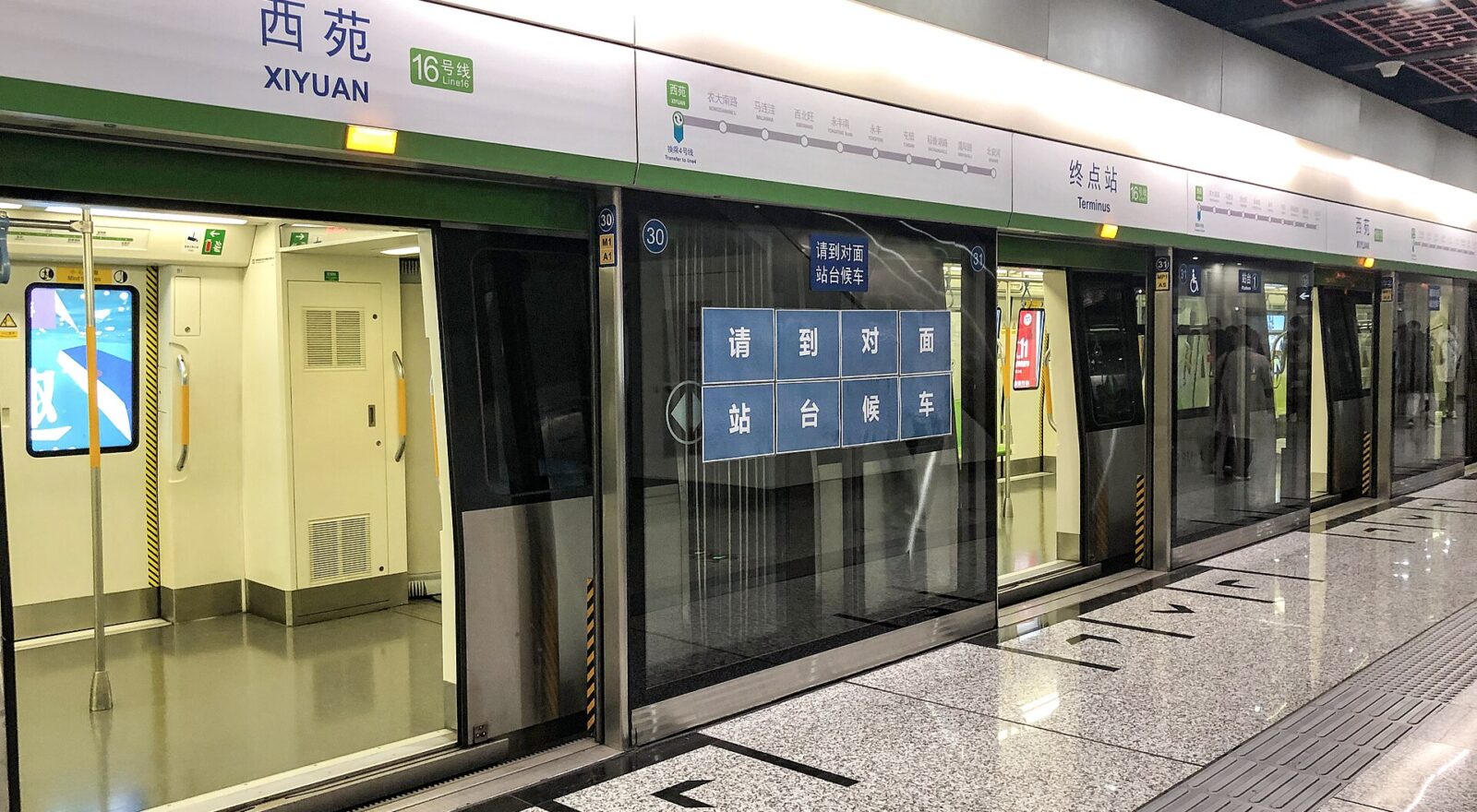
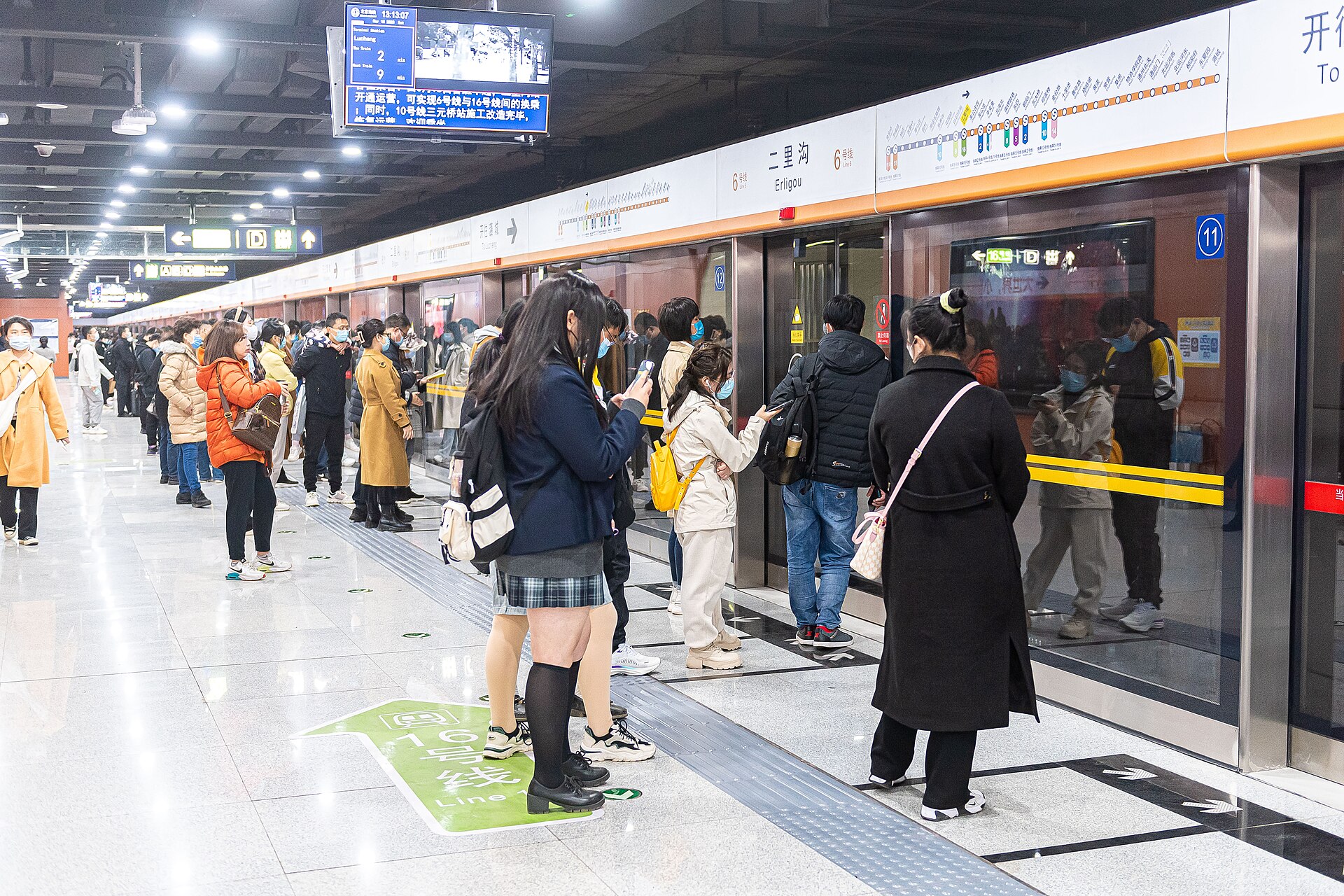
The Beijing subway is the best travel decision you’ll make in this city. Fast, cheap, fully bilingual, and reaching every attraction that matters — it’s the kind of system that makes you wonder why every city doesn’t just copy it. This Beijing subway guide gives you what you actually need: which lines to use, how to pay (including with your foreign card), how the security works, and which exit gets you where you’re going. For the full picture of getting around the capital — buses, taxis, airport runs — see our complete Beijing transportation guide. If you have only a day to use it in, our one-day route moves between three lines and nothing else.
2026 quick stats: 30 lines, more than 500 stations. Foreign Visa, Mastercard, JCB, and American Express contactless cards tap in directly at the gates — no setup, no app, no cash required. The go-to navigation tools for foreigners are Yitongxing (official Beijing transit app with cumulative fare discounts) and MetroMan (cleaner English interface with real-time updates). Every sign, every announcement, every ticket machine: bilingual. Our money and internet guide covers the passport verification both wallets require.
Here’s the thing most guides skip: the on-the-ground experience is far less intimidating than the wall map suggests. Trains come every two to three minutes in peak hours. The main friction points for first-time visitors are the security X-ray at every entrance — it’s mandatory, bring no large liquids — and figuring out which numbered exit leads where. Both are sorted below.
Beijing Subway at a Glance
| Metric | Value |
|---|---|
| Total lines | 30 (numbered plus named lines: Airport Express, Yizhuang, Daxing) |
| Stations | 540+ across the network |
| System length | 909 km (one of the world’s longest) |
| Operating hours | Vary by line: check first and last trains on bjsubway.com |
| Single ride fare | From ¥3 for up to 6 km, rising with distance (¥6 for 22–32 km, then ¥1 more per extra 20 km) |
| Airport Express (PEK) fare | ¥25 flat ($3.50) |
| Airport Express (PKX) fare | ¥35 ordinary class, Daxing Airport to Caoqiao ($4.90); varies by station pair |
| Languages | Chinese + English on every sign and announcement |
The Lines You’ll Actually Use
Of the 30 lines, tourists realistically stick to about six or seven. Know these and you can reach most of the sights in this guide without ever consulting anything more complex than a basic map.
Line 1 (Red) — The Tourist Spine
Runs dead east-west through the historic core along Chang’an Avenue. This is the line. Tiananmen East and Tiananmen West drop you at the old imperial palace and Tiananmen Square. Wangfujing handles shopping. Dongdan connects you south. Ride east to the end of the Batong branch and you arrive at Universal Resort station for Universal Beijing Resort. If you ride only one line in Beijing, make it Line 1.
Line 2 (Blue) — The Old City Loop
A circular line tracing the footprint of Beijing’s old Ming Dynasty city wall. Qianmen covers the famous shopping street, Jianguomen gets you to the Ancient Observatory, Yonghegong puts you at the Lama Temple, and Beijing Railway Station handles inter-city trains. The loop format is forgiving — miss your stop and you’ll swing back around.
Line 4 (Green) — North-South Through the Sights
Connects Beijing South Railway Station — where the high-speed trains depart for Tianjin, Shanghai, and beyond — up through Xidan, Xizhimen, and on to the Summer Palace at Beigongmen. Essential for any Summer Palace day trip. Also the line for Beijing Zoo.
Line 5 (Purple) — Hutong Country
North-south through east-central Beijing. Yonghegong for the Lama Temple, Beixinqiao for the Wudaoying Hutong strip, Tiantandongmen for the Temple of Heaven’s east gate. If you’re spending a day exploring the old alleyways, this is your line.
Line 6 (Brown) — Modern Chaoyang
East-west through Chaoyang District. Use it for the Sanlitun bar and restaurant zone (Dongdaqiao or Hujialou) and for Beihai North station, which puts you right on the edge of Beihai Park and Jingshan — two parks that most first-timers miss and shouldn’t.
Line 10 (Light Blue) — Cross-City Connections
Line 10 is good for Chaoyang nightlife at Tuanjiehu, and the Sanyuanqiao interchange where you pick up the Airport Express. Also useful for cross-city connections that don’t require fighting through the central core.
Airport Express — Capital Airport (PEK) to City
Not numbered — just called the Airport Express. It is the rail link between Beijing Capital Airport and the city, and a ride costs ¥25. Terminals, stops and onward connections are all in our Beijing airport to city center guide. Whether that is enough to be worth doing on a connection is the subject of our layover guide.
Daxing Airport Express — Daxing Airport (PKX) to City
A separate express for Beijing Daxing International Airport (PKX), running into Caoqiao, where you can change to Line 10 or Line 19. The run from the airport to Caoqiao takes about 19 minutes with one stop, at Daxing Xincheng, and an ordinary-class ticket for the full journey costs ¥35.
Fares: What You’ll Pay
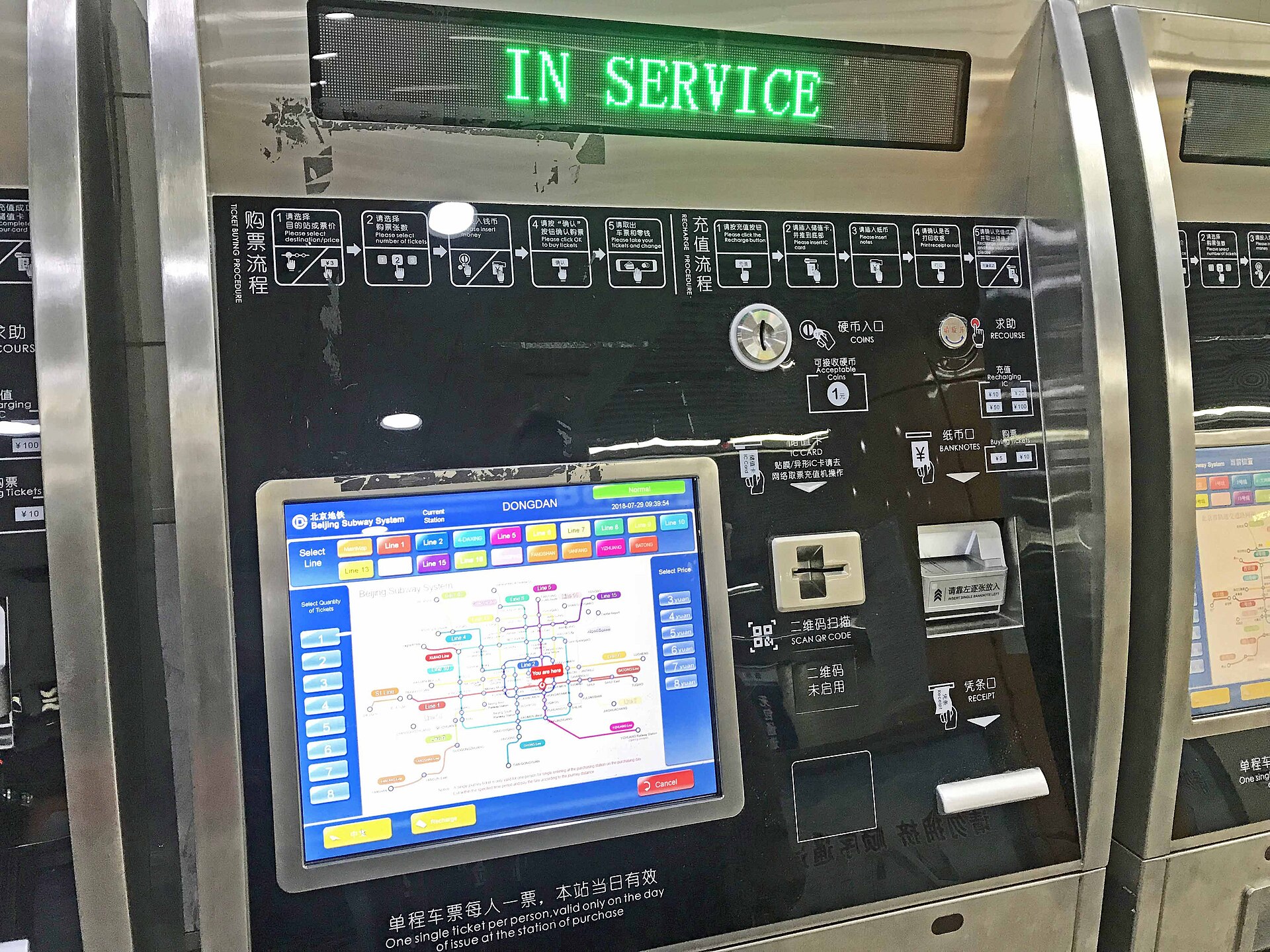
Beijing uses a distance-based fare on all numbered lines: ¥3 covers the first 6 km, and the price climbs in steps as the trip gets longer.
| Distance | Fare (CNY) | USD Approx |
|---|---|---|
| 0–6 km | ¥3 | $0.42 |
| 6–22 km | Between ¥3 and ¥6, by distance | — |
| 22–32 km | ¥6 | $0.85 |
| 32+ km (per 20 km) | +¥1 | +$0.14 |
The airport lines are priced apart from the rest of the network. The Capital Airport Express costs ¥25, while on the Daxing line the fare depends on where you get on and off, with ¥35 buying an ordinary-class seat for the whole airport–Caoqiao run. One important rule — don’t lose your ticket or card mid-trip. If you can’t tap out at your destination, ask station staff for help at the exit. Tokens have a way of disappearing into jacket pockets, so keep yours somewhere you can find it.
How to Pay in 2026
Foreign tourists have three solid payment options. Which one suits you depends mostly on how long you’re staying.
Option 1: Tap Your Foreign Card (Easiest)
Contactless Visa, Mastercard, JCB, and American Express cards work at the gates. Tap the yellow scanner area on entry, tap again on exit. The fare lands on your statement in CNY as a foreign transaction. This is the right choice for short stays — no app, no cash, no queue. One caveat: use a physical card. Apple Pay and Google Pay with foreign cards work intermittently at best. Bring the card itself.
Option 2: Yitongxing App (Best Value for Longer Stays)
Yitongxing (亿通行, “Easy Travel”) is the official Beijing subway app. Download it from the App Store or Google Play, register with your passport, link a credit card or Alipay/WeChat Pay, and use the in-app QR code at the gate. The real incentive: cumulative ride discounts kick in after you spend ¥100 in a calendar month — roughly your 20th ride — dropping fares by 20% and scaling to 50% on heavy use. If you’re in Beijing for five or more days and riding often, this pays off.
Option 3: Single-Journey Token
Buy a plastic token from any vending machine in the station. The machines have an English toggle (top-right corner of the screen). Pick your destination by name or map tap, then pay by Alipay/WeChat QR or cash. Ticket-only machines generally take ¥1 coins and ¥5 or ¥10 notes; the combined ticket-and-top-up machines generally take ¥10, ¥20, ¥50 or ¥100 notes, so check the denominations shown on the screen. Tap the token on the gate sensor to enter, drop it in the slot on the way out. Perfectly functional, just slower to set up than card-tap if you’re doing multiple rides per day.
What About the Yikatong Travel Card?
Beijing’s traditional plastic transit card — buy one at any station service window for a ¥20 refundable deposit plus whatever you want to top up. Works on subways, city buses, and some taxis. Still valid and useful, but a bit redundant now that foreign cards tap in directly. Get a Yikatong if you want something tangible to hand to a travel companion or if you’re planning heavy bus use, where card-tap is less reliable than on the metro.
Step-by-Step: Riding the Subway
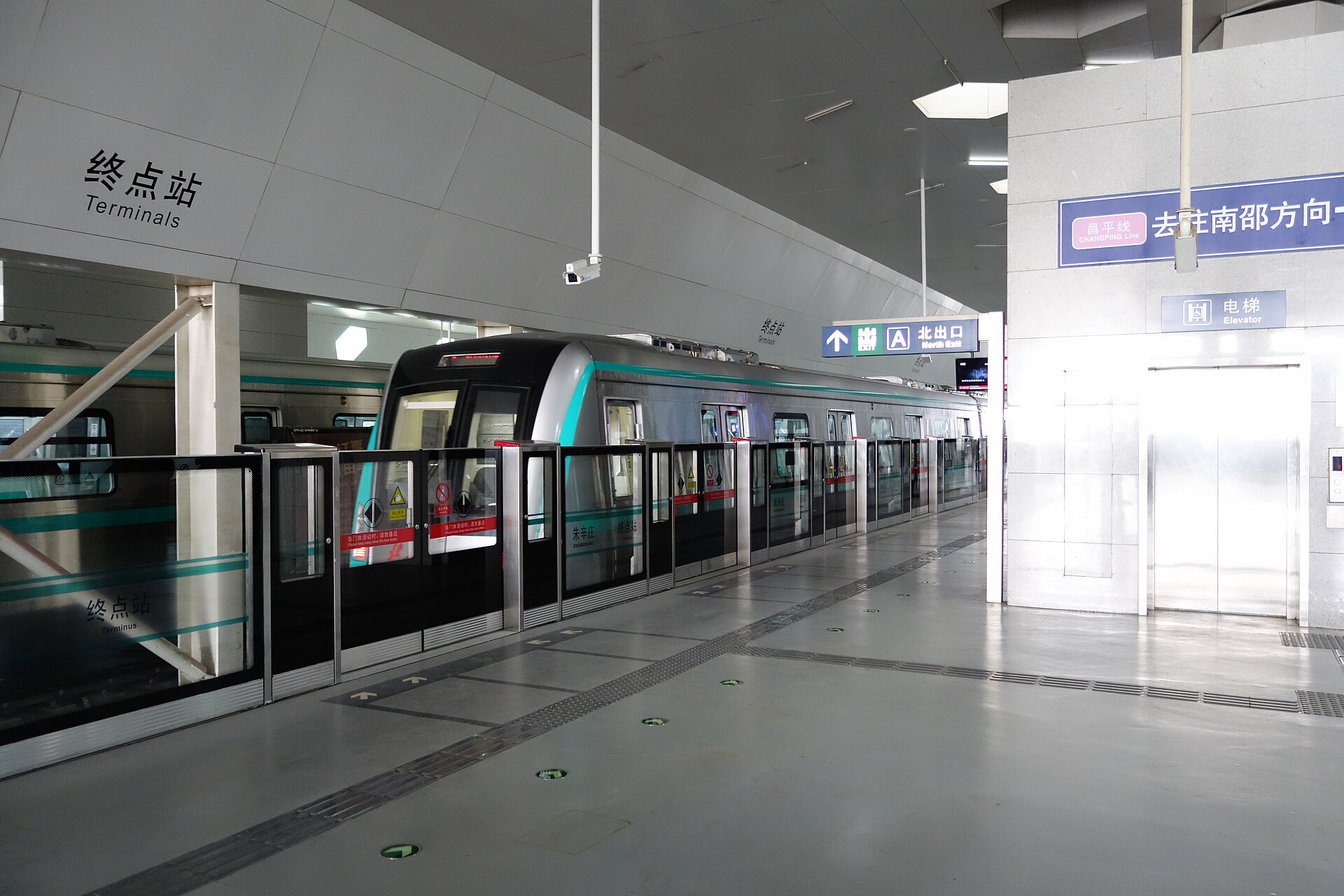
Every station follows the same sequence. Do it twice and it becomes muscle memory.
- Find the entrance. Look above ground for a blue circle with a white ‘B’ (北京地铁, Beijing Metro). Large stations have multiple lettered entrances — A, B, C, D — at different street corners. Google Maps and Apple Maps both tell you which entrance to use.
- Pass security. Every entrance has an X-ray scanner. Put your bag on the belt, walk through the metal detector, collect your bag. Liquids over 100ml may be swabbed. It takes under two minutes unless there’s a queue.
- Choose your line. Color-coded overhead signs indicate which line is served at each gate bank. Multi-line stations have separate banks per line.
- Tap or insert. Credit card on the yellow scanner, Yitongxing QR at the reader, or token in the slot. The tall plastic gate flaps open.
- Find your platform direction. Platform signs name both terminal stations of the line. If you need to go east on Line 1, you want the platform for Universal Resort (Line 1 now runs through onto the Batong line, which ends there). If you’re going west, it’s Pingguoyuan. Check the map once and you’ll have it.
- Wait behind the yellow line. Arrows on the floor show where to queue so exiting passengers can come off first. Beijing riders follow this — do the same.
- Board. Trains stop at every station, doors open automatically. Let people out, then get on.
- Listen for announcements. The next station is named in Mandarin and English before each stop. The overhead dot-map on the carriage wall tracks your progress.
- Tap out. At your destination, tap your card, show your QR, or drop your token. Follow the numbered exit signs (A1, B2, etc.) to the street.
Which Exit to Take
This is where most first-timers lose five minutes. Each station has lettered exits leading to different street corners — sometimes the difference between the right exit and the wrong one is a ten-minute detour above ground. Apple Maps is reliable for this in China (unlike Google Maps, which can be patchy). Search your destination, and it’ll specify which exit number to follow. Alternatively, each exit in the station has a small sign listing the street names and major buildings accessible from it. Take thirty seconds to read it before climbing the stairs.
If you’re doing a lot of independent exploration without Chinese, our guide to getting around Beijing without speaking Chinese has a fuller breakdown of navigation apps and workarounds that apply beyond just the subway.
Subway Stations for Major Tourist Sights
| Attraction | Best Subway Station | Line |
|---|---|---|
| Forbidden City (south entrance) | Tiananmen East or Tiananmen West | Line 1 |
| Tiananmen Square | Tiananmen East or Tiananmen West | Line 1 |
| Temple of Heaven | Tiantandongmen | Line 5 |
| Summer Palace | Beigongmen | Line 4 |
| Lama Temple | Yonghegong | Lines 2 and 5 |
| Wangfujing Shopping | Wangfujing | Line 1 |
| Sanlitun Nightlife | Tuanjiehu or Dongdaqiao | Lines 10 and 6 |
| Beijing Zoo / Pandas | Beijing Zoo | Line 4 |
| Olympic Park / Bird’s Nest | Olympic Sports Center | Line 8 |
| 798 Art District | Gaojiayuan, or Wangjing South or Jiangtai | Line 12 / Line 14 |
| Nanluoguxiang Hutong | Nanluoguxiang | Lines 6 and 8 |
| Wudaoying Hutong | Yonghegong | Lines 2 and 5 |
| Beijing South Railway Station | Beijing South Railway Station | Line 4 |
| Beijing Railway Station | Beijing Railway Station | Line 2 |
| Capital Airport (PEK) | Capital Airport T2 / T3 | Airport Express |
| Daxing Airport (PKX) | Daxing Airport | Daxing Express (change at Caoqiao for Line 19) |
Practical Tips That Actually Matter
- Avoid rush hour. The weekday commute is not just crowded — genuinely pressed-against-the-glass crowded. Start your sightseeing once the morning rush has passed and you’ll ride in relative comfort.
- Download offline maps before you go underground. Cell signal in tunnels is patchy. Apple Maps works well in China — download the Beijing area offline. Google Maps is unreliable on the mainland; use it only as a backup.
- Always check the exit number. A1, B2, C3 — they matter more than people expect. Check before you climb the stairs.
- Mind the gap. Step over the gap between train and platform deliberately, especially with luggage.
- Security rules to know. No knives, no aerosols over a certain size, no fireworks. A small penknife in a backpack outer pocket occasionally gets flagged. Avoid the headache and leave it at the hotel.
- Last train is non-negotiable. Each line has its own last train, so look yours up before a late night out. After that, you’re looking at taxis or hailing a car through Didi. Don’t bank on making the final train from a station three stops away.
- Strollers and large bags. Don’t count on a quick, easy-to-find elevator. Allow extra time, follow the accessibility signs, and don’t attempt rush-hour trains with an oversized suitcase if you can help it.
- Transfers are free. Switching lines at an interchange station doesn’t cost extra as long as you stay within the paid area. Some transfers are long walks, so budget accordingly.
Safety and Comfort
The Beijing subway is one of the safer metro systems you’ll ride anywhere. Pickpockets are rare — security cameras are dense, uniformed staff are present at every station, and the culture around public crime is different from many European or South American metros. Standard sense still applies: keep your phone in a zipped pocket in peak-hour carriages, wear a backpack on your front when it’s densely packed, and don’t leave bags unattended.
No eating or drinking in the carriages — staff occasionally enforce this, and other passengers will notice. No lying down across seats. But honestly, on a typical tourist ride these rules rarely come up.
The part of a subway journey that catches visitors out is not the train but the exit. Big stations have exits lettered A to K or beyond, and the wrong one can leave you on the far side of an eight-lane road with no crossing in sight. Our navigation guide covers how to choose the right exit in advance, and which map app shows it reliably.
FAQ
Is the Beijing subway in English?
Yes — comprehensively. Every station name, line indicator, exit sign, and emergency instruction is bilingual. Audio announcements cover the upcoming station name, transfer options, and door-side direction in both Mandarin and English. Ticket machines have an English toggle top-right. You need zero Chinese to ride the system.
How do transfers work?
Follow the colored signs for the line you’re switching to. No extra cost, no re-tapping, as long as you stay in the paid area. Some transfers involve a fair walk through underground corridors, so budget extra time at big interchange stations.
Can I bring luggage on the subway?
Yes, within the size and weight limits set in Beijing Subway’s passenger rules, so check them if you’re hauling something unusually large. Avoid the morning rush with a hard-sided roller if you can. It’s awkward, not forbidden, but other passengers will be very pointedly unenthusiastic.
Are there day passes?
Yes, in electronic form. Beijing introduced unlimited-ride passes, one-day and three-day versions among them, in 2019; check they are still on sale before you plan around one. The Yitongxing app’s discount structure is the other way to save: after ¥100 of rides in a calendar month you get 20% off, scaling to 50% on heavy use. It’s already cheap.
Does the subway run all night?
No. First and last trains differ from line to line, so check the times for your route if you’re out late. The Airport Express extends slightly to cover late international flights. After hours, your options are taxis or Didi — both are easy to catch in Beijing but more expensive, as you’d expect. See the Didi guide if you’re relying on ride-hailing for late-night returns.
What if I take the wrong train?
Get off at the next station, walk to the opposite platform through the underground walkway, and ride back. It’s happened to everyone. The bilingual signage means you realise the mistake quickly.
A Practical First-Day Route
A realistic opening-day plan: tap into Line 1 at whatever station is nearest your hotel, ride to Tiananmen East for the Forbidden City. Spend three hours. Re-enter at Tiananmen West, ride one stop to Xidan, and switch to Line 4 southbound for Xuanwu. Each leg costs a few yuan.
If you’re planning side trips beyond Beijing — the Great Wall by train, a day trip to Tianjin — the subway connects to high-speed rail at stations such as Beijing South, on Line 4, which is straightforward from the center. The subway is the connective tissue of the whole city: learn it early and the rest of your trip gets easier.
More Beijing Transportation Guides
- Getting Around Beijing: Full Transportation Overview
- Beijing Airport to City Center: Every Transfer Option Compared
- Beijing Taxi Guide: Fares, Apps & Tips for Foreigners
- Beijing Bus Guide: Routes, Payment & How to Use Public Buses
- Didi in Beijing: How to Use Ride-Hailing as a Foreigner
- Beijing High-Speed Trains: Lines, Stations & Booking
- Planning a Beijing Trip: The Complete Guide