Beijing Parks & Gardens
Beijing Parks and Gardens: Complete Guide to the City’s Green Spaces
The imperial parks, neighbourhood parks, hills, gardens and zoo of Beijing: which are worth your time, what they cost in 2026, how to book them with a passport, and the best season for each.
At seven in the morning in the Temple of Heaven, an old man in a grey jacket is writing a poem on the flagstones with a brush the length of a walking stick, dipped in a bucket of water. By the time he reaches the last line the first has evaporated. Behind him a ballroom-dancing class is foxtrotting to a speaker on a bench, a choir is warming up under the cypresses, and a woman is walking backwards round the path, clapping, for reasons that have been explained to many visitors and remembered by few. Beijing parks are where the city lives in public, and the grandest of them happen also to be some of the finest imperial landscapes on earth.
This guide is the overview: the imperial parks and what makes each worth a morning, the neighbourhood parks where local life is at its best, the gardens, hills and zoo on the edges of the city, how tickets and bookings work, what each costs, the best parks for each season and for children, and where to take a boat out. Prices and rules were checked in September 2026; treat them as the right order of magnitude, since some parks raise prices for festivals and peak seasons.
Beijing’s parks at a glance
| Park | Why go | Entry, peak season | Allow |
|---|---|---|---|
| Temple of Heaven | Morning park life and the finest Ming architecture in the city | ¥15 park only; ¥34 through ticket | 2–3 hours |
| Summer Palace | The great imperial lake-and-hill garden | ¥30; ¥60 through ticket | Half a day to a day |
| Beihai Park | A lake, an island and the White Dagoba, beside the palace | ¥10; ¥20 through ticket | 2 hours |
| Jingshan Park | The view over the Forbidden City’s roofs | ¥2; ¥10 in the peony festival | 1 hour |
| Zhongshan Park | Old imperial altar grounds next to Tiananmen | A small fee | 1 hour |
| Old Summer Palace | The ruins of the European-style palaces, and a vast park | ¥25 | Half a day |
| Olympic Forest Park | Space, running trails and the Olympic Tower | Free | 2 hours |
| Fragrant Hills | Autumn colour and a chairlift into the Western Hills | ¥10–15; more at leaf peak | Half a day |
| Beijing Zoo | The pandas | ¥15; panda house as a combo add-on | 2–3 hours |
| Zizhuyuan (Purple Bamboo Park) | Bamboo groves and lakes, and no ticket at all | Free | 1–2 hours |
How park tickets work
Beijing’s big municipal parks have moved their ticketing online, and the system is friendlier to foreign visitors than the museums’ booking systems are. Nine of them, the Summer Palace, the Temple of Heaven, Beihai, Jingshan, Zhongshan, Fragrant Hills (Xiangshan), Beijing Zoo, Yuyuantan and Taoranting, sell tickets through an official platform called Visiting Beijing Parks (畅游公园, Chàngyóu Gōngyuán), which has an English website at bjgyol.com.cn as well as a WeChat mini-program.
- Book in your own name with your passport number. Foreign visitors can buy with a passport or a Chinese permanent residence permit.
- Enter by scanning the QR code on your booking at the gate, and have the passport with you, since staff can ask to see it.
- Park-only or through ticket. The bigger parks sell a cheap ticket for the grounds and a “through ticket” (联票, liánpiào) that adds the main halls or islands. For the Temple of Heaven and the Summer Palace, the through ticket is the one you want.
- The China National Botanical Garden has its own booking arrangements, and Zizhuyuan is free with no reservation needed.
Payment inside the WeChat mini-program goes through WeChat Pay, which is one more reason to have WeChat Pay set up before you arrive. The website is the easier route for most visitors.
You may read about a Beijing park annual pass, a single card that covers the Summer Palace, the Temple of Heaven, Beihai and a dozen more for ¥100 a year. It exists, but the 2026 pass is restricted to Beijing trade-union members, retirees and full-time students in the city, so it is not an option for most visitors. Buy park by park.
The imperial parks
Almost all of central Beijing’s great parks were once imperial property: altars where emperors made sacrifices, pleasure grounds beside the palace, and garden retreats outside the walls. They are the city’s best-value sights by a distance, and the main reason the centre of Beijing is so unexpectedly green. Most are covered in detail elsewhere on this site, so what follows is a guide to choosing between them.
Temple of Heaven
If you only visit one park in Beijing, make it this one, and make it early. The Temple of Heaven was where Ming and Qing emperors prayed for good harvests, and its triple-roofed Hall of Prayer for Good Harvests is one of the most recognisable buildings in China. But the reason to come at dawn is the park itself: a huge expanse of old cypress groves where, from first light, the city exercises, sings, dances, plays cards and practises tai chi. The ¥15 park ticket gets you all of that; the ¥34 through ticket in peak season (¥28 from November to March) adds the Hall of Prayer, the Imperial Vault of Heaven and the Circular Mound Altar, and is worth it. The nearest subway is Tiantan Dongmen on Line 5. Our Temple of Heaven guide has the full route.
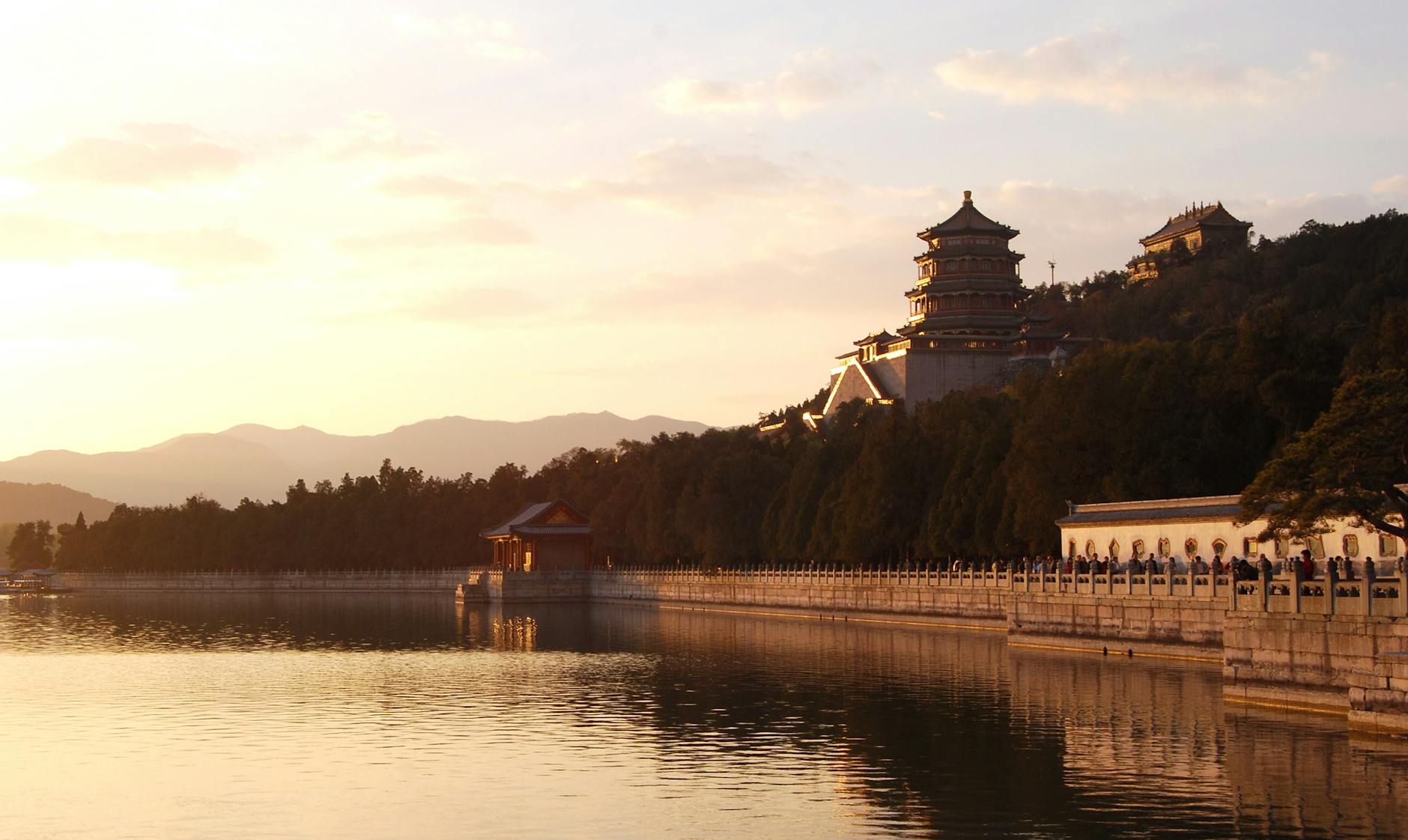
The Summer Palace
A whole imperial landscape in the north-west of the city, built around Kunming Lake and Longevity Hill, with the Long Corridor running along the shore and the Seventeen-Arch Bridge reaching out to an island. Entry is ¥30 in peak season and ¥20 off-peak, or ¥60 and ¥50 for the through ticket, which covers most of the extras. Give it at least half a day, walk the Long Corridor early before the tour groups, and climb to the Tower of Buddhist Incense for the view. Boats on the lake start at around ¥200 an hour with a ¥600 deposit. The nearest subway is Beigongmen on Line 4, at the north gate. The Summer Palace guide covers routes and timing.
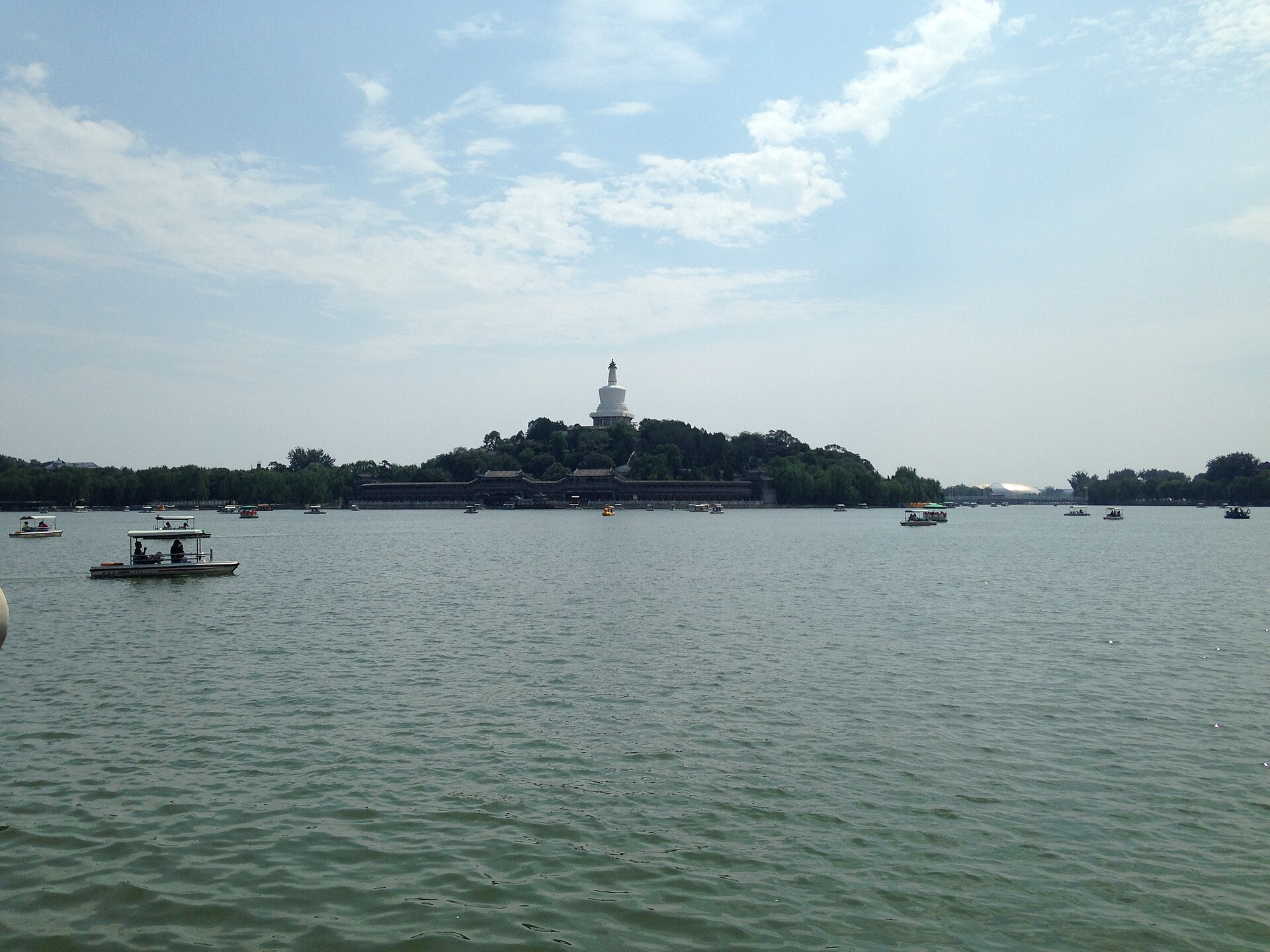
Beihai Park
A lake immediately north-west of the Forbidden City, with a wooded island crowned by the White Dagoba, a Tibetan-style stupa built in the seventeenth century. It is gentler and less crowded than the Summer Palace, and an hour on a pedal boat here is one of the most relaxed things you can do in central Beijing. Entry is ¥10 in peak season, ¥5 off-peak, or ¥20 for the through ticket that adds the island and the Round City. The nearest subway is Beihai North on Line 6. The Beihai Park guide covers it in detail.
Jingshan Park
An artificial hill built from the earth dug out for the Forbidden City’s moat, directly north of the palace, and the best view in Beijing for ¥2. From the pavilion on top you look straight down the length of the Forbidden City, a sea of yellow-tiled roofs running south towards Tiananmen. In late April and May the peony festival lifts the ticket to ¥10, which is still nothing. Walk across the road from the Forbidden City’s north gate and climb it the moment you come out. Our Jingshan Park guide covers the paths and the best light.
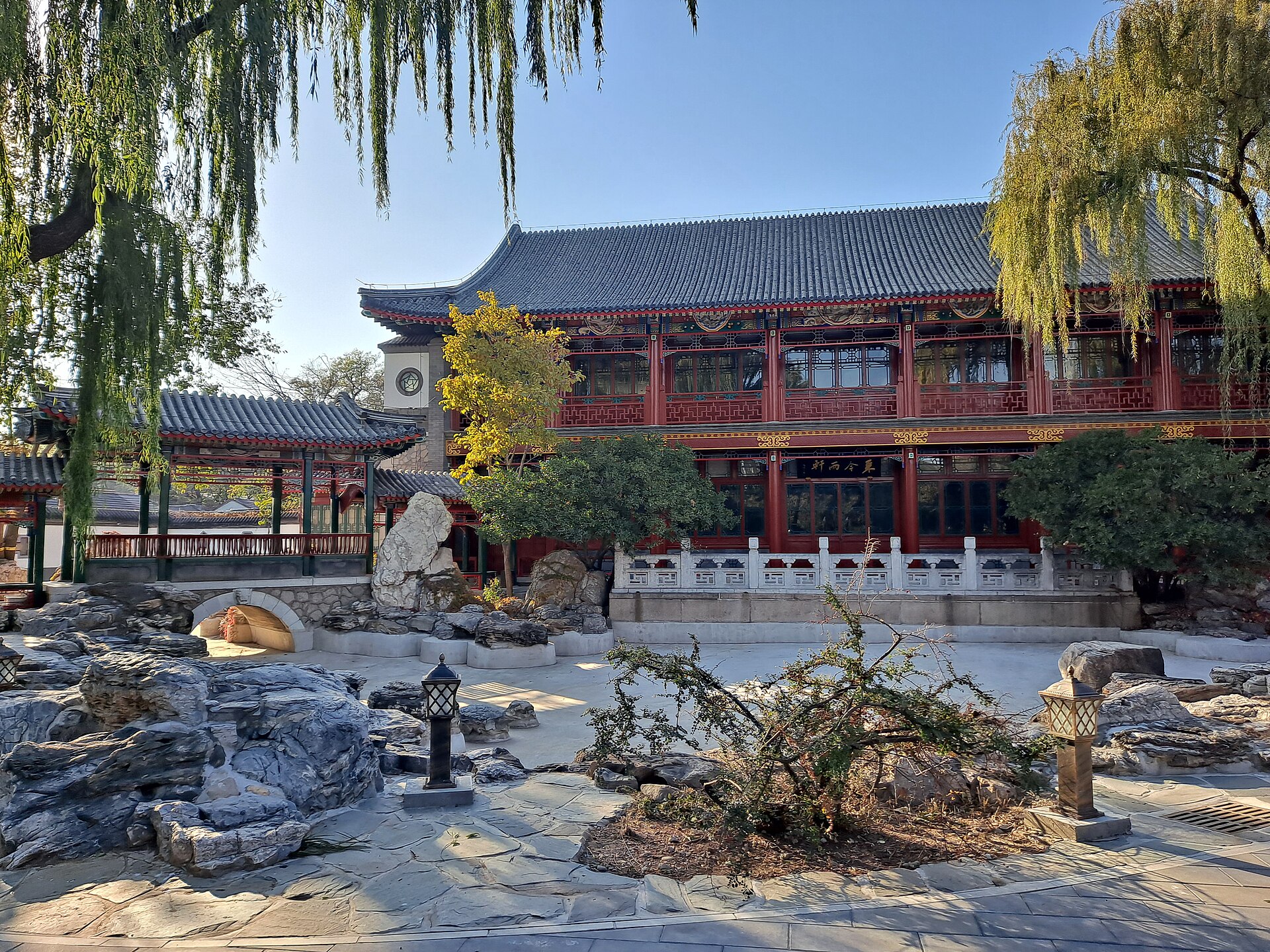
Zhongshan Park
Tucked immediately west of Tiananmen and the Forbidden City’s front gates, Zhongshan Park occupies the grounds of the former Altar of Land and Grain, where emperors made offerings for the harvest, and was one of the first imperial grounds opened to the public in the early twentieth century. It is small, shady and a few minutes’ walk from the crowds of the square, with ancient cypresses, a tulip display in spring and an old teahouse-restaurant, Laijin Yuxuan, under the willows. It sells tickets through the same parks platform for a small fee, and it is the ideal pause between the Forbidden City and anything else.
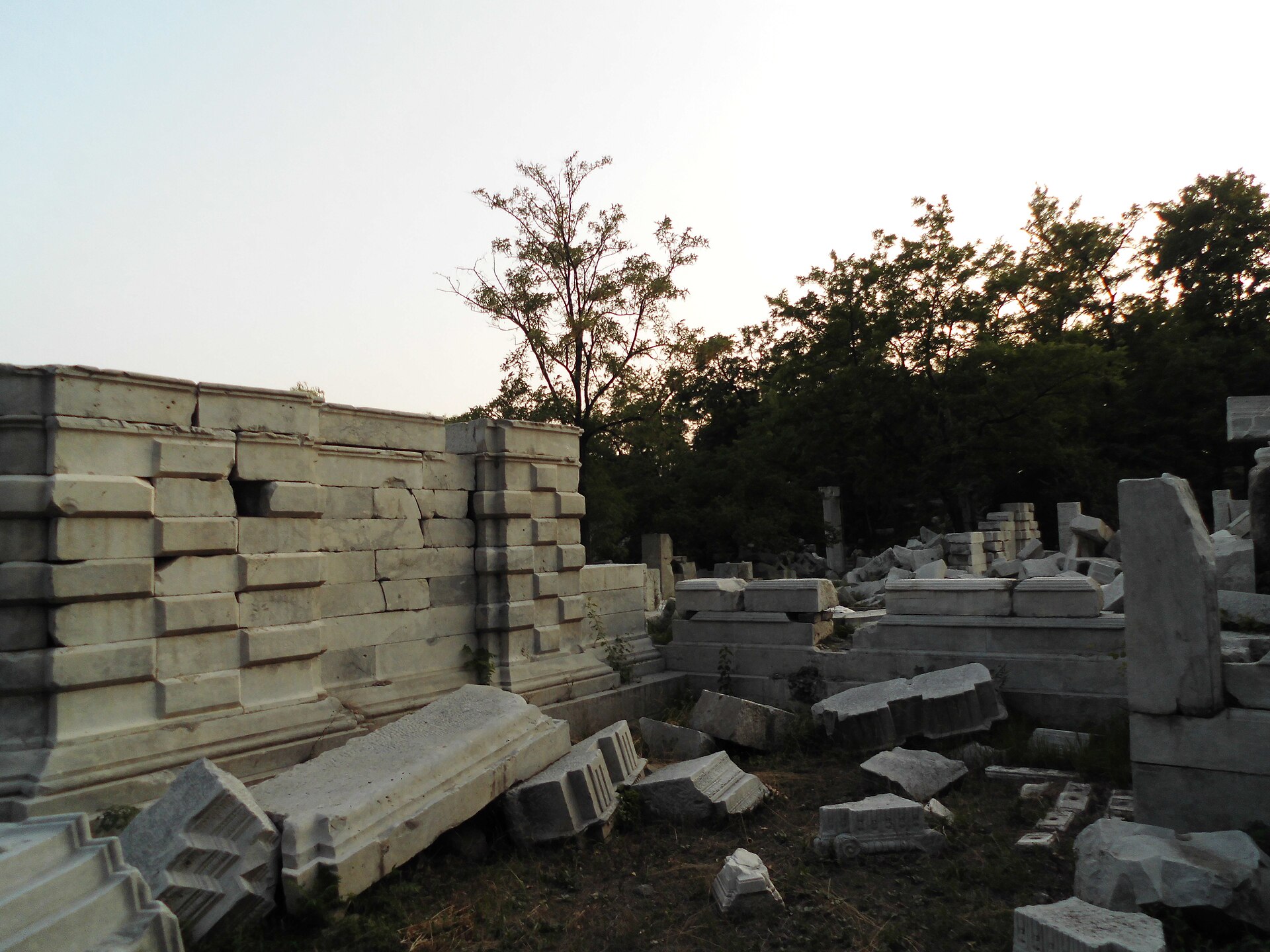
The Old Summer Palace (Yuanmingyuan)
Once the emperors’ main residence, a vast complex of gardens, lakes and palaces, burned by British and French troops in 1860 and never rebuilt. What most visitors come for is the Western Mansions, a corner of European-style palaces and fountains designed for the Qianlong emperor by Jesuit missionaries, now a field of carved marble ruins. The ruins are a small part of an enormous park, much of it lakes and willows that feel far quieter than the Summer Palace next door. Entry is ¥25 for adults and ¥10 for children over 1.2 metres, free below that; it is open 08:00–19:00 from April to October and 08:00–17:30 from November to March. Take Line 4 to Yuanmingyuan Park station and use Exit B.
The honest verdict: the Western Mansions are genuinely moving and worth the trip, and the lotus lakes are beautiful in summer, but budget your walking. The distances are long and the rest of the park is pleasant rather than spectacular. It pairs naturally with the Summer Palace in a single long day.
Parks where Beijing lives
The imperial parks are spectacular. The neighbourhood parks are where you see the city being itself, with no tour groups and no through tickets. Several of them are the city’s other imperial altars, laid out on the four points of the compass around the old city.
Ditan, Ritan and Yuetan: the Temples of Earth, Sun and Moon
The Temple of Heaven had three siblings. Ditan, the Temple of Earth, lies just north of the Lama Temple and is best known for its temple fair at Chinese New Year, one of the biggest in the city. Ritan, the Temple of the Sun, sits in the embassy district east of the centre, a leafy local park with its old altar still at the heart of it. Yuetan, the Temple of the Moon, is a quiet neighbourhood park in the west. None of them is a sight in the way the Temple of Heaven is, and all of them are a lovely hour with a local rhythm. Entry is free or a few yuan. Our Chinese New Year guide covers the temple fairs, and the Lama Temple guide the obvious pairing with Ditan.
Taoranting Park
A lake park in the south of the city built around a Qing-dynasty pavilion that was a favourite of scholars and poets, and later a meeting place for revolutionaries. It has a collection of replica famous pavilions from around China and a lot of local life. It is on the parks booking platform, and the nearest subway is Taoranting on Line 4.
Zizhuyuan (Purple Bamboo Park)
Bamboo groves, lakes, islands and bridges in the north-west of the city, near National Library station, and entirely free, with no reservation needed. It is one of the most pleasant places in Beijing for a quiet walk, especially on a hot summer afternoon.
Chaoyang Park and the Olympic Forest Park
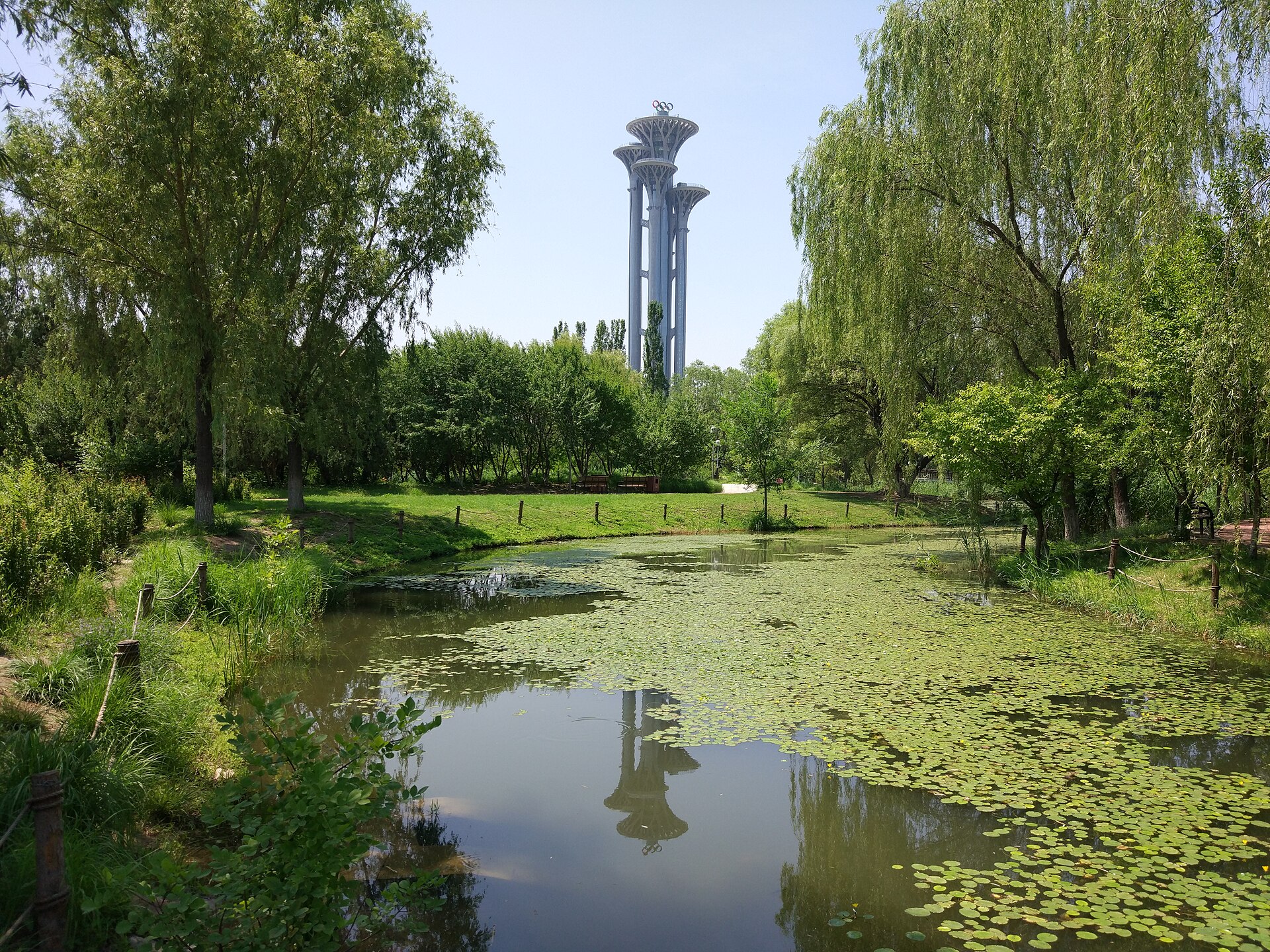
Two big modern parks in the east and north. Chaoyang Park, by the station of the same name on Line 14, is one of the largest in the city, with lakes, lawns and a busy calendar of festivals and events; it is a residents’ park rather than a destination, but a good one if you are staying nearby. The Olympic Forest Park, north of the Bird’s Nest and reached from Forest Park South Gate on Line 8, is enormous, free and built for running, cycling and picnics, with woodland, wetlands and long views to the Olympic Tower. The Olympic Park grounds around the stadiums are free too, with the Bird’s Nest and the Water Cube charging separately.
Shichahai: the lakes that are not a park
The three lakes north of Beihai, Qianhai, Houhai and Xihai, are not a gated park at all, but they do what the parks do: willows, water, walking, and in summer, people swimming off the banks in the early morning. They are free, open at every hour, and surrounded by hutongs. Our Shichahai and Houhai guide covers the lanes around them.
Gardens, hills and the zoo
Fragrant Hills (Xiangshan)
A wooded hill park in the Western Hills, famous for its red autumn leaves. It is honest to say what it is: a paved, stepped path up a steep hill, with a chairlift for those who would rather ride, not a wilderness hike. Entry is ¥10–15, a little more in the autumn-leaf peak, and the chairlift costs around ¥80 one way or ¥120 return, taking about twenty minutes. Late October is spectacular and very crowded; a weekday in early November is often the better compromise. The Xijiao line tram runs to Xiangshan station. The Fragrant Hills guide and the autumn leaves guide cover the timing.
China National Botanical Garden
At the foot of the Western Hills, next to Fragrant Hills and on the same Xijiao line, the National Botanical Garden spreads across a valley with a huge tropical conservatory, themed gardens and the Temple of the Sleeping Buddha, whose enormous bronze reclining Buddha dates back centuries. It is at its best in spring, when the peach and cherry blossom and the tulips come out, and it pairs well with Fragrant Hills for a full day in the west. It handles its own ticketing, separately from the main parks platform.
Beijing Zoo
The reason to come is the pandas, and the panda house is best early in the day, when the animals are most active and the crowds lightest. Entry is ¥15 in high season and ¥10 in low season, with the panda house as a combination add-on, and children under 1.2 metres go free. Opening hours are 07:30–19:00 from April to October, with last entry at 18:00, and 07:30–18:00 from November to March. Strollers can be hired for ¥30 a day at the South Gate. The zoo is by Beijing Zoo station on Line 4.
The honest verdict: the pandas are a delight, and the rest of the zoo shows its age, with some older enclosures that do not match modern standards. Go for the pandas, arrive early, and do not plan the whole day around it.
Yuyuantan Park and the Grand View Garden
Yuyuantan, a lake park in the west with its own station on Line 16, is Beijing’s best-known place for cherry blossom, with thousands of trees flowering in early April; our cherry blossom guide has the timing. The Grand View Garden in the south-west is a curiosity: a classical garden built in the 1980s as a set for the television adaptation of Dream of the Red Chamber, China’s great eighteenth-century novel. It is charming if you know the story and skippable if you do not.
Park life: what you will see, and how to join in
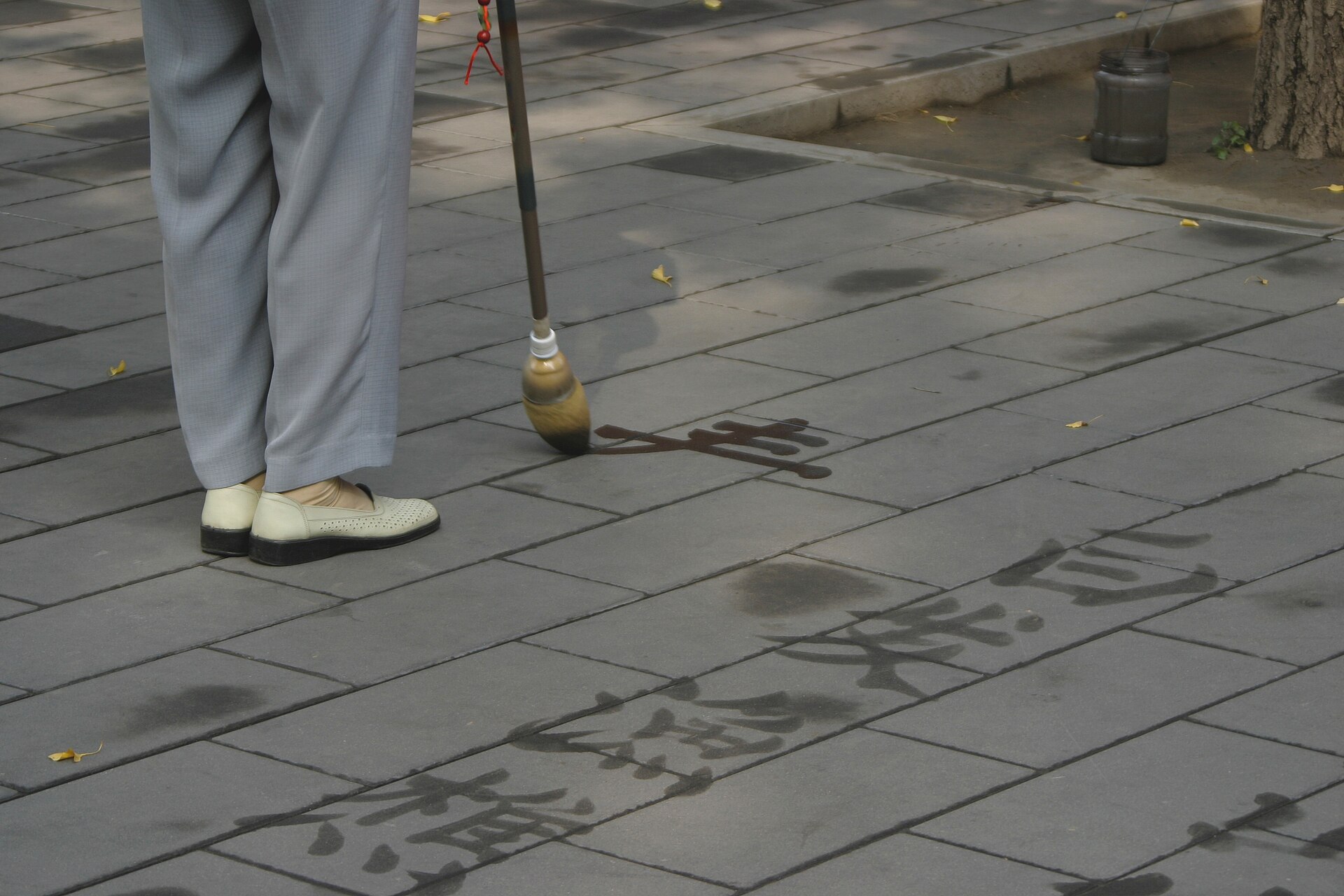
Beijing’s parks come alive in the early morning and again in the evening, when the heat goes out of the day and retirees, office workers and families come out. The best of it is free to watch:
- Tai chi and sword practice, usually in small groups under trees, at first light.
- Square dancing, or guǎngchǎng wǔ, groups of mostly middle-aged women dancing in formation to music from a portable speaker, from early morning and again after dark.
- Water calligraphy, poems and characters written on the flagstones with a long brush dipped in water, fading as you watch.
- Choirs and singing circles, belting out revolutionary songs, opera arias and pop, often with an accordion or an èrhú, the two-stringed fiddle.
- Jianzi, a weighted shuttlecock kept in the air with the feet, played in circles with astonishing skill.
- Card and chess games on stone tables, surrounded by commentators.
- Matchmaking corners, where parents gather at weekends with written profiles of their unmarried adult children, hoping to find a match. Zhongshan Park’s has long been the best known.
Watching is welcome, and joining in often is too. Dance groups and jianzi circles will usually wave in a visitor who looks keen, and nobody minds a bad first attempt. Ask before photographing people up close, and do not push a camera into a matchmaking corner, where the subject matter is personal. The Temple of Heaven, Jingshan, Ditan and Beihai are the best places to find all of this at once; our photo spots guide covers the best light for pictures.
The parks through the year
| Season | Where to go | What you will see |
|---|---|---|
| Spring, April–May | Yuyuantan, Zhongshan, Jingshan, the Botanical Garden | Cherry blossom in early April, tulips, then Jingshan’s peonies from late April |
| Summer, June–August | Yuanmingyuan, Beihai, Shichahai, Zizhuyuan | Lotus flowers on the lakes, and the parks as places to escape the heat early and late |
| Autumn, September–November | Fragrant Hills, the Summer Palace, the Temple of Heaven | Red leaves and golden ginkgo from mid-October, the clearest skies of the year |
| Winter, December–February | Beihai, Shichahai, the Summer Palace | Frozen lakes turned into skating rinks, and the imperial gardens under snow |
Autumn is the best season for the parks, as it is for Beijing generally, but avoid the National Day holiday from 1 to 7 October, when every famous park in the city is packed. Winter is underrated: the crowds vanish, the light is clear, and around the winter solstice the low sun lines up with the arches of the Summer Palace’s Seventeen-Arch Bridge. Our guide to the best time to visit and the winter guide go into more detail.
Parks for families
Children usually like Beijing’s parks more than its museums, and the parks are made for them: space to run, boats to pedal, snacks at every gate. The zoo’s pandas are the obvious draw, with free entry for children under 1.2 metres. Boating on Beihai or the Summer Palace lake goes down well with almost any age. The Olympic Forest Park has room to cycle and play without traffic, and the Temple of Heaven’s morning activities are a spectacle that tends to hold a child’s attention for far longer than the halls do. Our Beijing with kids guide covers the rest of a family trip.
Boats and lakes
Several of the parks are really lakes with land around them, and a boat is often the best way to see them.
- Beihai: pedal and electric boats on the lake around Jade Island, roughly ¥100–200 an hour plus a refundable deposit. The easiest and most central.
- The Summer Palace: boats on Kunming Lake from around ¥200 an hour with a ¥600 deposit, sold from 08:30 to 16:30. The views of Longevity Hill from the water are the best in the park.
- Shichahai: pedal boats and small tour boats on Qianhai and Houhai, in the middle of the hutongs.
Boating stops when the lakes freeze in winter, and in the coldest weeks the same lakes become skating rinks.
Three park days
The central axis
Come out of the Forbidden City’s north gate, cross the road and climb Jingshan for the view back over the palace. Walk west to Beihai and take a boat round the island, then leave by the north gate for the Shichahai lakes and the hutongs around them, ending at the Drum and Bell Towers as the evening comes on. The Forbidden City guide covers the first part of the day.
The north-west gardens
Line 4 links the Summer Palace and the Old Summer Palace, two stops apart. Spend the morning at the Summer Palace, starting early on the Long Corridor, and the afternoon at the Western Mansions ruins in Yuanmingyuan. It is a long, walking-heavy day, and one of the best in Beijing.
The Western Hills
Take the Xijiao line tram to the Botanical Garden for the conservatory and the Temple of the Sleeping Buddha, then carry on to Fragrant Hills for the climb or the chairlift. In autumn it is the classic leaf-peeping day; the rest of the year it is simply a green escape from the city. Our hiking guide covers wilder walks further out.
Getting there by subway
Nearly every park on this page is a short walk from a subway station, and a foreign contactless card taps you through the gates.
| Park | Station | Line |
|---|---|---|
| Temple of Heaven | Tiantan Dongmen | 5 |
| Summer Palace, north gate | Beigongmen | 4 |
| Old Summer Palace | Yuanmingyuan Park, Exit B | 4 |
| Beijing Zoo | Beijing Zoo | 4 |
| Taoranting Park | Taoranting | 4 |
| Beihai Park, north gate | Beihai North | 6 |
| Jingshan Park | Across the road from the Forbidden City’s north gate | — |
| Zhongshan Park | Tiananmen West | 1 |
| Ditan Park | Yonghegong, then walk north | 2, 5 |
| Zizhuyuan | National Library | 4, 9, 16 |
| Yuyuantan Park | Yuyuantan Park East Gate | 16 |
| Chaoyang Park | Chaoyang Park | 14 |
| Olympic Forest Park | Forest Park South Gate | 8 |
| Fragrant Hills | Xiangshan | Xijiao line |
| China National Botanical Garden | Botanical Garden | Xijiao line |
Big parks have several gates, often far apart, so check which gate your station serves before you plan a route through. The subway guide covers fares and transfers.
Park etiquette
The rules in Beijing’s parks are few and mostly common sense, but a handful surprise visitors:
- Keep off the grass where the signs say so, which in the imperial parks is most of it. Lawns are for looking at; paths and pavilions are for sitting.
- Do not climb the rockeries, the piled-up limestone formations that decorate imperial gardens. Some are centuries old.
- No swimming in the park lakes, whatever the old men of Houhai may be doing.
- Leave the drone at home. All of Beijing is controlled airspace, and the parks near the palace are among the most sensitive places in the city.
- Keep the volume down in the quieter gardens, and do not join a dance group’s circle mid-routine without a nod first.
Accessibility
The flat parks are easy going: the Temple of Heaven’s main axis, Beihai’s lakeshore, Zhongshan Park, Zizhuyuan and the Olympic Forest Park are all manageable with a wheelchair or a pushchair, with some uneven stone paving to watch for. The hill parks are not. Jingshan is a steep climb on steps, Longevity Hill at the Summer Palace has long flights of stone stairs, and Fragrant Hills is steep throughout, although its chairlift takes some of the effort out. Toilets in the big parks are plentiful and generally clean. Our accessibility guide covers getting around the city more widely.
Practical tips
- Go early. The parks are at their best at dawn, both for light and for life, and the famous ones are far quieter before the tour groups arrive.
- Carry your passport. Bookings are made in your name, and staff can ask to see it at the gate.
- Book the big ones online, through the Visiting Beijing Parks platform, a day or two ahead in peak season.
- Know the closing times. Halls inside the parks close earlier than the park gates, and winter hours are shorter than summer ones.
- Bring water and a snack. Food inside the imperial parks is limited and priced for a captive audience.
- Check the air. On a rare high-pollution day, the parks are a poor choice and a museum a better one. The air quality guide explains the readings.
- Avoid the Golden Weeks, 1–7 October and the Labour Day holiday in early May, if you possibly can.
For how the parks fit alongside the palaces, temples and tombs, our guide to Beijing’s historical attractions is the place to start.
The Old Summer Palace gets a fuller treatment in our guide to Yuanmingyuan’s ruins and history, which walks the Western Mansions from the maze to the Great Fountain, explains which of the four tickets to buy, and sets out why the 1860 burning still brings Chinese visitors in their thousands every 18 October.
The Olympic Green and the Forest Park get a guide of their own, which sorts the free parts from the paid ones, prices the Bird’s Nest, the Water Cube and the Olympic Tower, and explains why the Green is at its best in the hour before dark.
The zoo’s new panda house, opened in July 2026, is covered in a full guide to Beijing Zoo and its pandas, with the combined ticket, the hours when the animals are most likely to be awake, and an honest look at the rest of the zoo.
Frequently asked questions
What is the best park in Beijing?
For most visitors, the Temple of Heaven, visited early in the morning, for its combination of Ming architecture and local park life. The Summer Palace is the finest imperial garden, and Jingshan has the best view in the city for ¥2.
How much do Beijing parks cost?
Very little. In peak season, the Temple of Heaven is ¥15 for the park or ¥34 for the through ticket, the Summer Palace ¥30 or ¥60, Beihai ¥10 or ¥20, Jingshan ¥2 and the Old Summer Palace ¥25. Zizhuyuan and the Olympic Forest Park are free.
Do I need to book Beijing park tickets in advance?
For the nine big municipal parks, including the Summer Palace, the Temple of Heaven and Beihai, tickets are sold online through the Visiting Beijing Parks platform, in your name with your passport number. Booking a day or two ahead is sensible in peak season.
Can foreigners buy the Beijing park annual pass?
Generally not. The 2026 annual pass costs ¥100 but is restricted to Beijing trade-union members, retirees and full-time students in the city. Visitors buy tickets park by park.
Which Beijing parks are free?
Zizhuyuan, the Olympic Forest Park and the Olympic Park grounds are free, as are the Shichahai lakes, which are not a gated park. Several neighbourhood parks charge only a few yuan.
Where can I see locals dancing and doing tai chi in Beijing?
The Temple of Heaven early in the morning is the best place, followed by Jingshan, Ditan and Beihai. Square dancing also returns to most parks and public squares in the evening.
Which Beijing park is best for kids?
Beijing Zoo, for the pandas, with free entry under 1.2 metres. Boating on Beihai or the Summer Palace’s Kunming Lake is a close second, and the Olympic Forest Park has space to run and cycle.
Where can I go boating in Beijing?
Beihai Park, from roughly ¥100–200 an hour plus a deposit; the Summer Palace’s Kunming Lake, from around ¥200 an hour with a ¥600 deposit; and the Shichahai lakes. Boating stops in winter when the lakes freeze.
Is the Old Summer Palace worth visiting?
Yes, for the Western Mansions ruins, which are one of the most striking sights in Beijing, and for the quiet lakes. The park is huge and the walking is long, so pair it with the Summer Palace, two stops away on Line 4.
When is the best season for Beijing’s parks?
Autumn, from mid-October, for the leaves and the clear skies, avoiding the 1–7 October holiday. Spring brings blossom from early April, summer the lotus flowers, and winter frozen lakes and empty imperial gardens.