The Great Wall Near Beijing
Jiankou Great Wall: Wild Section Hiking Guide & Safety Tips (2026)

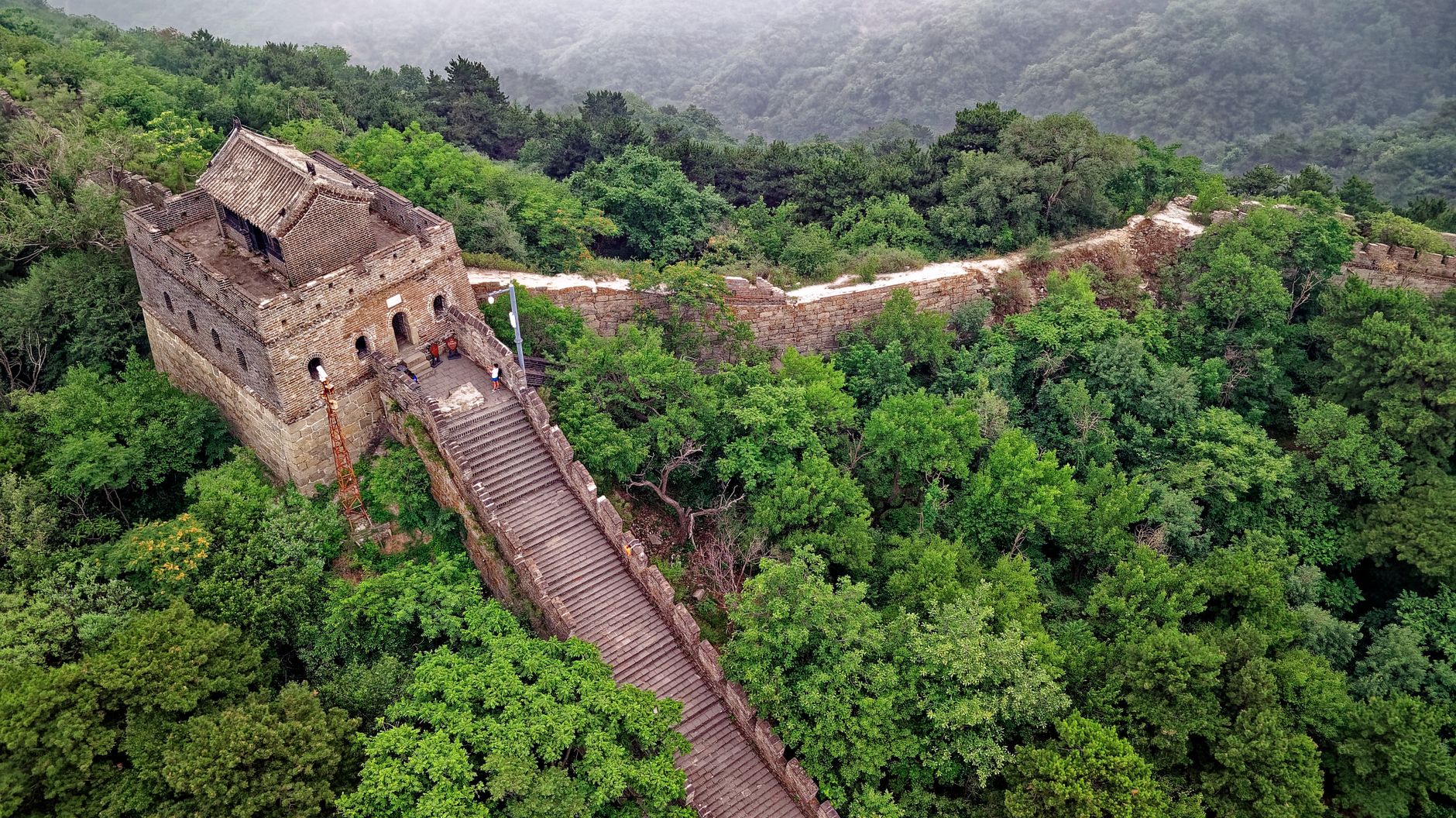
Jiankou Great Wall hiking is the dream of serious Great Wall enthusiasts and adventurous photographers — and the nightmare of unprepared casual tourists. Jiankou is the most dramatic, most photogenic, and most dangerous accessible Great Wall section near Beijing — a 20 km stretch of completely unrestored Ming-dynasty wall climbing knife-edge ridges 70 km north of Beijing. The wall is genuinely crumbling. The drops on either side are vertical. The famous “Sky Stairs” climb at near-vertical pitches with broken battlements. The reward: photography that no other Wall section can match, plus the sense of walking the Wall as it would have been 600 years ago. Our Great Wall photography guide ranks it against the sections you can shoot without the risk.
This guide covers Jiankou Great Wall hiking with brutal honesty — what to expect, the difficulty levels, safety warnings, the famous Jiankou-to-Mutianyu hike (the most popular guided experience), and exactly when Jiankou is right vs. wrong for you. Read our Great Wall Beijing overview first if you’re still deciding between sections. If you’re a fit hiker comfortable with exposure and photography is a priority, Jiankou should be on your list. If you’re a casual tourist or have any vertigo, choose the cable car and restored steps at Mutianyu instead.
Jiankou Great Wall at a glance
- Distance from Beijing
- 70 km north (90 min drive).
- Entry
- Technically not officially open to tourists; ¥10–¥30 collected by villagers at access points.
- Restoration
- NONE — completely unrestored, with crumbling battlements and exposed sections.
- Difficulty
- Difficult to extreme. Significant exposure, scrambling required.
- Length open
- ~20 km, with 4-hour Jiankou-to-Mutianyu most popular.
- Daily visitors
- 100–500 — the least-visited accessible Wall section near Beijing.
- Best for
- experienced hikers, photographers, adventure travellers willing to accept risk.
- Worst for
- families, casual tourists, anyone with vertigo, anyone wanting a regulated tourist experience.
Who Jiankou is actually for
Stop and read this before you book anything. Most visitors who say they “want wild wall” should actually go to Gubeikou instead, or to the lakeside wall at Huanghuacheng if the appeal is scenery rather than difficulty. Gubeikou is authentic, unrestored, and dramatically safer. The experience of walking ancient unrestored wall with no crowds and no guardrails? That’s Gubeikou. It delivers that without the genuine physical danger that Jiankou involves at its harder sections.
Jiankou is for a specific type of visitor: people who have already done Mutianyu and Jinshanling, who are comfortable scrambling on exposed ridges with vertical drops, who understand they are accepting real risk, and for whom the famous features — Sky Stairs, Eagle Flies Facing Upward, Beijing Knot — are specific photography goals. If you’re ticking “I want to see wild Great Wall” off a list, Gubeikou does that more safely. If you’re a serious hiker or photographer who has specifically researched Jiankou’s landmark features, then you’re probably ready for it.
If this is your first Great Wall visit, full stop: this is not your section. Come back after Mutianyu and Jinshanling.
Why Jiankou matters
Jiankou is the Great Wall as it actually existed for centuries — not as a tourist commodity. The unrestored sections show:
- Crumbling watchtowers with overgrown vegetation
- Original Ming-dynasty masonry without modern repair
- Knife-edge ridge sections where the wall is barely 2 metres wide with vertical drops on each side
- Famous landmarks: “Eagle Flies Facing Upward” (Ying Fei Dao Yang), “Sky Stairs” (Tian Ti), “Beijing Knot” — each a photographer’s bucket list
- Long stretches without other people, sometimes for hours
For photographers, Jiankou’s atmosphere is unmatched. For Wall enthusiasts wanting authentic experience, it’s the gold standard. For everyone else — Mutianyu or Badaling.
Important safety warning
Jiankou has caused multiple injuries and at least 5 reported deaths since 2010. The wall is genuinely dangerous in places — most fatalities cluster in the middle segment between Beijing Knot and Jiankou Spot, which includes the famous “Eagle Flies Facing Upward” and “Sky Stair” features. Slopes here approach near-vertical (~90 degrees) and are full of loose ripraps from centuries of weathering. Inexperienced hikers should bypass this segment entirely. Risks include:
- Falling: Some sections have 10+ metre vertical drops on both sides of a 2-metre walkway.
- Crumbling stones: Brick and stone can dislodge under weight.
- No barriers or handrails: Unlike restored sections, you have no protection.
- Weather: Wet, icy, or windy conditions dramatically increase risk.
- Remoteness: Cell signal is weak; emergency response slow.
- Wildlife: Bee and wasp nests are common in summer; venomous snakes possible.
If any of these concern you, do not hike Jiankou. Choose Mutianyu, Badaling, or Jinshanling’s safer ridge walk instead.
Solo hiking caution: Solo Jiankou hiking is strongly discouraged regardless of experience. Multiple sections are unmarked, the most dangerous segments have no warning signs, and a guide with local knowledge will steer you onto safer alternative routes around the truly perilous sections like Sky Stair. Most reported deaths involved solo or unguided hikers.
Jiankou vs. Gubeikou — wild wall compared
Both sections are unrestored. Both are far from the tourist crowds. Both give you the experience of walking Ming-dynasty wall as it actually stands today. The difference is risk and features.
Jiankou has more dramatic photography — Sky Stairs, Eagle Flies Facing Upward, and Beijing Knot are genuinely iconic and no other section replicates them. But the most photogenic parts are also the most dangerous. You’re scrambling on near-vertical exposed ridges with loose stone and no protection.
Gubeikou delivers unrestored wall with a fraction of Jiankou’s danger. The wall is crumbling and overgrown, the atmosphere is atmospheric and lonely, and you’re still walking ancient Ming-dynasty structure with no crowds. The risk level is manageable for fit, sensible hikers. For most “wild wall” seekers, Gubeikou is the smarter choice. Jiankou is for experienced hikers who have specifically researched its signature features and are prepared for what they’re getting into.
Jiankou hiking routes
Route 1: Jiankou to Mutianyu (recommended, 4–5 hours)
The most popular guided experience. Start at Xizhazi Village (Jiankou base), hike east along the wild wall, descend at Mutianyu where infrastructure resumes. Difficulty: moderate to hard. Distance: ~10 km. Includes the famous “Niu Jiao Bian” (Ox Horn Edge) and “Eagle Flies Facing Upward” sections.
This route is the best Jiankou choice for capable hikers because it lets you experience the wild wall’s atmosphere then exit at Mutianyu’s restored infrastructure — no need to backtrack along the same dangerous sections.
Route 2: Jiankou main loop (advanced, 6–8 hours)
Loop around Xizhazi Village to climb the famous “Sky Stairs” and “Beijing Knot” sections. Difficulty: hard. Returns to start point. For experienced hikers only.
Route 3: Sky Stairs only (extreme, photographer’s bucket list)
Direct climb to the iconic “Sky Stairs” section — near-vertical broken stairs at 80+ degree pitch. Specialised photography route. Climbing experience required.

Transport from Beijing to Jiankou
Full transport options are covered in our breakdown of buses, trains and tours to the wall. The summary for Jiankou specifically:
Option 1: Group tour (¥600–¥1,200)
The recommended approach. Hike-focused tours from Beijing Hikers, Great Wall Hiking, and similar operators include guide, transport, lunch. ¥600–¥1,200 per person depending on operator and group size.
Option 2: Private hike with guide (¥1,500–¥2,500)
For 2–4 people. Includes private car, English-speaking guide, lunch, and personalised pacing.
Option 3: DIY (not recommended for first-time)
- Take bus 916 from Dongzhimen to Huairou (¥12, 75 min)
- From Huairou, hire taxi to Xizhazi Village (¥80–¥120)
- Pay village access fee (¥10–¥30)
- Self-guide
DIY is significantly cheaper but you’ll have no guide for navigation or safety — strongly recommend group/private tours for first-time Jiankou visits.
What to eat and drink at Jiankou
There is no food on the wall. Full stop. The wall at Jiankou is unrestored and unmaintained — no vendors, no canteen, no cable car base cafe. If you arrive hungry, you’ve made a planning error.
Xizhazi Village, the base settlement, has one or two family-run restaurants. Expect basic Chinese food — noodles, fried rice, simple meat dishes — for around ¥30–50 per meal. No English menus, no card payments, limited predictability on what’s actually available on a given day. These places keep irregular hours; don’t rely on them for a post-hike meal without checking in advance.
Water is the critical planning point. Buy it before you leave Huairou — the main town 25 km away — where supermarket prices apply. At the village, prices are marked up and availability is unreliable. On the wall itself there is nothing. Bring 2 litres minimum per person; more in summer or if you’re doing a longer route. Pack a proper lunch from Beijing, or make it yourself if you have booked an apartment with a kitchen. This isn’t the sort of hike you can improvise food logistics on.
Seasonal notes for Jiankou
The season you visit changes the Jiankou experience more drastically than at any other Wall section — because without safety infrastructure, the conditions are the only thing managing your risk.
Spring (April–May) is the best overall window. Cool temperatures, dry stone, green hillsides coming to life around ancient ruins, and morning mist in the valleys for atmospheric photography. The light is softer than summer and the footing is reliable. This is when Jiankou is at its most photogenic and most manageable.
Autumn (September–October) brings the best foliage photography. The red and gold forest backdrop against crumbling grey wall is the image most associated with Jiankou. Go early in the day to beat any weekend crowds that do appear. Mid-October is peak.
Summer (July–August) is genuinely miserable and more dangerous than people expect. The heat combined with steep, open, unshaded wall is draining in a way that wears down judgment. More critically: summer wasp nests are a real hazard. The overgrown sections of Jiankou host active nests in the vegetation growing from crumbling watchtowers, and disturbing one on a section with no safe retreat route is a medical emergency. Multiple incidents are reported each summer. Add the afternoon thunderstorm risk turning already-wet loose stone into a slip hazard, and July–August is a month to avoid unless you genuinely have no other option.
Winter (December–February) takes difficult and makes it potentially fatal. Ice on near-vertical unprotected stone sections with vertical drops is not a challenge to accept lightly. The dramatic winter photography you’ve seen from Jiankou? Taken by experienced photographers with proper mountaineering equipment and local knowledge. Don’t attempt winter Jiankou without that combination.
Jiankou photography guide
Jiankou’s specific shots require knowing where to stand and when. Getting to the right location for the right light is as much of the challenge as the hiking itself.
Eagle Flies Facing Upward (Ying Fei Dao Yang) is best photographed from below the section, not from on it. An early morning position in the valley, when mist fills the space behind the ridge, gives you the classic Jiankou shot: the dramatic angle of the wall against the sky with the valley atmosphere beneath. Get there by 7am in spring for the best mist conditions.
Sky Stairs (Tian Ti) works as a telephoto shot from Ox Horn Edge. A 70–200mm lens compressed against the ridge gives you the full drama of the near-vertical section without requiring you to be on it. This is the safer and often more satisfying photographic approach.
Beijing Knot is best at golden hour looking east. The warm light picks up the texture of the ancient stone and the junction of the wall sections in a way that flat midday light completely loses.
For gear: a 16–35mm wide angle captures the dramatic foreground-to-horizon shots that define Jiankou’s character. A 70–200mm handles the compressed ridge compositions. The vegetation-overgrown watchtowers need careful exposure management — the dark interior contrasts sharply with the bright exterior sky, and automatic exposure will either blow the sky or lose the interior detail. Shoot RAW and bracket.
What to bring to Jiankou
This is genuine hiking equipment, not tourist gear — our seasonal packing list for Beijing covers everything else you’ll want for the rest of the trip:
- Hiking boots with ankle support — non-negotiable
- Hiking poles — significantly help with stability
- Gloves — protect hands during scrambles
- Helmet (optional but advisable for extreme sections)
- 2L+ water — no purchase points on the wall
- Trail snacks and lunch — no food on the wall
- Layered clothing — weather changes fast
- Rain gear — afternoon storms common
- First-aid kit including blister care
- Headlamp in case hike runs late
- Cell phone with emergency contact saved
- Camera and lens kit — Jiankou is bucket-list photography
- Cash for village fees and water at base (¥200)
Common mistakes at Jiankou
The same errors come up repeatedly with incidents at Jiankou. Knowing them in advance is the most useful safety briefing you can get.
Going in summer. The heat, the wasp nests, the afternoon storms — summer Jiankou is harder and more dangerous than any other season. Most first-timers who have a bad experience went in July or August.
Not hiring a guide. Navigation on the unmarked ridge is genuinely confusing. Sections that look passable from a distance are not. A guide with local knowledge doesn’t just keep you safe — they show you the sections worth seeing and steer you away from the genuinely perilous ones. The Jiankou-to-Mutianyu route in particular has junction decisions that are obvious to someone who has done it fifty times and genuinely unclear to someone doing it for the first time.
Wearing running shoes or trainers. The loose stone, steep grades, and exposure make ankle support essential. Running shoes have cost people their ankles and worse at Jiankou.
Not telling anyone your plans. If something goes wrong at Jiankou, rescue response is slow and the terrain makes helicopter extraction in some sections impossible. Someone on the ground in Beijing should know your route and expected return time.
Going solo. Covered under safety already, but worth repeating as a specific mistake. Even experienced hikers have had serious incidents on Jiankou’s exposed sections. A hiking partner is not optional.
Underestimating the descent. People budget time for the ascent and forget that descent on steep loose stone takes nearly as long and puts more stress on knees. If you’re calculating whether you’ll make it back before dark, your calculation is probably wrong. Add 30 minutes to whatever you’re estimating for descent.
Best time to visit Jiankou
Best months
- Late April to early June: cooler, dry, manageable
- Mid-September to early November: autumn foliage, dry weather
Avoid
- July to mid-August (heat, summer storms, slippery stones, wasps)
- Winter (December–February): icy stones make Jiankou genuinely dangerous
- Rainy days regardless of season
Best time of day
Start at 7am for cool morning hiking and to allow buffer time. Plan to be off the wall by 4–5pm.
Very few people come here on a first trip to Beijing, and that is the right instinct — this is a section for walkers who have already done a restored one and want to know what the rest of it looks like. It anchors our five-day plan for returning visitors, alongside the safer Jinshanling alternative.
Jiankou Great Wall FAQ
Is Jiankou legal to hike?
Officially Jiankou is closed to tourism but the prohibition is loosely enforced. Local villagers collect small fees at access points; this has been the de facto arrangement for years.
Has anyone died at Jiankou?
Yes. Multiple injuries annually and at least 5 reported deaths since 2010. Treat the safety warnings seriously.
Should I hike Jiankou without a guide?
Strongly recommended against for first-time visitors. The wall is unrestored and unmarked; navigation errors at exposure can be fatal.
Is Jiankou-to-Mutianyu hike difficult?
Moderate to hard. 4–5 hours, significant scrambling, exposure to drops. Suitable for fit hikers; not for casual tourists.
Can children hike Jiankou?
No. Adults only — Jiankou is genuinely dangerous for children.
Is photography allowed at Jiankou?
Yes — but drones are not permitted (and would risk Wall damage). Bring a tripod.
What if I get hurt at Jiankou?
Cell signal is weak. Emergency services take 1–2 hours to respond. Carry adequate first aid, hike with companions, and check that your policy covers emergency evacuation.
Is the Jiankou-to-Mutianyu hike one-way?
Yes, and that’s precisely the point. You hike from Xizhazi Village east through the wild sections and exit at Mutianyu, where you can take the cable car or toboggan down and arrange transport back to Beijing. This one-way format means no backtracking through the most exposed sections. Organise your driver or taxi from Mutianyu back to Beijing in advance — don’t assume you’ll find one easily at the bottom.
How much does a guide cost for Jiankou?
For a Chinese-speaking guide sourced locally through Xizhazi Village connections, expect ¥300–500 per day. English-speaking guides arranged through tour operators in Beijing run ¥500–800 per day. Worth every yuan — not just for safety, but because a good guide will show you angles and sections that first-timers simply won’t find on their own. This is one situation where skimping on a guide to save money is genuinely bad decision-making.
Is Jiankou photographable with a phone?
Yes for the wide landscape shots — a modern phone camera handles the broad mountain-and-wall compositions well. The limitation is high-contrast scenes: bright open sky against dark crumbling ruins creates dynamic range challenges that phone cameras handle with varying success depending on model. A camera with manual exposure control gives you reliably better results on the dramatic interior-exterior watchtower shots. But if a phone is what you have, don’t let that stop you — the location does most of the work.
The bottom line on Jiankou Great Wall
Jiankou is the Great Wall in its raw, dangerous, photogenic glory — strictly for fit hikers and photographers willing to accept real risk. For most international tourists, choose Mutianyu, Badaling, or Jinshanling instead. For dedicated Wall enthusiasts on multi-day Beijing trips, the Jiankou-to-Mutianyu guided hike is the iconic Wall experience. Consider Great Wall camping as a way to extend the experience into an overnight adventure.
For other Great Wall sections, see Mutianyu, Jinshanling, and Gubeikou for wild wall with lower risk. For the full picture see what hiking each section actually involves and Great Wall Beijing overview. For logistics, see Beijing to Great Wall transport and our roundup of excursions out of the city.