The Great Wall Near Beijing
Gubeikou Great Wall: Authentic Unrestored Sections & Hiking Guide (2026)
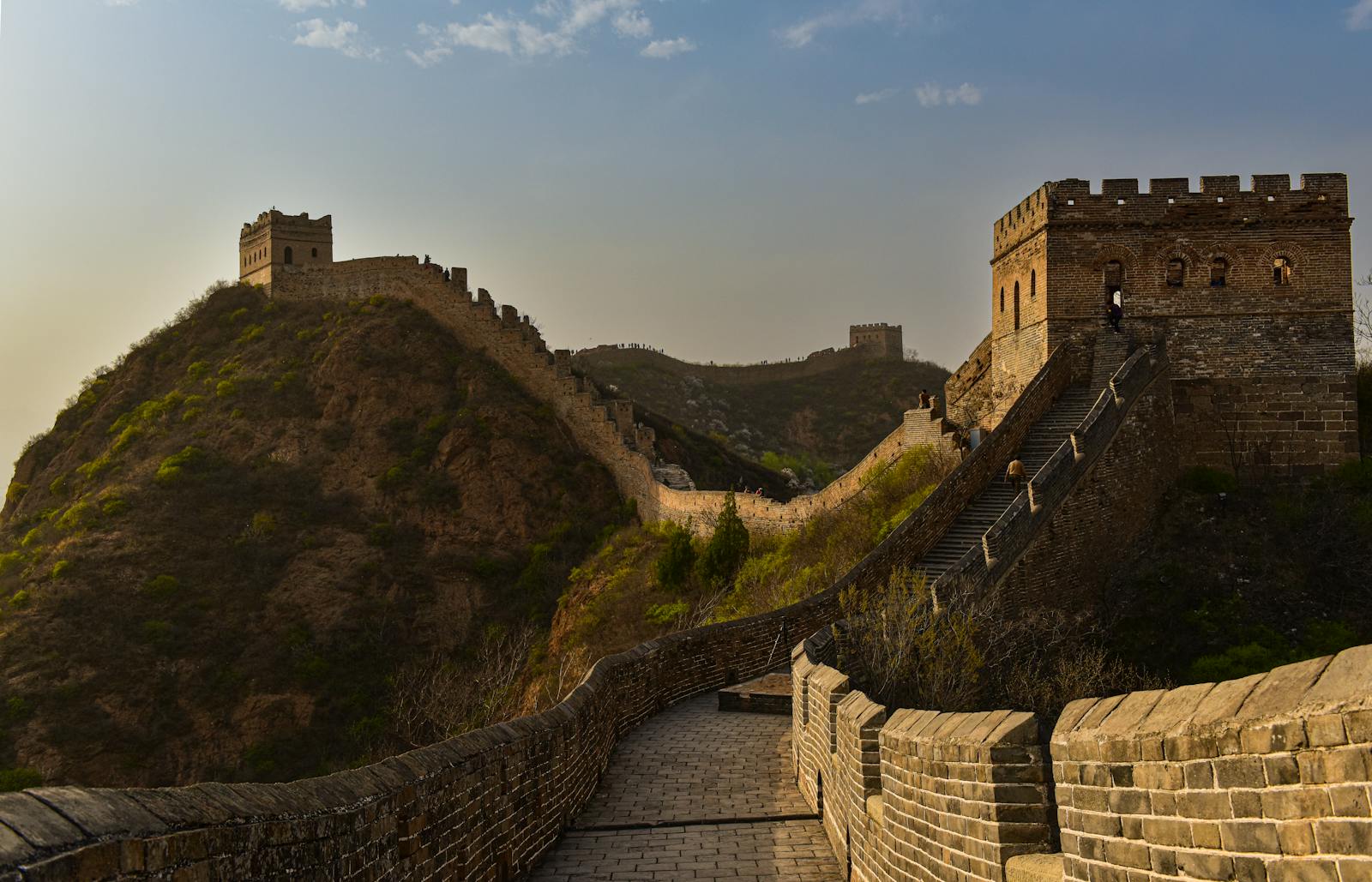
Gubeikou doesn’t get the attention it deserves. Most visitors choosing “authentic” Great Wall end up at Jiankou, the wildest section of all, and discover it’s more dangerous than they bargained for. Gubeikou solves that problem: genuinely unrestored Ming Dynasty wall, 600-year-old original masonry, sections completely reclaimed by nature — and it’s accessible to moderately fit hikers without the near-vertical exposure that makes Jiankou a serious risk for anyone without climbing experience. The 130 km trip from Beijing is identical to the run out to Jinshanling, and the experience is more raw. If you want wild wall without genuine peril, this is your section. For the full context, start with our complete visitor’s guide to the Great Wall.
This guide covers Gubeikou Great Wall — the hiking routes, what to expect from unrestored Wall, transport from Beijing, and the famous Gubeikou-to-Jinshanling connecting hike that combines Gubeikou’s authenticity with Jinshanling’s photogenic ridge sections.
Gubeikou Great Wall at a glance
- Distance from Beijing
- 130 km northeast (2 hours by car).
- Entry ticket
- ¥25 ($3.60).
- Wall length open
- ~10 km hiking section; full 40 km accessible to experienced hikers.
- Restoration
- Virtually none — original Ming Dynasty masonry.
- Daily visitors
- 100–500 — among the least-visited sections.
- Difficulty
- Moderate to hard (less extreme than Jiankou; harder than Mutianyu).
- Best for
- experienced hikers, photographers, repeat visitors wanting authenticity.
Gubeikou history — why this pass mattered
Gubeikou (“Ancient North Pass”) was one of the most strategically critical passes in the entire Ming-dynasty wall system. This wasn’t just another section of defensive wall — it was the main route armies used to invade Beijing from the north and northeast. That strategic importance explains both the quality of the original construction and the ferocity of the fighting it witnessed.
In 1550, Altan Khan led a major Mongol force through Gubeikou and reached the outskirts of Beijing itself before withdrawing. Further invasions followed in 1629 during the deteriorating late-Ming period. And in 1644, Manchu forces used the northeastern passes — including routes near Gubeikou — in their final conquest of the Ming dynasty and establishment of the Qing. The wall you’re walking has real blood in its history.
The construction itself happened in phases, and you can read those phases if you know what to look for. Earlier sections use stone and mud mortar — rougher, more irregular. Later Ming-dynasty sections use fired brick laid with lime mortar, more uniform and durable. Both styles survive at Gubeikou, sometimes within metres of each other. It’s a living textbook of Ming construction methods.
Why Gubeikou matters
- Authentic Ming Dynasty masonry: Original wall stones, watchtowers as built 600 years ago.
- Less commercial than Jinshanling: No cable car, no major tourist infrastructure. Walk the wall as locals would have.
- Connects to Jinshanling: The famous Gubeikou-to-Jinshanling hike (12 km) traverses two distinct Wall styles.
- Significantly safer than Jiankou: Wider walking paths, less exposure, fewer collapsed sections.
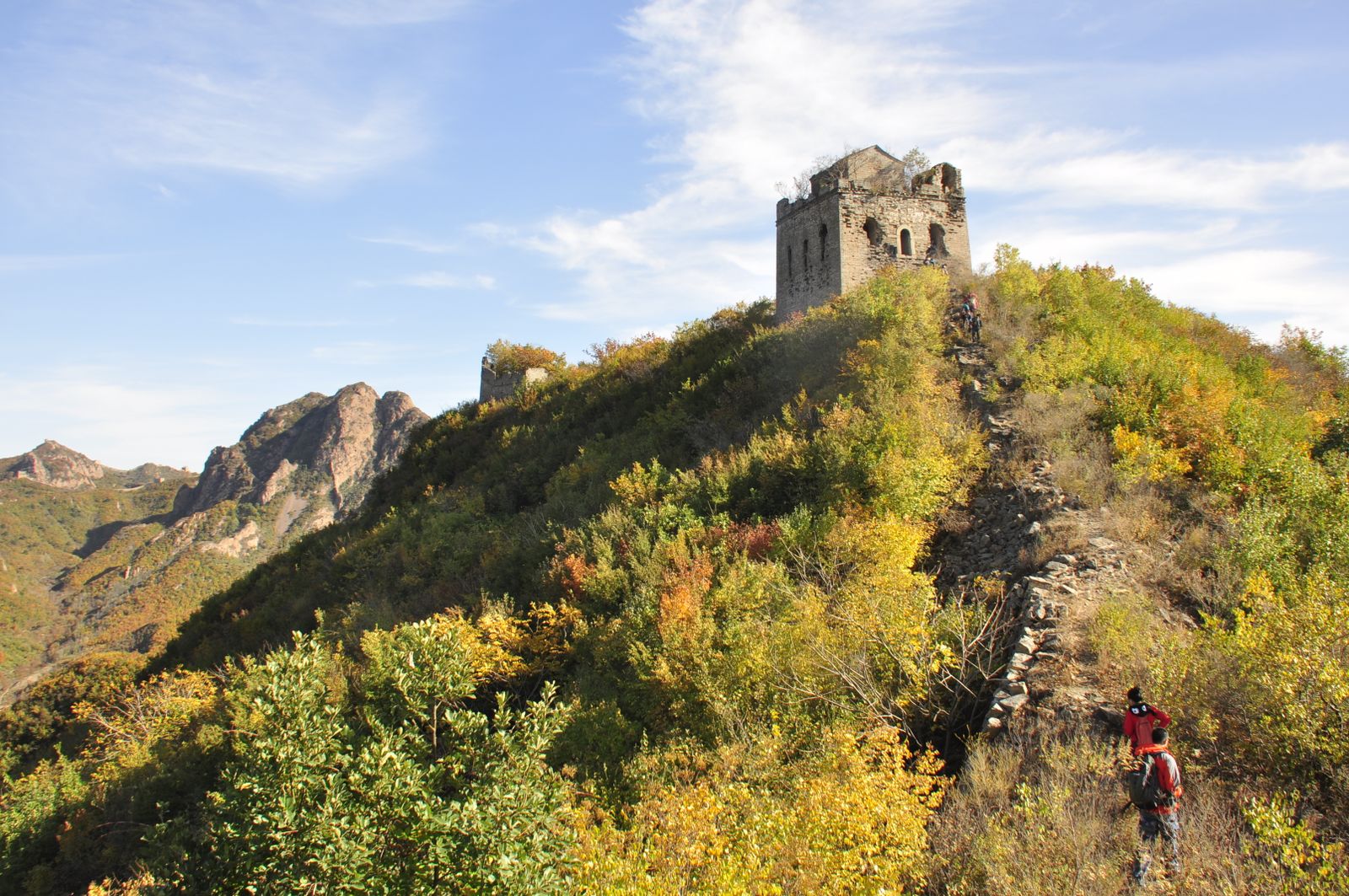
- Reclaimed by nature: Trees grow through battlements; vines drape over watchtowers. The most “ruined” looking Wall section.
What “unrestored” actually means at Gubeikou
This is worth unpacking because “unrestored” gets used loosely about several Wall sections. At Gubeikou, it means something specific.
Unlike Mutianyu’s smooth tourist wall and Badaling — where the wall has been substantially rebuilt to near-original condition with new brick, pointing, and smooth walkable surfaces — Gubeikou’s wall is essentially as it stood 400 years ago, minus the battlements that have crumbled away. Nobody has come in with new brick. Nobody has re-pointed the mortar. The state you see is the state time left it in.
Watchtowers range from nearly intact — some still have their vaulted roofs and interior spiral stairs you can climb — to rubble mounds with only the lower courses of brick surviving. The wall walk itself has sections 2–3 metres wide with clear, walkable paths, and sections where the top has completely eroded and you’re picking your way along the rubble base. This is not a continuous walkable surface. You need to think about your footing.
A guide with local knowledge makes a real difference here. Not because the trail is impossible to follow, but because knowing which watchtowers are safe to enter, which paths offer the best conditions, and where the section boundaries are takes local familiarity. For the Gubeikou-to-Jinshanling connecting hike in particular, a guide is close to essential.
Gubeikou tickets and pricing 2026
| Ticket | Price |
|---|---|
| Entry ticket (adult) | ¥25 ($3.60) |
| Entry ticket (child 1.2–1.4m) | ¥15 |
| Entry ticket (under 1.2m) | Free |
| Connecting ticket (Gubeikou + Jinshanling combo) | ¥85 |
Ticket office at the main village entrance, open daily. No advance booking required for Gubeikou itself — just turn up and pay. The combo ticket with Jinshanling (¥85) is purchased at the Jinshanling ticket office, not at Gubeikou.
Transport from Beijing to Gubeikou
Option 1: Group tour (¥600–¥900)
Most common for international visitors. Includes guide, transport, lunch. Often combined with Jinshanling. See our guide to travelling out to the wall from Beijing for current tour operators.
Option 2: Bus from Beijing (¥30–¥58)
- Take subway to Dongzhimen.
- Catch bus 980 to Miyun (¥30, 2 hours) — boarding and payment work the same as on the city’s ordinary bus routes.
- From Miyun, take taxi to Gubeikou Town (¥80–¥120).
- Total: ~3.5 hours each way.
Option 3: Private car (¥1,200–¥1,800/day)
For 2–4 travellers. Allows flexibility for combined Gubeikou-Jinshanling hikes and makes the 130 km journey manageable. This is also a worthwhile day trip from Beijing when combined with the connecting hike.
Best routes on Gubeikou
Gubeikou loop (recommended for first-time visit)
- Start at Gubeikou village base
- Climb Wall on the south side
- Hike east along the ridge
- Reach the famous “General Tower” landmark
- Return via the same route
- Total: 4–5 hours, 6–8 km, moderate fitness
Gubeikou-to-Jinshanling connecting hike (advanced)
The classic multi-section hike covers approximately 12 km in 6–7 hours — passing through three distinct Wall segments: Gubeikou → Panlongshan → Jinshanling. The hike begins on Gubeikou’s largely-unrestored wild wall, transitions to the Panlongshan ridge (also unrestored), and finishes on Jinshanling’s photogenic restored sections. For hiking details across all sections, see our guide to walking the wall route by route.
Important military detour: between Panlongshan and Jinshanling, a section of Wall borders an active military area and is permanently blocked. Hikers must bypass it by descending into the Spider Valley trail, crossing through the valley, and then reascending to rejoin the Wall at the Jinshanling east entrance. This adds roughly 2 km of off-Wall trail walking and is one reason guided hikes on this route are highly recommended — first-timers regularly miss the detour and end up backtracking.
You can also combine Gubeikou with Great Wall camping on the Panlongshan section for an overnight experience that very few visitors ever attempt.
The military area detour — don’t miss it
This deserves its own section because it catches people out more than anything else on this route. The section between Gubeikou and the Panlongshan ridge passes through the edge of an active military zone. There are signs and occasional patrols. The military area boundary is clearly marked with red signs in Chinese — respect them absolutely.
The Spider Valley detour bypasses this restricted stretch for the Gubeikou-to-Jinshanling connecting hike. The detour is signposted but easy to miss if you’re following the wall and not paying attention to the signage. First-timers regularly walk straight past the detour turn-off and end up stopped by soldiers or having to backtrack an hour. This alone is a compelling reason to hire a guide for the connecting hike — local guides know exactly where the detour starts and can walk you through without interruption.
But here’s the thing: once you’re on the Spider Valley trail itself, it’s a pleasant forested walk. The “detour” isn’t a penalty — it’s just different terrain. Treat it as part of the experience.

Where to stay near Gubeikou
Gubeikou village has farmhouses offering basic overnight accommodation at ¥150–300 per night. These are simple, clean rooms run by local farming families. Breakfast is typically included — congee, mantou, pickled vegetables, eggs. Nothing fancy, but it’s exactly the right preparation for a full day on the wall.
Staying in the village is genuinely recommended if you want to do the connecting hike to Jinshanling without a pre-dawn Beijing start. The 130 km drive plus 6–7 hours of hiking in a single day is feasible but exhausting. An overnight in the village means you start the connecting hike fresh at 8am.
Gubei Water Town (in the Simatai area, 10 km away) is the more comfortable option at ¥600–3,000 per night — a resort-style development near Simatai Great Wall. Nice hotel, completely different atmosphere. Good if you’re combining a Simatai visit with Gubeikou.
What to eat at Gubeikou
The village has basic restaurants run by local families. Meals run ¥30–60, there’s no English menu, and you point at what looks good. The ordering system is simple: beef noodles (牛肉面 niúròu miàn), rice with stir-fried vegetables, and the local specialty smoked mountain chicken (熏鸡 xūnjī) are usually available. The chicken is worth ordering.
There’s one small convenience shop for water and snacks. Buy extra here — you won’t find anything on the wall itself. Outside the village, there is nothing. This is not Mutianyu with its tourist cafes and gift shops. Pack accordingly.
Gubeikou photography
Less dramatic than Jinshanling but deeply atmospheric. The best shots at Gubeikou are the overgrown watchtowers: trees growing through the watchtower walls, vines draped over battlements, wildflowers covering collapsed sections in spring and summer. These images don’t exist anywhere else on the Wall near Beijing.
The main landscape composition is the wall descending steeply over a ridgeline with forested mountains rolling away to the horizon — no restoration scars, no tourist facilities, just 600-year-old masonry and nature slowly reclaiming it. Best light: morning from the south-facing slopes, late afternoon from the northern ridge. Autumn foliage in mid-October is spectacular and rivals anything at Jinshanling. And because Gubeikou gets a fraction of the visitors, you can shoot without crowds in frame.
Best time to visit Gubeikou
- April to June: spring greenery, manageable temperatures, wildflowers on collapsed sections.
- September to early November: autumn foliage, dry weather, best photography.
- Avoid: heavy rain (uneven masonry becomes genuinely treacherous when wet), July–August heat, winter ice on unrestored sections.
Best time of day: 8am start to allow buffer. Plan to be off the wall by 4pm for the loop; for the connecting hike to Jinshanling, you need to start by 8am to finish before dark.
Gubeikou vs Jiankou — making the choice
Many readers arrive at this guide having considered both sections. Here’s the honest comparison.
Jiankou has more famous landmarks — the Sky Stairs, Eagle Flies Facing Upward — and the most dramatic photography of any section near Beijing. But Jiankou has genuinely caused deaths. The section requires scrambling experience, comfort with exposure, and good conditions. In wet weather or winter, it becomes dangerous for experienced hikers, not just beginners. Our photography guide weighs that drama against the risk, section by section.
Gubeikou has equivalent authenticity, a far lower risk profile, better logistics (proper roads, established farmhouses, reliable transport), and the bonus of connecting to Jinshanling for a world-class multi-section day. For most “wild wall” seekers — people who want the unrestored atmosphere without the genuine risk — Gubeikou is the smarter choice. Choose Jiankou only if you’re an experienced scrambler specifically after those landmark features and willing to accept the risk profile.
Combining Gubeikou with other Wall sections
Gubeikou + Jinshanling (recommended)
The classic combination. Day 1 Gubeikou solo or guided hike; Day 2 Jinshanling. Or single-day connecting hike with a skilled guide — the most satisfying Great Wall day possible near Beijing.
Gubeikou + Gubei Water Town / Simatai
Feasible and logical. Gubei Water Town is 10 km from Gubeikou. Stay overnight at the town, hike Gubeikou and visit Simatai over 2 days.
What to bring to Gubeikou
- Hiking boots — uneven terrain, broken stones. Non-negotiable. Trainers will make this unpleasant.
- Hiking poles — useful on descents over rubble sections
- 2L+ water — no purchase points on the wall
- Trail snacks and lunch — restaurants in the village only
- Layered clothing — ridge exposed to wind
- First-aid kit
- Camera
- Cash (¥150 minimum)
Common mistakes at Gubeikou
Going without a guide on the connecting hike. The military zone detour is not obvious. People miss it, get stopped, and backtrack. Hire a guide for the Gubeikou-to-Jinshanling route specifically.
Not booking the village farmhouse in advance for weekends. There are only a handful of places to stay and they fill up Friday nights.
Expecting the wall to look like Mutianyu. Some sections of Gubeikou are rubble, not photogenic. You need to know where to go for the good viewpoints — another argument for a local guide.
Not carrying enough water. There are no vendors on the wall. Two litres minimum for the loop; three litres for the connecting hike.
Wearing trainers instead of proper hiking boots. The uneven masonry and rubble sections will destroy your ankles in flat shoes — check what to pack for the season you’re visiting in before you go if you’re unsure what else to bring.
Arriving too late in the day for the connecting hike. You need 6–7 hours of walking time. Start by 8am or don’t attempt it that day.
Gubeikou’s appeal is that it is wild and almost empty, which is also why it is the wrong choice for a first visit with small children — there is no cable car, the going is uneven, and the nearest facilities are a long way back. If you are travelling as a family and wondering which section to give your one Wall day to, our guide to the Great Wall with children in tow works through the options by age, from the restored walkways at Mutianyu to the lakeside stretch at Huanghuacheng. For walkers returning to Beijing it is the obvious Wall day, and our plan for a second visit is built around it.
Gubeikou Great Wall FAQ
Is Gubeikou safe?
Safer than Jiankou but less safe than Mutianyu/Badaling. Moderate exposure on some sections; uneven stones throughout. Suitable for fit hikers with proper footwear; not for casual tourists or those with vertigo.
How does Gubeikou compare to Jinshanling?
Gubeikou is less restored, less developed, and quieter. Jinshanling has dramatic ridges and is somewhat restored. Pair them via the connecting hike for the best of both.
Can I hike Gubeikou solo?
Possible for the loop with experience. Not recommended for the connecting hike — the military zone navigation alone makes a guide worth it.
Are there bathrooms?
At the entrance only. None on the wall itself.
Is Gubeikou photographable?
Yes — the unrestored watchtowers, vegetation-overgrown sections, and authentic masonry photograph beautifully. Less dramatic than Jinshanling but more atmospheric.
Can I do Gubeikou as a day trip from Beijing?
Yes, comfortably for the Gubeikou loop (4–5 hours on wall, 2 hours each way by car). The connecting hike to Jinshanling requires either an early start from Beijing or an overnight in the village.
How does Gubeikou connect to Jinshanling exactly?
The route goes Gubeikou → Panlongshan → Spider Valley detour → Jinshanling east entrance. Total 12 km, 6–7 hours. The Spider Valley detour bypasses the military zone between Panlongshan and Jinshanling. A guide handles the navigation.
Is Gubeikou good in winter?
Decent. The low visitor numbers mean even less company than usual, and unrestored wall under snow photographs beautifully. But ice on the unrestored masonry requires extra caution — some sections become genuinely slippery. Manageable for careful hikers in good boots.
Is there a ticket office?
Yes, at the main village entrance. Open daily. ¥25 per person. No advance booking needed. The combo ticket with Jinshanling (¥85) is available at the Jinshanling ticket office.
The bottom line on Gubeikou Great Wall
Gubeikou is the best balance of authentic unrestored Great Wall with manageable safety near Beijing. Less extreme than Jiankou; more authentic than Mutianyu; more accessible than it looks. The Gubeikou-to-Jinshanling connecting hike is one of the genuinely great multi-section Wall experiences — and because it requires effort to reach, it stays quiet. Plan a full day with guide; combine with Jinshanling for the best results. Stay overnight in the village if you want to do the connecting hike without a punishing pre-dawn Beijing start.
For other Great Wall sections, see Jinshanling, Jiankou, Mutianyu, and our Great Wall hiking guide. For transport from Beijing, see getting to the Great Wall. For Beijing trip planning, head to our complete Great Wall guide.