Beijing Food Guide
Where to Eat Peking Duck in Beijing: Best Restaurants Ranked
Find the best Peking duck in Beijing. Expert rankings of Quanjude, Dadong, Siji Minfu, and hidden gem roast duck restaurants.
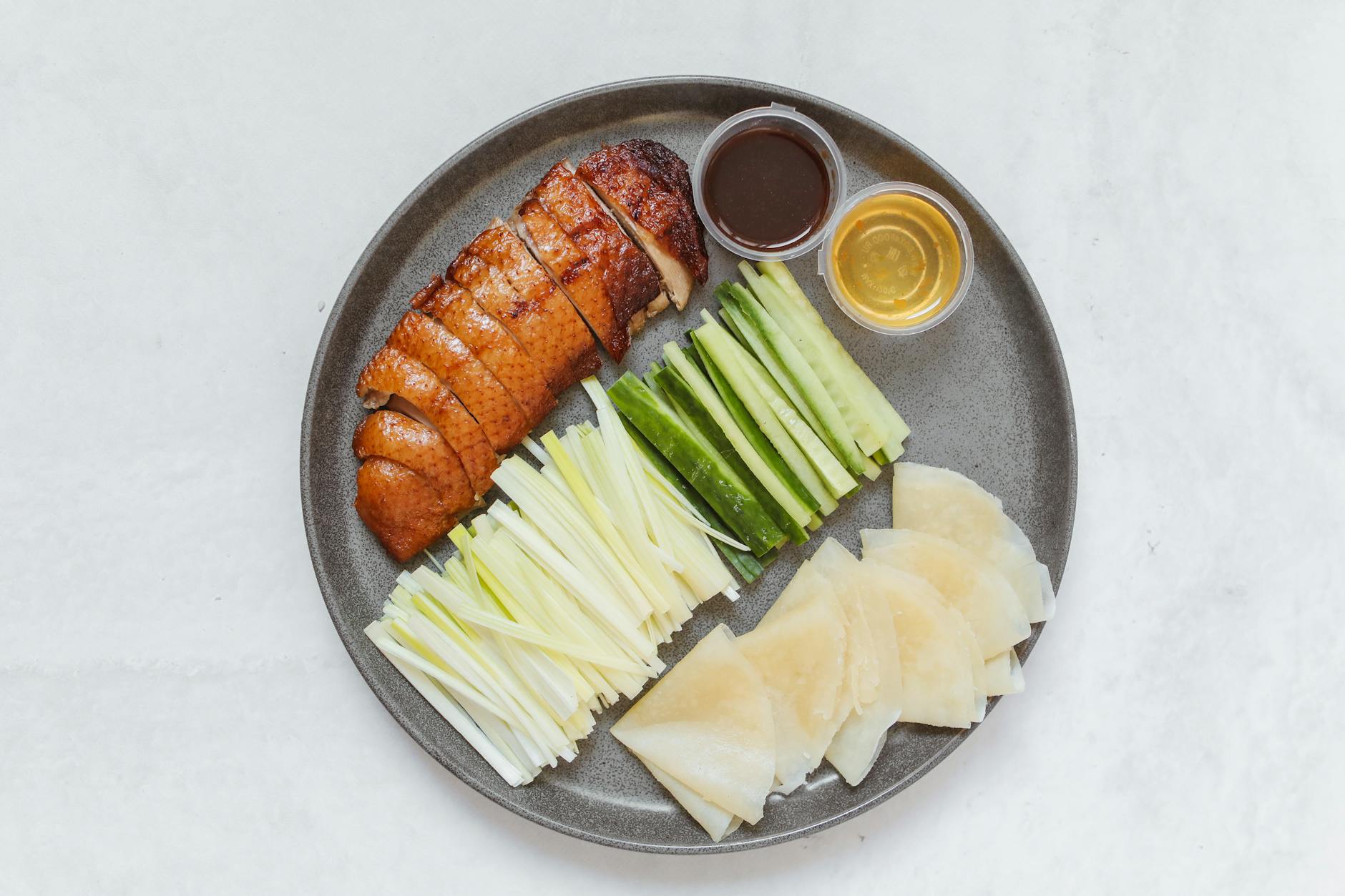
Peking duck is the dish Beijing is famous for, and eating it well is one of the great pleasures of any trip to the city. Done properly, it’s theatre as much as a meal: a whole duck roasted until the skin shatters like glass, carved tableside, and wrapped at the table with scallion, cucumber and sweet bean sauce in paper-thin pancakes. But the city has hundreds of duck restaurants, and they are very much not equal. Prices vary by restaurant, so check the current menu before you book. This guide ranks the ones worth your money — and tells you how to order, what to expect, and how to avoid the overpriced duds.
The gap between a great duck and a mediocre one is enormous. This guide covers the best restaurants across every budget, the two main roasting styles, how the meal actually works when it arrives, what to expect on the bill, and the questions first-timers always ask. By the end you’ll know exactly where to book and what to do when the duck arrives at your table.
Best Peking duck in Beijing at a glance
- Best for value
- Siji Minfu — superb quality, reasonable prices, near the Forbidden City. Expect a wait.
- Best fine dining
- Dadong — Michelin-recognised, the crispiest skin in the city, beautiful presentation.
- Best atmosphere
- Li Qun — a ramshackle hutong institution; charmingly rough around the edges.
- Best courtyard experience
- Duck de Chine (1949) — refined courtyard setting, great for a special night.
- Most historic
- Quanjude — founded 1864, world-famous, but increasingly outshone by rivals.
- Typical price
- varies by restaurant and by the size of the duck, so check the current menu when you book.
- Book ahead
- the good places fill up — reserve, especially for dinner and weekends.
What makes a great Peking duck
Before the rankings, it helps to know what you’re judging. A great Peking duck is all about the skin: it should be lacquered mahogany, shatteringly crisp, and rendered almost free of fat beneath. The meat should be moist and tender, never dry. The duck is traditionally air-dried, glazed with maltose syrup, and roasted — either hung in an open oven over fruitwood (the Quanjude style, which gives a smoky note) or in a closed oven (the Bianyifang style, gentler and more even). Tableside carving, each slice with a sliver of skin, is part of the ritual. The accompaniments matter too: thin, springy pancakes; julienned scallion and cucumber; and the sweet fermented tianmianjiang bean sauce. The best places also serve the crispiest skin separately, to be dipped in sugar — a revelation if you haven’t tried it. If the technique has you curious, a handful of Beijing cooking classes now teach a simplified version of the carving and pancake-rolling alongside their more everyday dishes.
The best Peking duck restaurants, ranked
1. Siji Minfu (四季民福) — best all-rounder
If you ask Beijing residents and clued-up travellers where to take a first-timer, the answer is almost always Siji Minfu. It nails the thing that matters most: consistently excellent duck with crackling skin and juicy meat. The branch near the Forbidden City (on Nanchizi Dajie) even has windows with a view of the palace’s moat and walls, making it a brilliant lunch after a morning inside the palace walls. The catch is its popularity, so put your name down early or aim for an off-peak time. There are several branches around the city if the main one is mobbed.
2. Dadong (大董) — best for a special occasion
Dadong reinvented Peking duck for the modern fine-dining era. Its signature “super-lean” duck has the crispiest, least greasy skin in the city, presented with artful precision alongside inventive modern Chinese dishes. It’s Michelin-recognised and polished, and the current menu will tell you what the duck costs. If you want the most refined version of the dish and a memorable meal, this is it. The spin-off Taste of Dadong serves a similar duck, with its own menu and prices to check before you book. Multiple branches across Beijing; book ahead for dinner.
3. Li Qun (利群) — best old-Beijing atmosphere
Tucked deep in a crumbling hutong south of Tiananmen, Li Qun is the antithesis of polished. The courtyard is smoky, cramped and gloriously atmospheric, with ducks roasting over fruitwood in a brick oven you pass on the way in. The duck is excellent and the experience unforgettable — this is old Beijing, warts and all. Service is brusque and the surroundings are rough, so come for character rather than comfort. It’s the sort of place that pairs perfectly with a day spent eating through the hutongs, and reservations are essential because the courtyard is tiny.
4. Duck de Chine / 1949 (全鸭季) — best courtyard dining
Duck de Chine is a courtyard restaurant at 98 Jinbao Street in Dongcheng, and hard to beat for a romantic or celebratory dinner. It leans Western-friendly and upscale, with a good wine and Champagne list. Ideal if you want the duck experience dialled up for a special evening.
5. Quanjude (全聚德) — the historic name
Quanjude, founded in 1864, is a renowned Peking duck chain that adopted the open-oven method developed in the Qing imperial kitchens. It’s worth knowing about for its history — but be honest with yourself about why you’re going: the ceremony, not a hunt for the best duck. If you want to eat at a piece of culinary history, the flagship Qianmen branch, on the edge of the old Dashilar shopping quarter, delivers the ceremony. If you simply want the best duck, the names above will serve you better.
How to eat Peking duck: the ritual
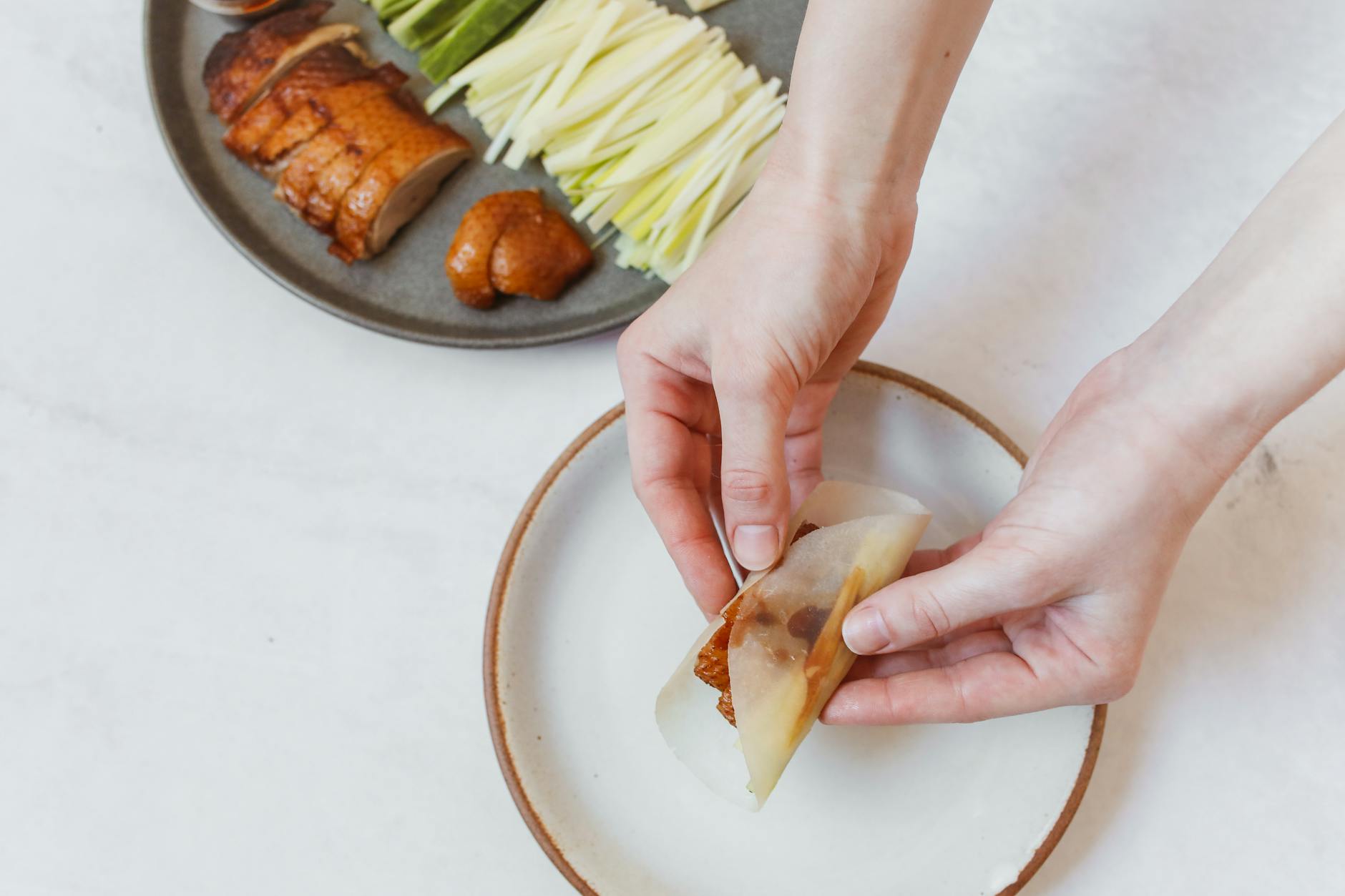
When the duck arrives, a chef carves it at your table into thin slices, each ideally carrying a piece of that prized skin. Here’s how to assemble the perfect bite. Take a pancake, lay in a couple of slices of duck, add scallion and cucumber, then a dab of the sweet bean sauce — and roll it up like a little burrito, folding the bottom so it doesn’t drip. That’s the classic. Many of the best restaurants also bring the crispiest pieces of pure skin on a separate plate with a dish of white sugar: dip the skin in the sugar and eat it on its own. It sounds odd; it’s sublime, the fat melting against the sugar crystals.
A whole duck yields more than just pancake fillings. Most places offer to use the carcass in one of two ways: simmered into a milky, comforting duck soup, or the extra meat stir-fried. Order the soup — it’s usually free or cheap and rounds out the meal beautifully. Don’t over-order on sides; a duck plus a vegetable dish and the soup is plenty for two people.
What it costs
| Restaurant | Whole duck price | Vibe |
|---|---|---|
| Siji Minfu | Check current menu | Best all-rounder, busy |
| Taste of Dadong | Check current menu | Modern, accessible |
| Li Qun | Check current menu | Rustic hutong |
| Duck de Chine | Check current menu | Upscale courtyard |
| Dadong | Check current menu | Fine dining |
| Quanjude | Check current menu | Historic, touristy |
Pancakes, sauce, sides and tea add to the bill, so check the menu when you book. Compared with prices back home, even the fine-dining options are a relative bargain — this is one Beijing splurge that’s well worth it. For how it fits a daily food budget, see our Beijing travel budget guide.
Booking and practical tips
- Reserve ahead for dinner and weekends — the good places are genuinely busy. Many take bookings by phone or through a hotel concierge.
- Go at lunch for shorter waits and the same duck, often at the same price.
- Order the duck when you sit down — a proper duck takes time to carve and sometimes to finish roasting.
- Ask for skin with sugar if it’s not offered; it’s a highlight.
- Don’t over-order sides; the duck is the star and portions are generous.
- A half duck is available at many places if you’re dining solo or want to save room.
- Pair it with a hutong wander or a visit to a nearby sight to make an afternoon of it.
A little history
Roast duck has been eaten in China for centuries, but the dish we now call Peking duck took its modern form in the imperial kitchens of the Ming and Qing dynasties, refined for the court right here in Beijing. The two great schools diverged in the city’s restaurants: Bianyifang, dating to the 15th century, perfected the closed-oven method, roasting the duck with the heat of the oven walls rather than an open flame; Quanjude popularised the open, hung-oven method over fruitwood in 1864, giving a smokier skin. Both styles survive today, and tasting the difference is part of the fun. The dish’s prestige is such that it has long been served to visiting heads of state — a piece of edible diplomacy. Understanding that you’re eating a dish perfected for emperors adds something to the experience. For the wider scene, see our main guide to eating in Beijing.
More duck houses worth knowing
Beyond the headline five, a few more names are worth having in your back pocket. Bianyifang traces its origins to 1416 and is known for closed-oven roast duck; the duck is gentler and less smoky than the open-oven style, and it’s a fascinating counterpoint if you’ve already tried Quanjude’s version. Jing Yaa Tang, in the Opposite House hotel in Sanlitun, serves a beautifully executed duck in a stylish designer setting, popular with a younger, design-conscious crowd. Made in China, in the Grand Hyatt just off Wangfujing’s shopping street, plates one of the most consistent high-end ducks in the city with an open kitchen and a smart but unstuffy room. And for travellers staying in the east of the city, Xiao Diao Li Tang and various Siji Minfu branches spread the love beyond the centre. The point is that you’re never far from a good duck in Beijing — the trick is simply avoiding the autopilot tourist option in favour of one of these.
When to eat it, and what to drink
Peking duck is a celebratory, sit-down meal rather than a quick bite, so build it into your itinerary as a proper lunch or dinner rather than squeezing it between sights. Lunch is the insider move: the duck is identical, the price is often the same or lower, and the waits are far shorter than the dinner rush. If you’re visiting central sights, the Forbidden City–area branch of Siji Minfu makes an ideal midday stop; in the east, the Sanlitun and Chaoyang options pair well with an afternoon of shopping or galleries.
To drink, the traditional accompaniment is simply tea, which cuts the richness nicely, or a cold local beer such as Yanjing or Tsingtao. The upscale rooms — Dadong, Duck de Chine, Made in China — have proper wine lists, and a light, fruit-forward red or an off-dry Riesling stands up well to the duck and the sweet bean sauce. If you want to go local and modern, several of Beijing’s craft breweries make amber ales and stouts that pair surprisingly well with the crispy skin. However you drink it, don’t rush — the meal unfolds in courses, from skin to pancakes to soup, and it’s meant to be lingered over.
A note on dietary needs
Peking duck is, obviously, not for vegetarians — but the better duck houses are full-service Chinese restaurants with extensive menus, so a mixed group can eat well together, with plenty of vegetable, tofu and noodle dishes alongside the duck. If anyone in your party is vegetarian or vegan, it’s worth glancing at our dedicated vegetarian and vegan Beijing guide before you book, and choosing a restaurant with a broad menu. The pancakes themselves are just flour and water, and the scallion, cucumber and sauce are plant-based, so a vegetarian can happily build pancakes around extra vegetables while everyone else tackles the duck.
One last piece of advice: treat your first Peking duck as the benchmark, not the finish line. Half the joy of a longer stay is comparing styles — the smoky open-oven version against the mellow closed-oven one, the fine-dining presentation against the smoky hutong courtyard. Beijing is the one place on earth where you can do that properly, so if duck is a highlight of your trip, consider eating it twice at two very different restaurants, or setting aside a separate evening for a hot pot dinner to see the other half of the city’s classic night-out cooking. You’ll taste the centuries of refinement that went into the city’s signature dish. On a short trip there is only one duck dinner to get right, and our two-day route puts it on the first evening.
Peking duck FAQ
What’s the best Peking duck restaurant in Beijing?
For most visitors, Siji Minfu offers the best combination of quality, price and accessibility. For a fine-dining experience, Dadong is the top pick; for atmosphere, Li Qun. The historic Quanjude is famous but increasingly outclassed.
How much does Peking duck cost?
Prices and portion sizes vary by restaurant, so check the current menu when you book, including what comes with the duck.
Do I need to book?
For the popular and upscale restaurants, yes — reserve for dinner and weekends. Siji Minfu doesn’t take reservations at all branches, so arrive early or expect a wait. Lunch is generally quieter.
How many people does one duck serve?
Comfortably two, or three with extra sides. Solo diners and couples watching their appetite can order a half duck at many restaurants.
What do I do with the crispy skin and sugar?
Dip a piece of the pure crispy skin into the white sugar and eat it on its own — the fat and sugar together are a classic Beijing treat. The rest of the duck goes into pancakes with scallion, cucumber and sweet bean sauce.
Is Quanjude worth it?
Only if you specifically want the historic experience. Many diners find it overpriced and touristy now. For better duck at a better price, choose Siji Minfu or Dadong.
The bottom line on Peking duck
Peking duck is a Beijing must, but where you eat it makes all the difference. Skip the autopilot tourist trap and book Siji Minfu for unbeatable value, Dadong for a polished splurge, or Li Qun for smoky hutong character. Order the duck as soon as you sit, ask for the crispy skin with sugar, wrap your pancakes generously, and finish with the duck-bone soup. Do that, and you’ll understand why this dish — perfected for emperors and still going strong — defines Beijing dining.
Make a day of it with a Beijing hutong food tour, explore late-night eats on Ghost Street, or browse the whole scene in our Beijing food guide. New to the city? Start with the guide that covers the whole trip.