The Great Wall Near Beijing
The Great Wall of China Near Beijing: Complete Visitor’s Guide
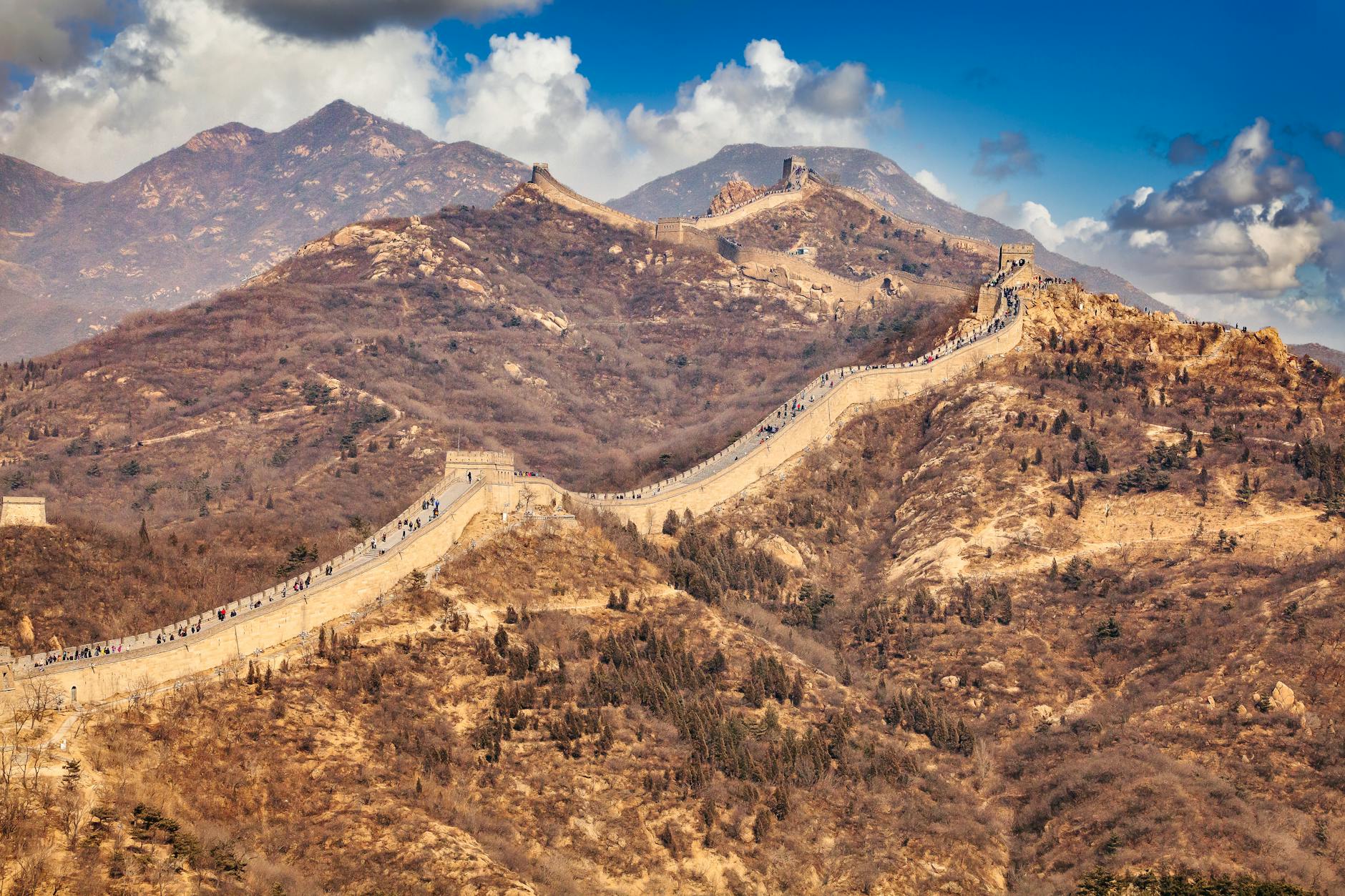
Most people arrive at the Great Wall with no plan. They book the first tour they find, end up at Badaling at 11am on a Saturday, and spend three hours shoulder-to-shoulder with ten thousand other people staring at a restored wall section that frankly looks a bit too neat. Then they go home and say the Great Wall was “impressive but crowded.” It doesn’t have to go that way. The sections near Beijing range from polished and packed to genuinely wild and empty — knowing which one to pick changes everything.
This guide is for the visitor who wants to do this properly. We cover all six major sections accessible from Beijing — including the ones that most guides gloss over — with honest assessments of crowds, terrain, transport, and who each section actually suits. We also tell you which section to skip if your time is limited, when not to go, and how to see this thing the way it deserves to be seen.
Looking at a bigger Beijing trip? Our day trips from Beijing guide puts the wall in context alongside other excursions, and the Beijing historical attractions guide covers what to do before or after your wall day.
Understanding the Great Wall Near Beijing
The Great Wall is not a single continuous structure. It’s a vast network of walls, watchtowers, beacon towers, and fortifications stretching over 20,000 kilometers across northern China — most of it built and rebuilt across different dynasties over roughly 2,000 years. The sections near Beijing were primarily constructed during the Ming Dynasty (1368–1644) and represent some of the best-preserved stretches anywhere. Within a two-hour drive of central Beijing, you can access at least six distinct sections, each offering a radically different experience.
The key variable isn’t just distance — it’s how much of the original wall has been restored, and how many other visitors share it with you. The most-restored sections (Badaling, Mutianyu) have smooth walkways and safety railings. The less-restored sections (Jinshanling, Huanghuacheng) have crumbling battlements and uneven footing. The wild sections (Gubeikou, Jiankou) have almost nothing — just ancient stone slowly being reclaimed by vegetation. All of them are extraordinary. None of them are “the Great Wall experience” — they’re six entirely different ones.
Your choice should depend on fitness level, available time, tolerance for crowds, and whether you care more about convenience or authenticity. Below, we break down each section honestly.
Badaling Great Wall: Easiest Access, Biggest Crowds
Badaling is the most visited section of the Great Wall on Earth. Over 10 million people come here annually, and the section’s published daily capacity is 65,000 visitors, a limit that peak days such as Golden Week put under real pressure. Let’s be direct about that: if you visit on a Saturday in October or during any national holiday, you will be in a crowd. The wall will look like a moving queue rather than an ancient fortification.
That said, Badaling is genuinely impressive and not a bad choice if you know what you’re getting into. Located 70 kilometers northwest of central Beijing, it’s the closest major section to the city and benefits from a dedicated high-speed train that gets you there in 20–30 minutes from Beijing North or Qinghe stations. The wall has been extensively restored with smooth pathways, safety railings, and wheelchair-accessible sections — the best facilities of any section. For visitors with mobility issues, elderly family members, or very young children, Badaling is the only sensible option.
Tickets cost ¥45 in peak season (April–October) and ¥35 in low season (November–March). The cable car is ¥140 round trip. Hours run 6:30am–7pm in peak season, 7am–6pm in low season. Pre-book online — during holidays, Badaling sells out and turns people away at the gate.
Best for: First-timers with limited time and transport flexibility, families with very young children or elderly members, visitors with mobility concerns.
Honest drawback: If you go on a weekend or during any holiday, prepare for queues everywhere — cable car, entrance gate, watchtower stairs, all of it. A weekday morning visit, arriving before 8am, transforms the experience.
For the full breakdown, see our Badaling Great Wall guide.
Mutianyu Great Wall: The Best All-Round Section
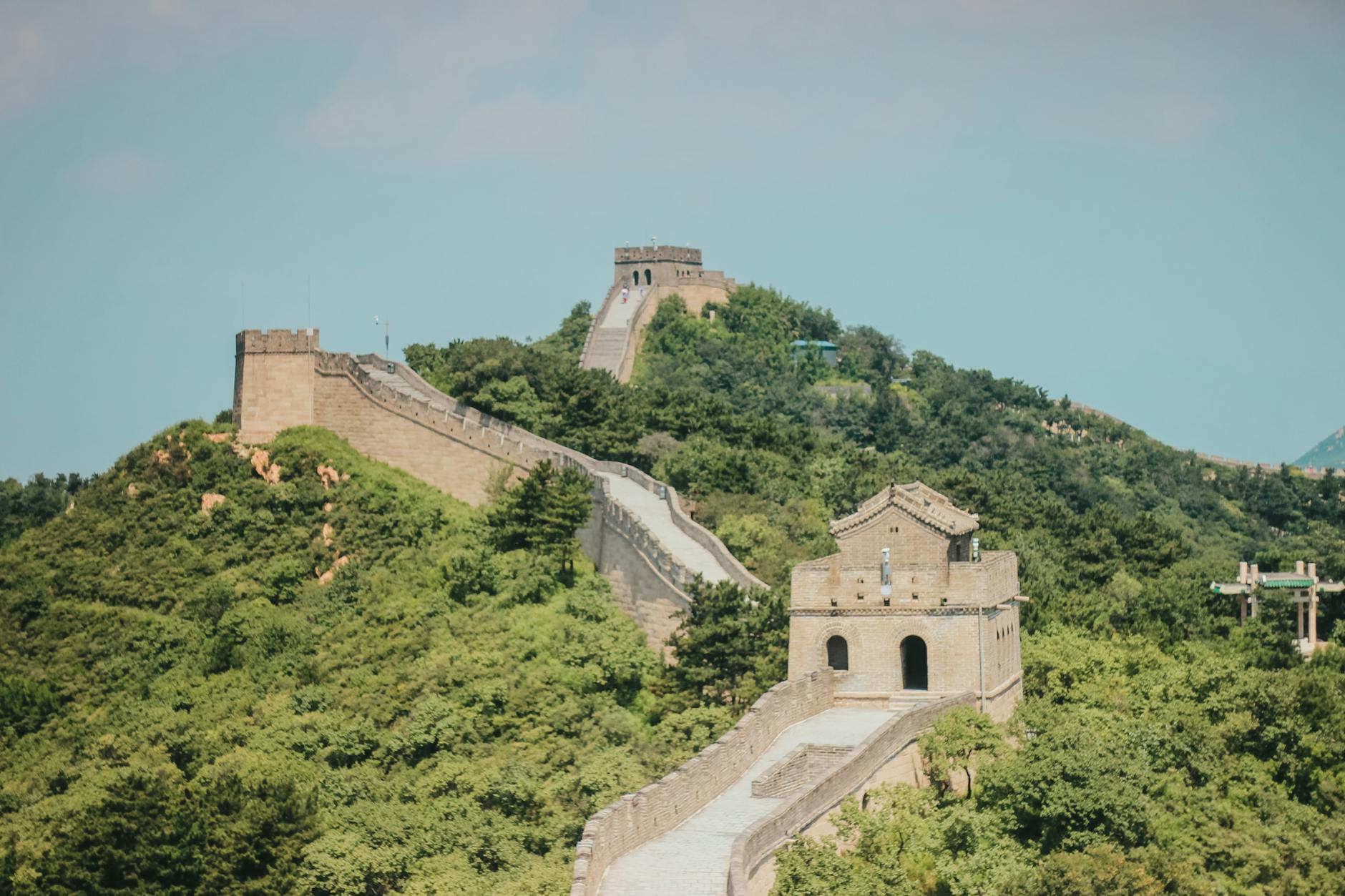
If Badaling is the Great Wall for the masses, Mutianyu is the Great Wall for people who did five minutes of research. Located 73 kilometers northeast of Beijing (about 75–90 minutes by car), Mutianyu features a beautifully restored 2.25-kilometer stretch with 23 watchtowers, a cable car, a chairlift, and — the section’s signature attraction — a metal toboggan slide that drops you from Watchtower 6 back to the parking lot at a genuinely alarming speed.
Daily visitor numbers run 8,000–12,000 in peak season. That’s a fraction of Badaling’s numbers, and it shows. You can actually stop and take photos without someone walking into the frame. The surrounding mountains are thickly forested — the tree coverage rate is around 96% — which turns spectacular in mid-October when the deciduous trees go red and gold. For pure photographic impact, Mutianyu in autumn is hard to beat.
The toboggan deserves its own mention. It runs 1,680 meters down a metal track, you control the speed with a hand brake, and the faster riders hit 30km/h on the straightaways. Children under 10 need an adult. It’s closed on rain days, and after rain there’s a 30–60 minute wait while staff dries the track. Plan for that contingency.
Entrance is ¥45, cable car ¥100 one-way / ¥140 return, chairlift ¥100 one-way, toboggan ¥100 single ride. A typical visit with cable car return plus toboggan runs about ¥185 all-in. Peak season hours are 7:30am–6pm, low season 8am–5:30pm.
Best for: Most international visitors, photographers, families with children over 6, anyone who wants the authentic Great Wall experience without dealing with Badaling-level crowds.
Recommended route: Cable car up to Watchtower 14, walk east toward Watchtower 20 (or 23 if fit), return to 14, cable car down. Or: cable car up to 14, walk west and then down to 6, toboggan.
Full details in our Mutianyu Great Wall guide — transport options, precise ticket prices, best photo spots, and the toboggan logistics.
Jinshanling Great Wall: Best for Hiking and Photography
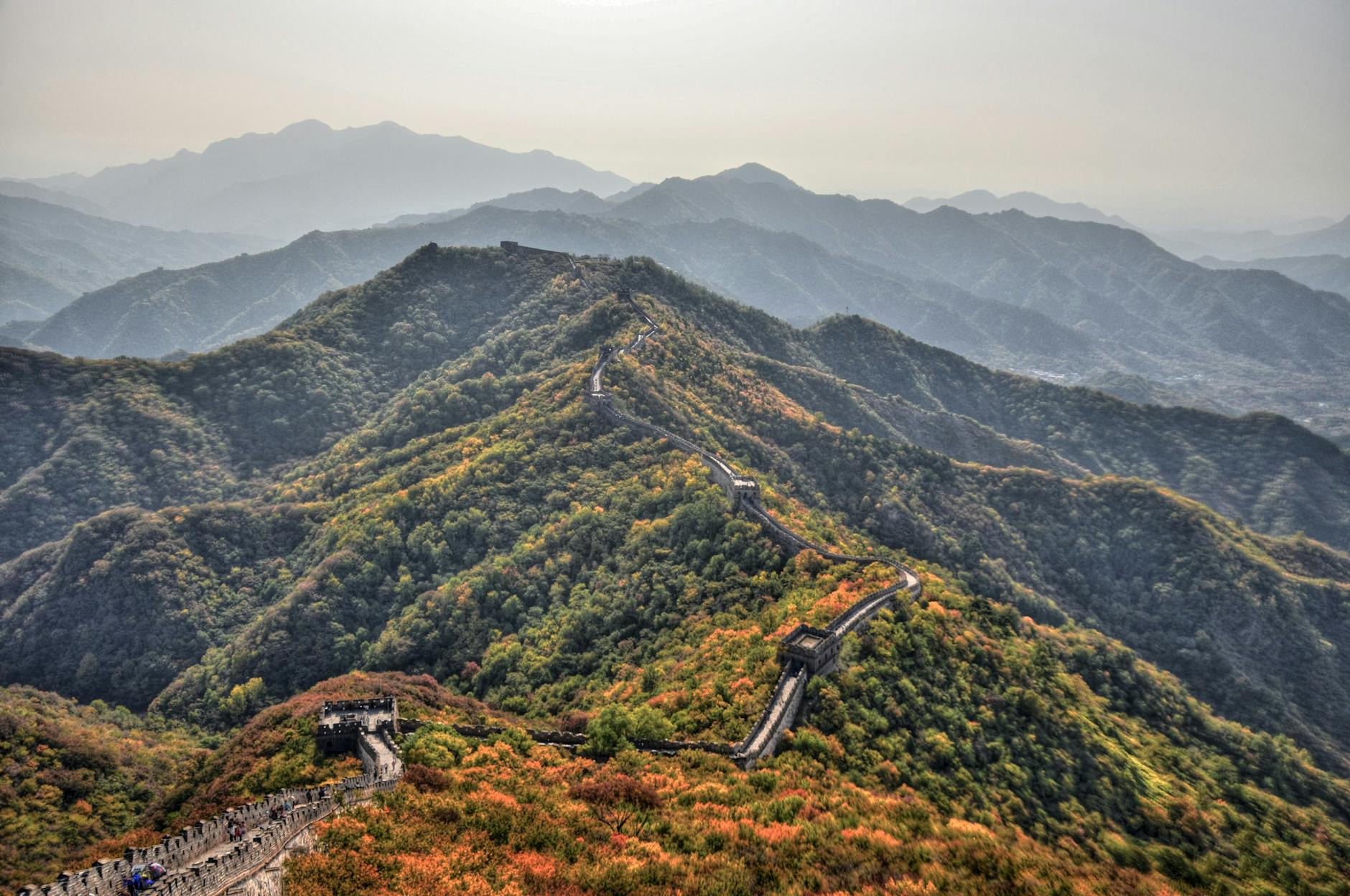
Jinshanling is where the Great Wall gets serious. About 130 kilometers northeast of Beijing in Hebei Province — roughly 2.5 hours by car — Jinshanling features a 10.5-kilometer stretch of wall that mixes carefully maintained sections near the entrance with progressively more atmospheric crumbling sections further east. The combination of intact battlements and collapsing towers in a single frame is exactly what photographers come for, and the visitor numbers are low enough that you can actually set up a tripod without negotiating around tour groups.
The wall here was built between 1368 and 1570 under the direction of General Qi Jiguang, who added distinctive architectural features — barrier walls, horse-blocking walls, and inscribed brickwork — found nowhere else on the wall. Over 15 watchtowers line the route, and the topography means constant elevation changes and constantly shifting perspectives. Sunrise here on a clear autumn morning, with mist in the valleys below and the wall curving off in both directions, is one of the great landscape experiences in China.
Getting there requires effort. Direct tourist buses run from Wangjing West subway station on peak weekends only. On other days, you’re looking at a private car or an organized tour. Many visitors combine Jinshanling with a night at nearby Gubei Water Town, a reconstructed Ming-era village with actual good restaurants and proper hotels — a rare combination on the wall circuit.
Entrance costs ¥65 in peak season, ¥55 in low season. Cable car is ¥50 one-way or ¥80 return. Peak hours 6am–5:30pm. The most popular route is approximately 6 kilometers and takes 3 hours at a moderate pace.
Best for: Fit hikers, photographers (especially for sunrise/sunset shoots), anyone who wants to spend real time on the wall rather than just passing through it.
Not recommended for: Families with small children, anyone with mobility limitations — the terrain is steep and uneven throughout.
See the Jinshanling Great Wall guide for the precise route, transport logistics, and why this section is worth the extra distance.
Simatai Great Wall: Night Visits and Dramatic Terrain
Simatai is the only section near Beijing where you can walk the wall after dark. Located 120 kilometers northeast of Beijing next to Gubei Water Town, it offers a daytime hike with steep, partly unrestored terrain and a separate nighttime illuminated walk that’s genuinely unlike anything else on the wall circuit. The western section was closed years ago due to extreme terrain — the remaining eastern section is still steep enough to get your heart rate up.
The night tour program illuminates sections of the wall against the dark mountain backdrop while Gubei Water Town’s canal streets glow with lanterns below. It’s theatrical, and deliberately so, but also genuinely atmospheric if you’re in the mood for it. Couples tend to love Simatai. Serious hikers who came for the wall itself tend to find the commercial packaging a bit much.
Tickets: ¥40 daytime; ¥120–160 for the night tour (seasonal pricing). Gubei Water Town entrance is ¥140 additional. Combined packages exist. Daily visitors are capped at 3,000 — advance reservation is not optional, it’s required.
Best for: Couples, night photography, and anyone who wants to combine wall hiking with a resort-town overnight. The accommodation options at Gubei Water Town are genuinely good and it makes for a comfortable two-day Beijing escape.
Full planning details in our Simatai Great Wall guide.
Wild Sections: Gubeikou, Jiankou and Huanghuacheng
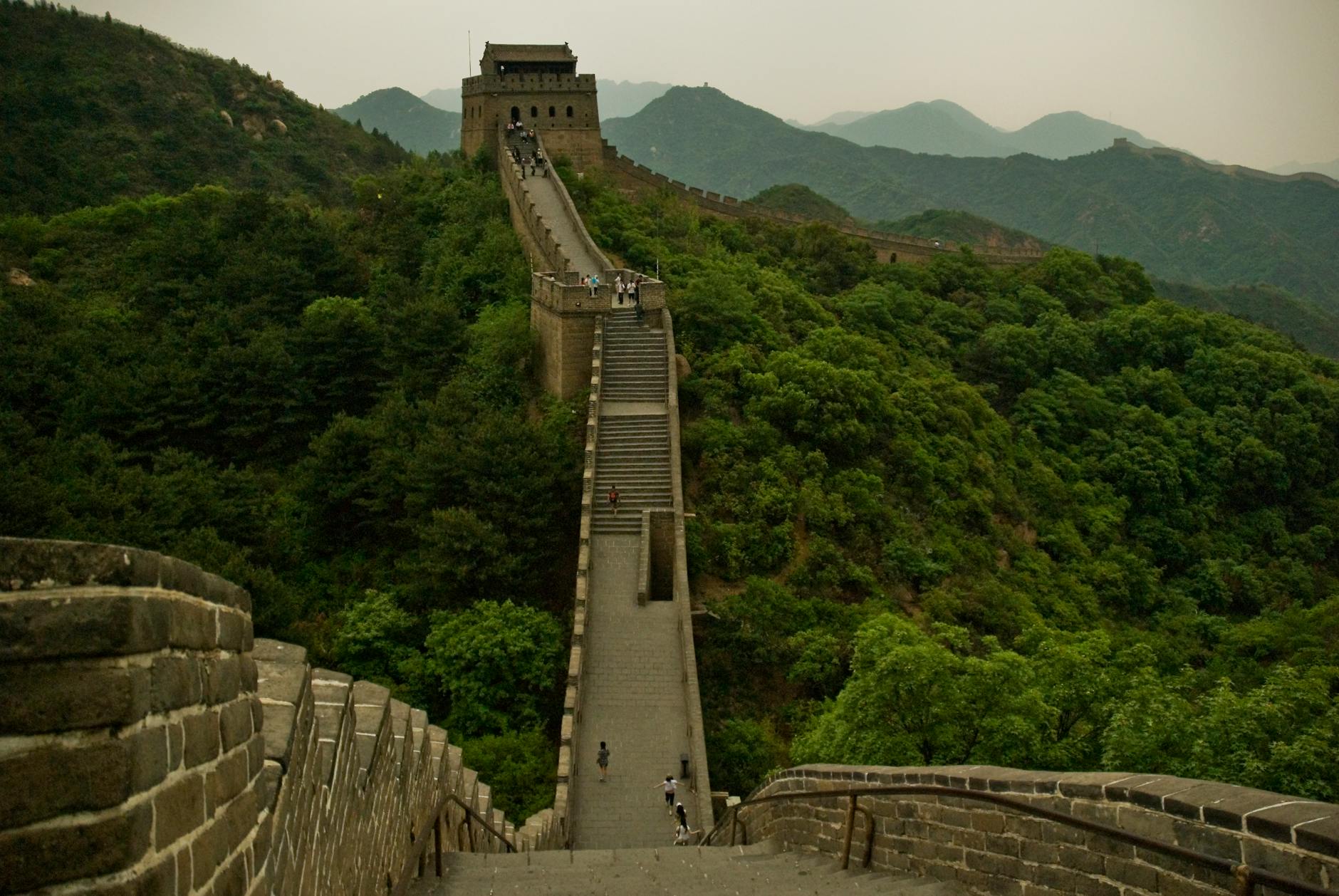
This is where the wall gets genuinely wild. No safety railings. No cable cars. No souvenir shops. Just crumbling stone and silence — and, if you time it right, the peculiar sensation of having an ancient wonder entirely to yourself for hours at a stretch.
Gubeikou (130 km from Beijing) was one of the most strategically important passes in the entire Ming defense system, and it looks the part. The wall here is largely unrestored, with watchtowers overgrown and battlements crumbling back into the hillside. Hiking Gubeikou is demanding — paths are uneven, sometimes unmarked, and good footwear is non-negotiable. A local guide is strongly recommended for anyone unfamiliar with the terrain. Gubeikou connects toward Jinshanling in one direction, though the connecting section is officially closed to hikers.
See the Gubeikou Great Wall guide for the route details and how to get there independently.
Jiankou is the wild wall section that shows up in every Great Wall photography book — the extreme ridge-line sections, crumbling towers, and knife-edge paths photographed at dawn. It’s genuinely dangerous in places. Jiankou is not a casual hike; experienced walkers with proper gear only. The views are extraordinary. The risks are real.
Full details in our Jiankou Great Wall guide, including the specific sections to avoid and how to approach this safely.
Huanghuacheng (65 km from Beijing) is nicknamed the “Lakeside Great Wall” because a 1970s reservoir was built at the base of the wall, creating the strange and beautiful sight of ancient fortifications disappearing into turquoise water. It’s the closest wild-wall section to Beijing and the most accessible of the three, with moderate hiking and some optional scrambling on unrestored sections. Particularly beautiful in early summer when the yellow wildflowers that give it its name bloom along the wall.
See the Huanghuacheng Great Wall guide for logistics, the lake route, and what to expect on a half-day visit.
Safety note for all wild sections: No safety infrastructure means genuine risk. Don’t hike wild wall sections alone. Tell someone your planned route and return time. Bring at minimum 2 liters of water, food, a fully charged phone, and a basic first aid kit. Sturdy ankle-supporting boots are essential, not optional.
Which Section Should You Visit?
Here’s the honest breakdown:
Half a day, first visit, don’t want to overthink it? Badaling. High-speed train, done in half a day. Accept the crowds as part of the experience and arrive before 8am.
Full day, want the best overall experience? Mutianyu. Better setting, manageable crowds, toboggan included, worth the extra 45 minutes of travel.
Serious hiker or photographer? Jinshanling. No question. Make the trip. Stay overnight at Gubei Water Town if you can.
Night experience or romantic trip? Simatai — the only nighttime wall option. Book well ahead, numbers are capped.
Adventure, solitude, genuine wildness? Jiankou or Gubeikou. For fit, experienced hikers only.
Unusual scenery, closest wild section? Huanghuacheng — the lake wall, only 65km from Beijing, accessible on a half-day trip.
Travelling with elderly family or children under 5? Badaling. It’s the only section with proper wheelchair access and stroller-friendly paths. For older children the calculation changes completely — taking children to the Wall covers which sections suit which ages, and the height rules on the cable cars.
When NOT to go at all: Chinese National Day Golden Week (October 1–7), Spring Festival/Chinese New Year (January/February), and the May Day holiday (May 1–5). All sections get hammered during these periods. Badaling in particular becomes physically uncomfortable. If you must visit during a holiday, Jinshanling handles the extra visitors better than any other section. There is more on the timing in our guide to dodging the crowds, including the hour each section starts to empty.
Section-by-Section Guides
Each section has its own full guide with precise transport directions, current ticket prices, the best walking routes, and photography tips:
- Mutianyu Great Wall guide — the best all-round section: cable car, toboggan, 23 watchtowers, manageable crowds
- Badaling Great Wall guide — most accessible, most visited; high-speed train from Beijing in 30 minutes
- Jinshanling Great Wall guide — premier hiking and photography section; 10.5km of dramatic mixed terrain
- Simatai Great Wall guide — the only section with a nighttime programme; adjacent to Gubei Water Town
- Jiankou Great Wall guide — wild, steep, unrestored; for experienced hikers only
- Huanghuacheng Great Wall guide — the “lakeside wall”; closest wild section to Beijing
- Gubeikou Great Wall guide — strategically significant and largely unrestored; connects to Jinshanling area
- Hiking the Great Wall — multi-section hiking routes, what to bring, difficulty ratings
- Great Wall camping guide — overnight camping on the wall; what’s legal, what’s practical, what to expect
Best Time to Visit the Great Wall from Beijing
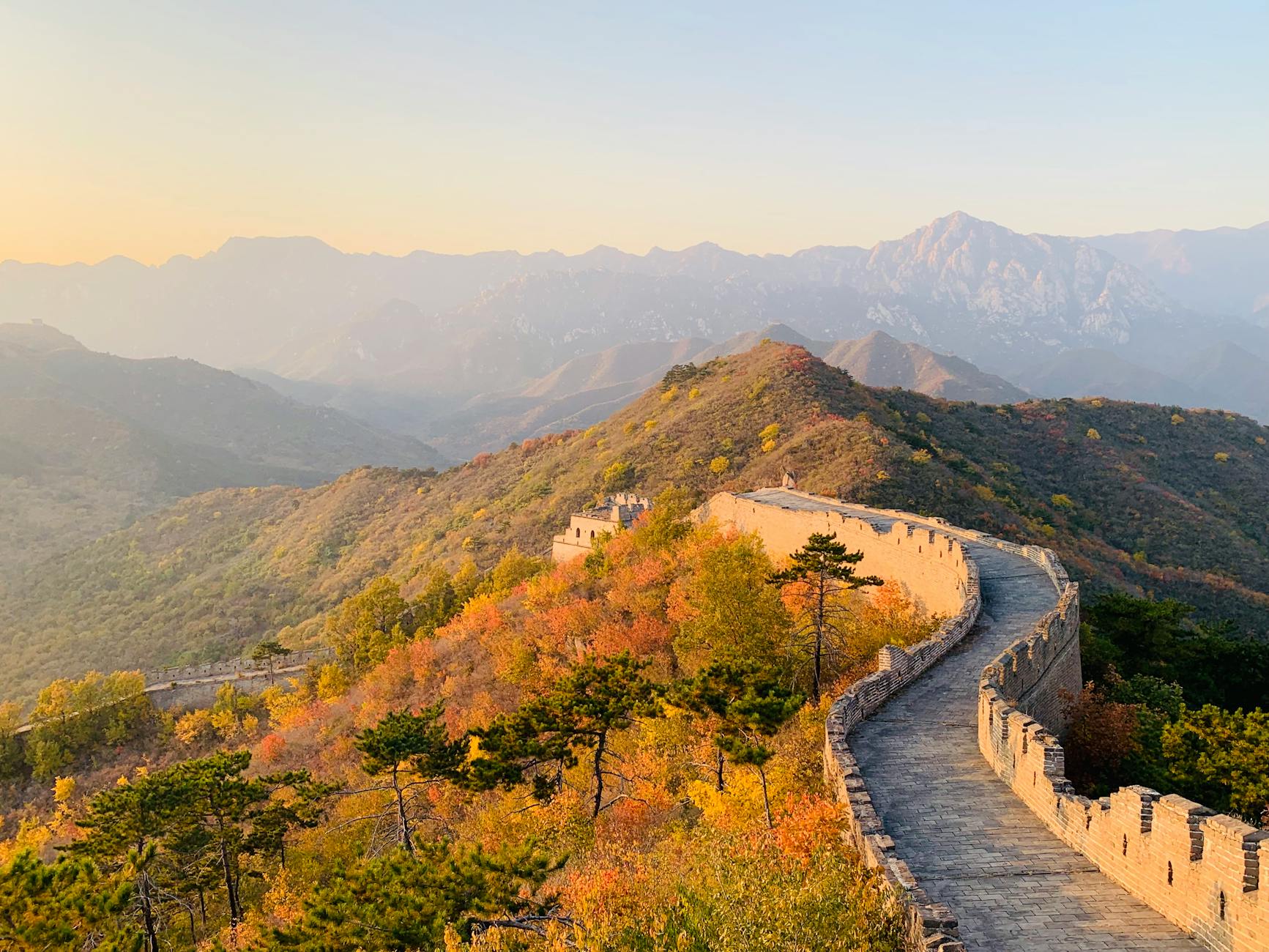
The optimal windows are late April to mid-May and mid-September to early November. Autumn is the undisputed peak: temperatures between 10–20°C (50–68°F), clear skies with excellent visibility, and the mountain forests going gold and red. At Mutianyu and Jinshanling, where the tree coverage is dense, the foliage makes the wall look like something from a fantasy painting. Mid-October to early November is the sweet spot — after Golden Week crowds thin and before winter sets in.
Spring is underrated. April and early May bring green mountains, wildflowers on the wild sections, and comfortable temperatures before the summer humidity builds. Avoid the May Day holiday period (May 1–5).
Summer (June–August) is manageable if you start early. Temperatures reach 35°C and humidity is high, but an 7am arrival before the heat builds can be excellent — particularly at wild sections where you’ll be in the forest shade. Afternoon thunderstorms are common from July onward.
Winter (December–February) is a niche but rewarding option. Snow on the wall creates extraordinary photography and crowd levels at every section drop dramatically. Temperatures can hit -15°C at night; daytime on the exposed ridgeline is reliably below freezing. Go to Mutianyu rather than a wild section in winter — you want safety railings when the steps are icy. The cable car still runs in winter except in severe weather.
The dates to absolutely avoid: National Day Golden Week (October 1–7) and Chinese New Year (late January/early February, dates vary annually). Badaling at these times is not just crowded — it’s an unpleasant crush. Mutianyu holds up better, Jinshanling better still. But all sections are significantly affected.
Getting to the Great Wall: Transport from Beijing
Transport logistics are where most first-timers lose time. The sections are 65–130 km from central Beijing, and public transport to most of them is indirect. Here’s the honest summary:
Badaling has the best public transport of any section. The high-speed S2 rail line or CR Beijing-Zhangjiakou trains from Beijing North/Qinghe stations get you there in 20–30 minutes for ¥18–31. Bus 877 from Deshengmen (near Jishuitan subway) takes about an hour for ¥12. No other section has anything close to this.
Mutianyu requires a bus to Huairou then a taxi or local minibus to the wall — about 2.5 hours total from central Beijing on public transport. Tourist shuttle buses from Qianmen run ¥80 return in peak season and are the most convenient DIY option. Private car/DiDi is 75–90 minutes.
Jinshanling, Simatai, Gubeikou essentially require a private car or organized tour — public transport options exist but are convoluted and unreliable. Budget 2.5–3 hours each way.
Huanghuacheng and Jiankou are reachable with a combination of subway and rural minibus but a private car is significantly easier.
For detailed routes, see our full breakdown of getting to the Wall from Beijing, which covers trains, buses, taxis, and organized tours for each section with current prices. Our rundown of the city’s subway, buses and taxis covers moving around Beijing itself.
What to Wear and Bring
The wall runs along mountain ridgelines at 500–1,000 meters elevation. It’s windier and 5–10°C colder up there than in Beijing city, even on days when the forecast looks mild. The stone steps are often uneven, worn smooth over centuries, and slippery after rain.
Footwear first. This is the one item that matters most. Sturdy hiking boots or trail shoes with proper ankle support and grip. Not trainers, not sandals, not anything with a flat leather sole. The descent in particular is hard on unstable footwear — those worn Ming-dynasty stones will find every weak point in your shoes.
Layers. Breathable base layer, mid-layer (even in summer — bring something), and a lightweight windproof jacket. Beijing weather is reliably unreliable. Afternoon thunderstorms in summer materialize in under an hour; the temperature on a ridgeline with 30km/h wind feels completely different from the temperature at the car park.
Water: more than you think. Two liters per person for a half-day hike, three liters for a full day on wild sections. Food vendors on the wall charge ¥15 for water that costs ¥3 in Beijing. Pack your own. Snacks too — proper hiking food, not just a chocolate bar.
Sun protection. At elevation with no shade on the wall top, UV exposure is high. SPF 50+, a wide-brimmed hat, and sunglasses. Summer sun on exposed white stone is brutal.
Phone and backup power. A portable battery pack. Getting a DiDi back from Mutianyu with a dead phone is an inconvenience you don’t want to engineer.
For hiking-specific preparation including poles, gear recommendations by section, and overnight camping logistics, see our Great Wall hiking guide and Great Wall camping guide.
Photography on the Great Wall
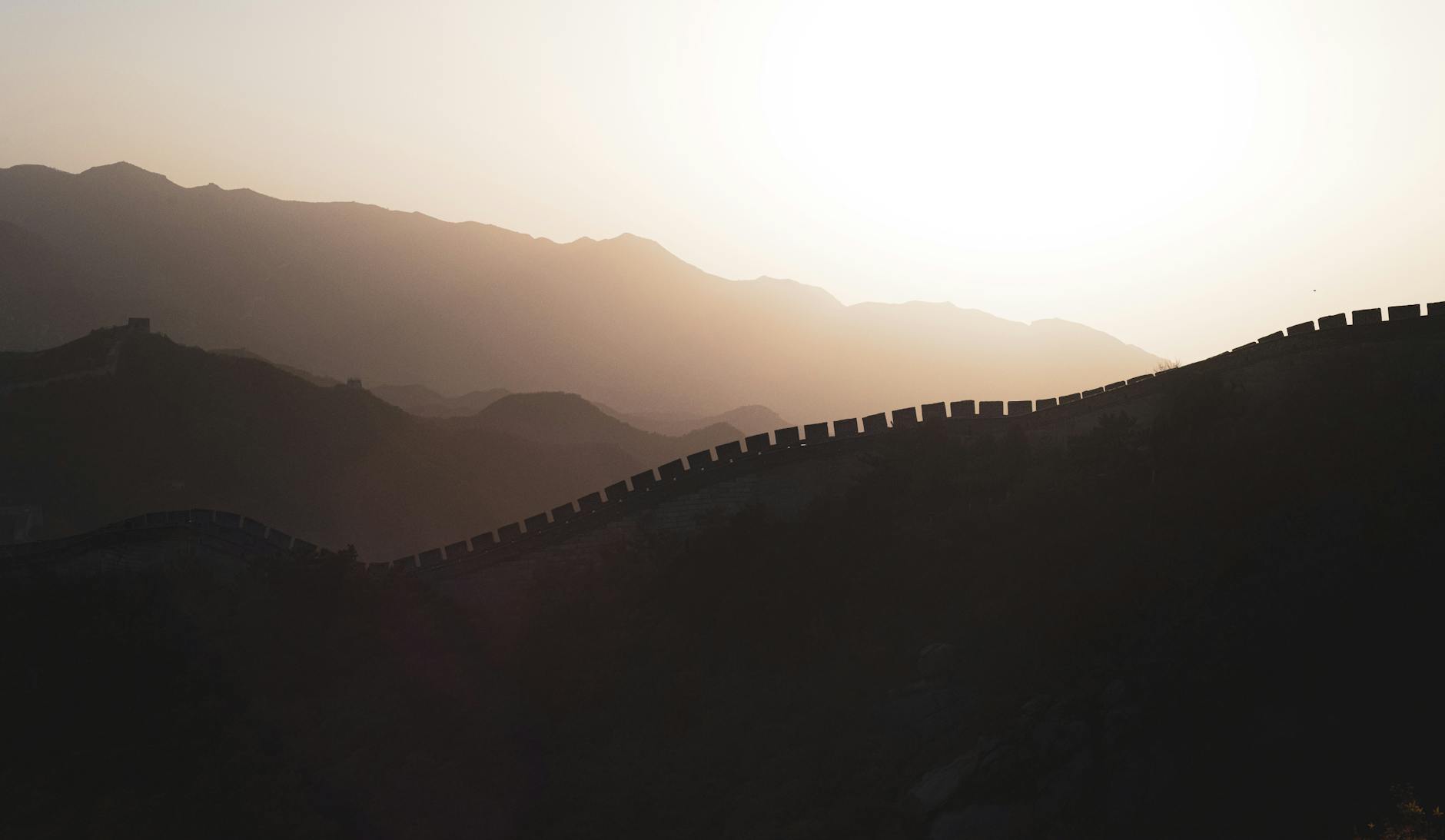
The Great Wall is one of the most photographed structures on earth, which cuts both ways. It means there are a thousand reference shots — and it means you need to work harder to get something that doesn’t look like every other one. The dedicated photography guide goes tower by tower on where to stand and when.
The golden hours are real here. The first 60 minutes after sunrise and the last 60 before sunset produce dramatic light, long shadows along the battlements, and warm tones on the stone that midday simply doesn’t offer. Sunrise access is straightforward at Mutianyu (cable car opens 7:30am) and at Jinshanling (gates open 6am). The big advantage of early arrival is double: the light, and the near-empty wall.
Best sections for photography: Jinshanling is the clear winner for serious photographers — unobstructed views, crumbling and restored sections in the same frame, manageable crowds. Mutianyu’s dense watchtower concentration creates compelling compositions. Simatai at night has nightscape opportunities that don’t exist anywhere else on the wall circuit. Jiankou is the extreme option — the most dramatic settings, but genuinely hard to access and not for casual visitors.
Composition approaches that work: The wall as a leading line drawing the eye toward a distant watchtower. Framing through archways and window openings for depth. Including a human figure for scale — the wall dwarfs people in a way that makes the scale legible. Morning mist in the valleys is common in spring and autumn; when the wall emerges from cloud it creates something genuinely ethereal. A polarizing filter manages sky reflections and deepens blue tones.
Drones: Technically prohibited at most sections. Enforcement varies. Badaling and Mutianyu take it seriously — expect confiscation. Jinshanling has historically been more relaxed about it, but that can change. Don’t count on it.
Once you have chosen a section, the next decision is how to get there. Great Wall tours compared weighs a group tour against a private car or the public bus for each section, explains what a fair price looks like in 2026, and shows how to spot the cheap tours that spend half the day in a jade showroom.
Practical Tips
Book tickets ahead. Badaling and Simatai both impose daily visitor limits and sell out during holidays and busy weekends. Buy online via Trip.com or the official WeChat mini-programs at least two to three days out during peak season. Keep your passport — you’ll need it at the entrance gate.
Start as early as physically possible. The difference between arriving at 7:30am and 10am is enormous at every section. Tour buses start arriving around 10am in waves. The first cable car of the day frequently runs nearly empty.
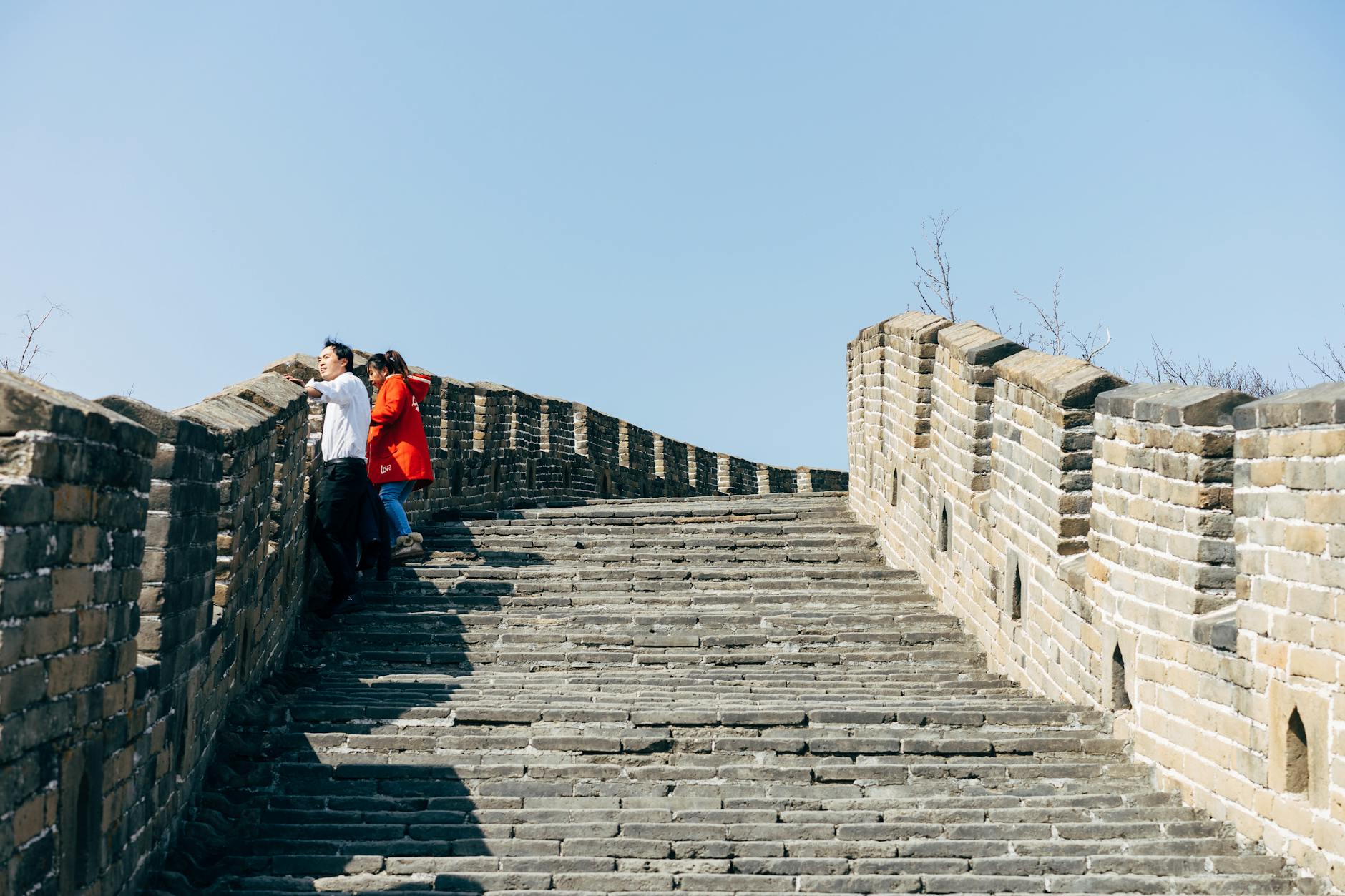
Don’t underestimate the physical demand. The inclines on the Great Wall are not gentle — some staircase sections run at 70-degree angles. The descent is often harder on knees than the ascent. Fit people who do zero hiking regularly find themselves genuinely winded on Jinshanling. Know your limits and don’t overcommit to a route you can’t complete.
Food and vendor strategy. Eat before you go or bring your own lunch. Restaurants near the wall entrance charge 3–5x normal prices. Vendors on the wall top are charging ¥15 for a bottle of water. This is not a place to rely on finding affordable food spontaneously.
Cable cars are worth it. At Badaling and Mutianyu, the cable cars aren’t shortcuts for the unfit — they’re a smart use of energy, saving 45–60 minutes of stair-climbing so you can spend that time actually walking along the wall. Use them without guilt.
For everything else Beijing — where to stay, what else to see, how to get around the city — our Beijing transportation guide and day trips from Beijing guide cover the planning essentials. The Great Wall is the obvious first day trip from the capital; our Beijing historical attractions guide covers what to do with the other days.