Beijing Itineraries
7 Days in Beijing: A Week That Includes a Rest Day
A seven-day Beijing plan with two Great Wall days, a slow day in the hutongs, and a final day spent either in the western hill temples or overnight in Datong.
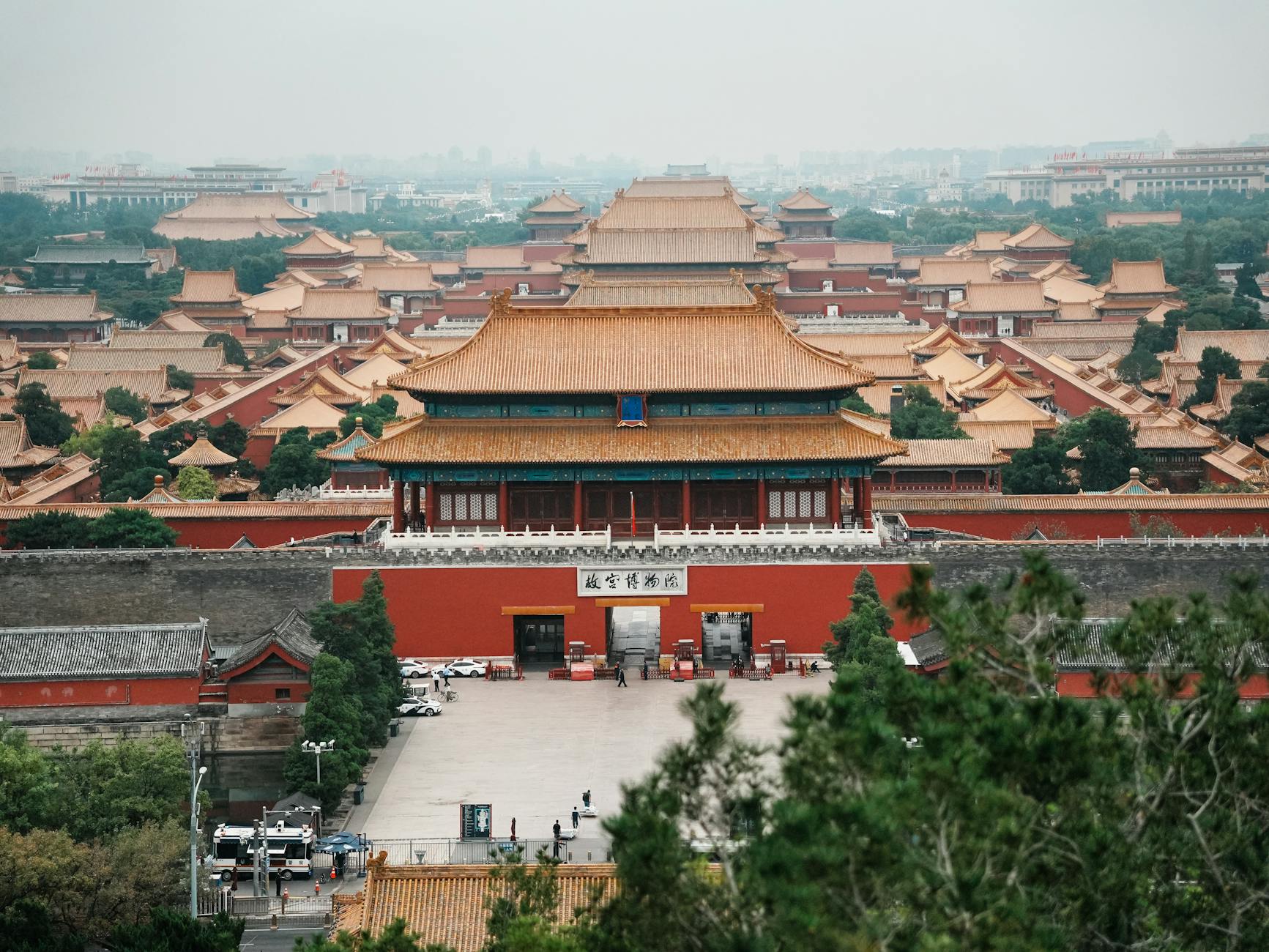
A week is the first trip length where Beijing gets to be a place rather than a list. Five days already covers everything a first-time visitor is expected to see, so the value of 7 days in Beijing is not two more palaces — it is a wild stretch of Wall, a day in the western hills where nobody speaks English, a morning with no plan, and, for the first time, the option of putting a second Chinese city on the end without wrecking the first.
This page lays out all seven days, argues for what days six and seven should hold, and does the arithmetic on adding Datong, Tianjin or Xi’an. Prices were checked in September 2026; treat them as the right order of magnitude rather than a quote.
The week at a glance
| Day | Plan | Effort | Roughly |
|---|---|---|---|
| One | Tiananmen, Forbidden City, Jingshan, Beihai, Shichahai, duck | 9–11 km flat | ¥95 plus dinner |
| Two | Mutianyu Great Wall, evening at the Lama Temple | 3 h of steps | ¥345 |
| Three | Temple of Heaven at opening, Summer Palace all afternoon | 8–10 km | ¥95 |
| Four | Yuanmingyuan, then 798 in the afternoon | 7–8 km | ¥25–145 |
| Five | Jinshanling — the Wall as it actually is | 4–5 h hiking | ¥400–700 |
| Six | Hutong morning, cooking class, market, opera | Easy | ¥300–500 |
| Seven | Western hills and temples, or a second city | Your call | ¥60–600 |
Two structural rules hold this together. First, the two hardest days — the Wall days — go on days two and five, with three softer days between and after them; a week of consecutive big days is how people end up spending day six in bed. Second, day seven stays flexible until you are actually in Beijing, because by then you will know whether you want another temple or a lie-in.
Days one to five, in short
These five days are the standard sequence and each is written out hour by hour elsewhere. What follows is the shape and the money, plus what a week lets you do differently.
Day one — the central axis
Tiananmen Square on a booked morning slot, three hours in the Forbidden City from the Meridian Gate to the north exit, Jingshan for ¥2, Beihai on the ¥20 through ticket, then Shichahai and the Drum Tower before dark, then duck at Siji Minfu at about ¥259 a whole bird. On a week-long trip you can add the Treasure Gallery and the Clock Gallery for ¥10 each and take the palace at five hours rather than three, because nothing later in the week depends on you finishing early. The hour-by-hour version, the Forbidden City.
Day two — Mutianyu
08:00 tourist bus from Dongzhimen at ¥80 return, 90 minutes each way; shuttle ¥20, entry ¥45, cable car ¥100 up to tower 14, walk east to tower 20, back west to tower 6, toboggan down ¥100. Last bus 17:00, 16:00 in winter. Mutianyu, transport options.

Day three — the two gardens
Temple of Heaven at opening for the park life — tai chi, choirs, water calligraphy on the paving — on the ¥34 through ticket, since the ¥15 park-only ticket excludes the Hall of Prayer. Then Line 5 and Line 4 to the Summer Palace’s north gate for the afternoon, ¥60 through ticket, four hours. The three-day plan.
Day four — Yuanmingyuan and 798
The burned Old Summer Palace at ¥25 in the morning, then Dashanzi for the galleries in the afternoon: free to walk, ¥30–120 for ticketed shows, most of it shut by six. The four-day plan.
Day five — Jinshanling
Two and a half hours north-east, ten kilometres of rampart running from restored to weathered to half-collapsed, four to five hours of walking on it and ten to eleven door to door. ¥400–700 per person depending on transport; a private car at ¥800–1,500 for the vehicle is the better deal for three or four people and much more flexible about departure time. Take the cable car up — it saves a stiff forty minutes at the start. Jinshanling, the five-day plan.
Day six — the slow day
Seven days of sightseeing is not a holiday, it is a job. Day six exists to break the rhythm, and the people who skip it are the people who come home saying Beijing was exhausting.
Morning — hutongs in daylight
Every other day on this itinerary meets the hutongs after dark, when they are lit and busy. In the morning they are a working neighbourhood: deliveries on electric trikes, breakfast stalls, birdcages hung on hooks, laundry, a barber with a stool and a mirror on a wall. Start in the alleys either side of Nanluoguxiang or in Dongsi and walk for two hours with no route. It is free and it is the best two hours in the week. If you want structure, a walking tour earns its money here in a way the rickshaw loops do not; the courtyard houses explain the layout you are walking through.

Midday — make something
A cooking class runs about three hours including a market visit and lunch. Calligraphy is the quieter version, and a hanfu photo session is the one that visitors are sniffiest about and enjoy most.
Afternoon — markets
Panjiayuan is free to walk and most things go for ¥10–500 after bargaining; it is best on a weekend morning, so if your day six lands mid-week, swap it with whichever day is a Saturday. There is more on Panjiayuan, including how to bargain and what is actually worth buying.
Evening — the modern city
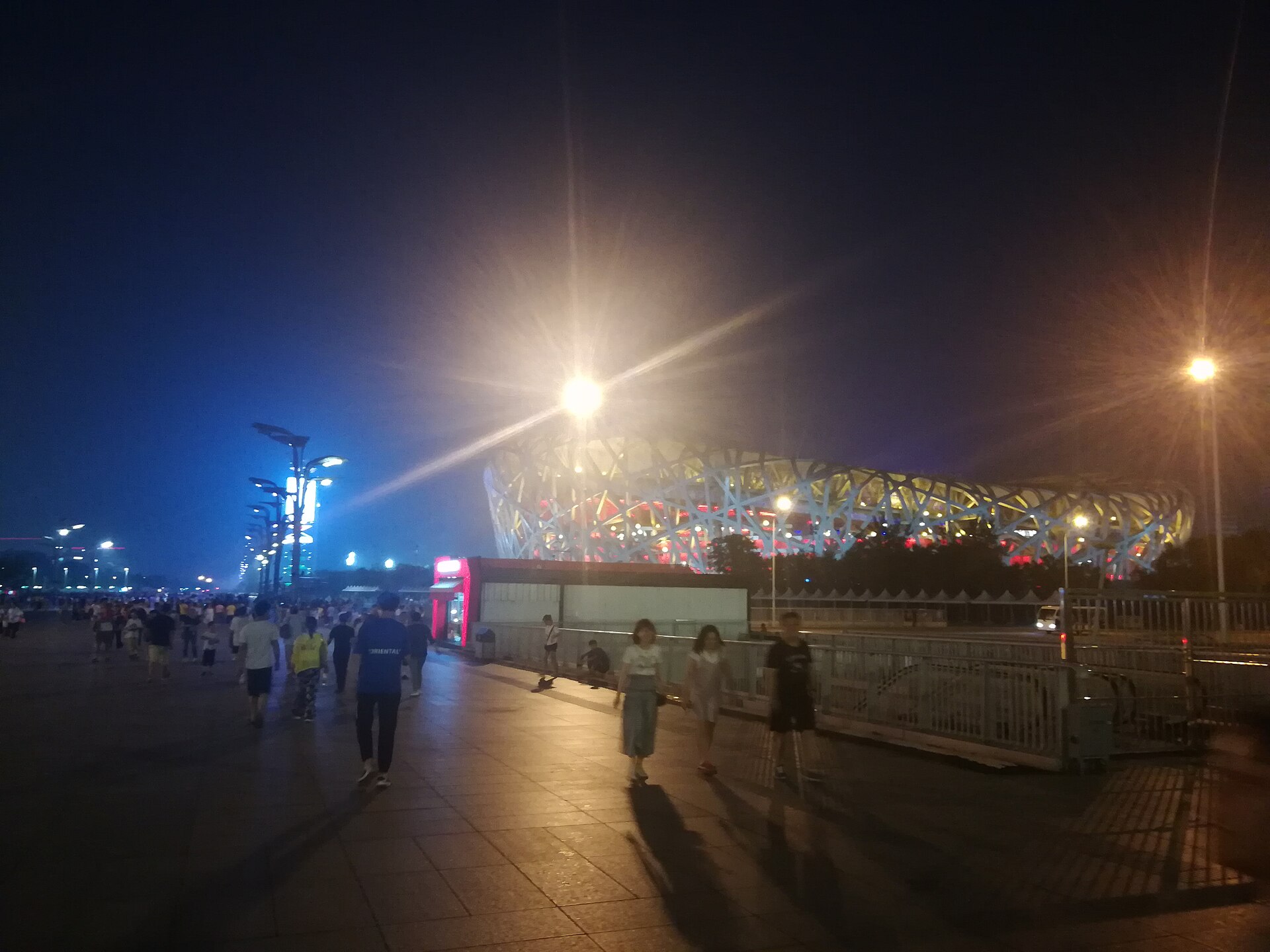
The Olympic Park is 30 minutes from Tiananmen on Line 8 and the grounds are free to walk; the Bird’s Nest and the Water Cube — which becomes the Ice Cube in winter — each charge separately. It is worth an evening precisely because it is the opposite of everything else this week. Otherwise Sanlitun, live music, or Peking opera at ¥120–380 for a subtitled 70 to 90 minute performance.
Day seven, option one — the western hills and the old temples
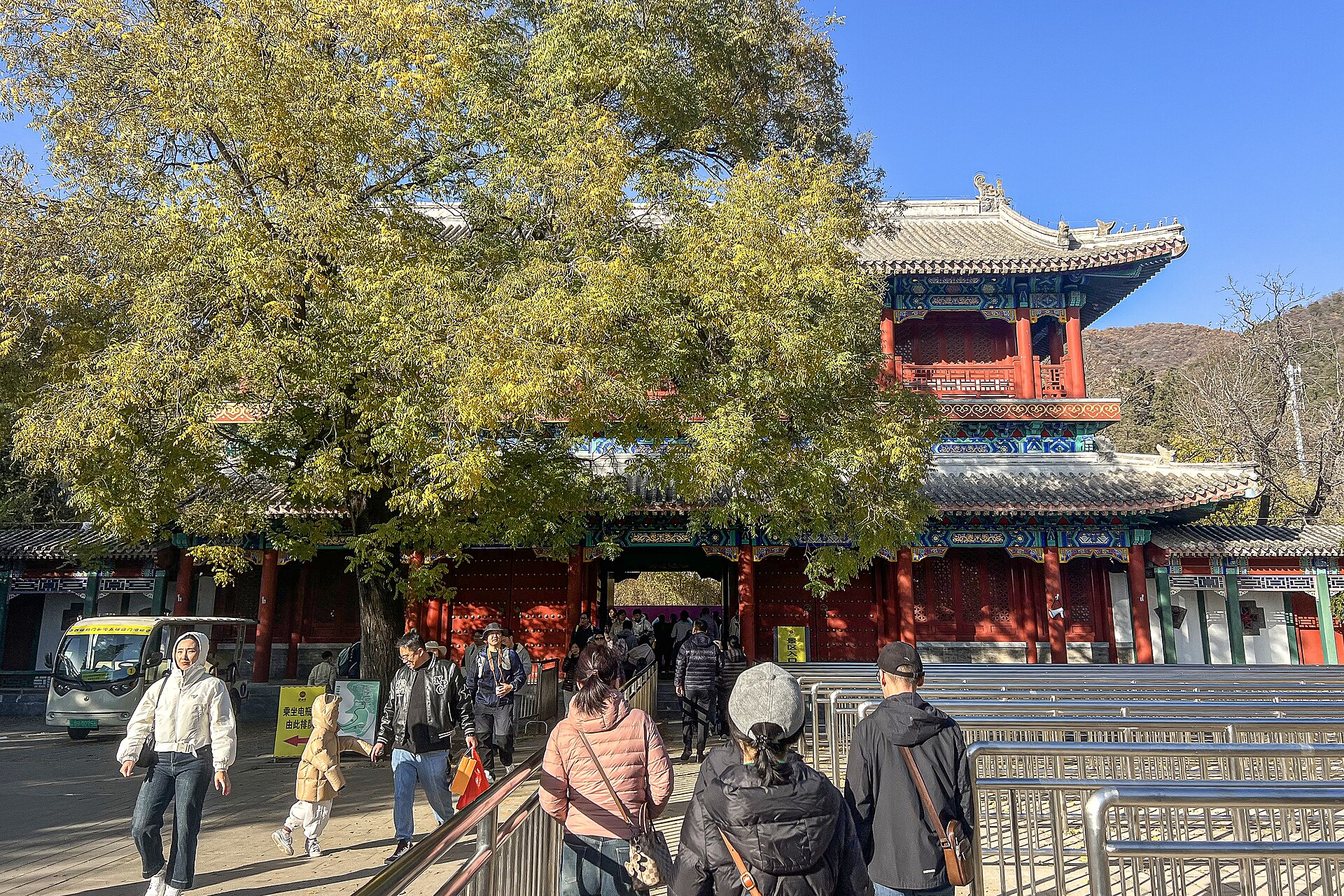
This is the day almost nobody plans and almost everybody who takes it rates highly. Mentougou District, out past the western suburbs, holds two temples that predate the Ming capital by centuries: Tanzhe, on a wooded hillside with terraces climbing behind it and gingko trees older than most of the buildings on the axis, and Jietai, half an hour away, built around an ordination platform and a set of famously contorted pines. Both are quiet on a weekday in a way nothing inside the second ring road ever is.
Give it a full day and hire a car or work out the bus connections in advance, because the two are not conveniently linked by public transport. Add Cuandixia — a Ming stone village terraced up a hillside further west — and you have a genuinely rural day out of a city of twenty million. Tanzhe Temple, Jietai Temple.
The closer version, if a full day west is too much, is the Fragrant Hills: entry ¥10–15, higher in the autumn-leaf peak, with a cable car at about ¥80 one way or ¥120 return that gets you up in twenty minutes. Be clear about what it is — a paved stepped path with a chairlift and, in late October, a very great many people. It is a pleasant afternoon and not a wilderness. Fragrant Hills, and for actual hiking, the mountains further out — Lingshan tops the municipality at 2,303 metres.
Day seven, option two — a second city
A week is the first trip length where this arithmetic works, and it works for exactly one city, not two.
| City | Time each way | Second class | Verdict at seven days |
|---|---|---|---|
| Tianjin | 30 min | ¥55 | A day trip, not a second city — easy and fun |
| Datong | ~1 h 45 | Varies | The best overnight; Yungang Grottoes |
| Xi’an | 4 h 17 | ¥515–565 | Needs two nights; better on a longer trip |
| Shanghai | 4 h 18 | ¥553–663 | Two nights minimum, and a different holiday |
| Qingdao | 3 h | ¥315 | Coastal, underrated, needs two nights |
Datong is the pick. Bullet trains run from Beijing North at around 08:20 arriving Datong South about 10:06, which puts you at the Yungang Grottoes — fifty-odd caves of Northern Wei Buddhist carving, some of it colossal — by early afternoon, with the Hanging Temple reachable the following morning. Go for one night rather than a day trip; the return journey compressed into a single day wastes the thing you went for. High-speed rail from Beijing.
Tianjin at thirty minutes and ¥55 each way, with seventy-plus departures a day, is the only one that genuinely works as a day trip. European concession architecture, an enormous riverfront and a city that feels nothing like Beijing. Tianjin.
Xi’an and Shanghai both need two nights to be worth the fare, which means giving up two of your seven Beijing days rather than one. On a week-long trip that is a poor trade — you would be cutting Jinshanling and the slow day, which are the two things a week uniquely buys. Save them for a ten-day trip. Beijing to Shanghai by train.
Day seven, option three — Chengde, overnight
The Qing emperors’ summer retreat, about ¥65 to enter the Mountain Resort, surrounded by a ring of Tibetan-style temples built to impress visiting Mongol and Tibetan dignitaries. It is a genuinely strange and impressive place, and it is a poor day trip because the travel eats the visit. As an overnight at the end of a week it works well, particularly if you are heading onward rather than flying out of Beijing. Chengde.
Day seven, option four — nothing at all
Worth saying plainly: after six days at this pace, spending the seventh in a tea house, at a coffee place in a hutong, and walking back around Houhai in the evening is not a wasted day. You will have covered somewhere near 60 kilometres on foot by then. Tea houses, Houhai.
What a week costs
| Line | Budget | Comfortable |
|---|---|---|
| Entries, days one to four | ¥330 | ¥475 |
| Mutianyu, all in | ¥190 | ¥345 |
| Jinshanling, all in | ¥400 | ¥700 |
| Day six — class, market, show | ¥180 | ¥520 |
| Day seven — temples or Datong | ¥120 | ¥900 with a night away |
| Local transport, seven days | ¥130 | ¥350 with DiDi |
| Food, seven days | ¥700 | ¥1,600 |
| Total excluding hotels | ~¥2,050 (US$290) | ~¥4,890 (US$700) |
Hotels sit on top of that. As a sanity check, a comfortable mid-range couple’s trip in Beijing runs about ¥800–1,200 per person per day all in. The gap between the two columns above is mostly restaurants and private cars rather than tickets — a bowl of beef noodles is ¥18–25 at a chain shop and ¥40–60 in a tourist restaurant, and a typical 8 km DiDi ride is ¥35–45 against ¥3–6 on the subway. The full budget guide.
Booking, in order
- The Forbidden City — ¥60 April to October, ¥40 November to March. Released seven days ahead on bookingticket.dpm.org.cn or the WeChat mini-program, real-name against a passport number, five people per booking, no gate sales, closed Mondays. Book this first and build the week around whichever day you get.
- Tiananmen Square — free, compulsory, real-name, one to nine days ahead, and slot-specific.
- The National Museum of China — free, mandatory reservation released seven days ahead at 17:00 Beijing time, physical passport required at the door. Worth one of your seven days’ mornings; it is a serious museum.
- Datong or Chengde beds, if day seven is going out of town.
- The Mutianyu bus in summer and over holidays, and any Jinshanling car.
Install Alipay before you leave home and WeChat alongside it. Alipay takes a foreign Visa, Mastercard or Amex after in-app passport verification and has the better English interface; WeChat matters because the reservation mini-programs live in it. Neither can be set up easily after you arrive, and public WiFi generally wants a Chinese mobile number for SMS verification. Getting around without Chinese.
Reordering, and what a week protects you from
Seven days gives you three floating days, which is enough to absorb almost anything Beijing throws at the plan.
- Both Wall days float. Check the forecast the evening before and take the two clearest days of the week. Beijing’s air is far better than its reputation — 2025 averaged 27 µg/m³ of PM2.5, a record low, with a single heavy-pollution day in the year — but ridge visibility is the whole point of a Wall day. Compare µg/m³ rather than AQI numbers, since the Chinese and US scales read the same particulate differently. Air quality.
- The Monday closure stops mattering. With seven days there is always somewhere else to put the Forbidden City.
- A wet day becomes the slow day. A cooking class, a market, the National Museum and an opera are all indoors.
- You can afford to be ill for a day. Which, on a week in a city with a very different diet, is not a trivial consideration.
Where to stay for a week
One base, seven nights, unless day seven goes to Datong or Chengde. Dongcheng around Wangfujing is the efficient choice and puts day one on foot. A courtyard hotel in the Shichahai hutongs costs ten minutes at each end of the day and is much the nicer place to come back to for a week — over seven nights that difference compounds. Chaoyang suits you if the modern city is a real part of the plan. Our neighbourhood comparison goes through the options, with more on courtyard hotels and picking a base.
A week is also long enough that a serviced apartment starts to make sense — a kitchen and a washing machine change the economics of a seven-night stay considerably. Apartment rentals, budget options.
What a week still leaves out
Universal Studios, a whole day at ¥418–748. Longqing Gorge. Gubei Water Town and the Simatai night Wall, which needs an overnight to be worth it. An actual night on the Wall. The Ming Tombs, which most people find fine rather than memorable, at about ¥60 per site in peak season. The Marco Polo Bridge. And China, which is enormous — a week in Beijing is a week in one city, and the country starts at the ring road. The itinerary hub covers longer trips. If this is not your first trip, the returning-visitor plan reuses the length and almost none of the sights.
If the Olympic evening appeals, the Olympic Park guide separates what is worth a ticket from what is better seen free from outside: the Bird’s Nest rooftop walkway is the one to buy, the Olympic Tower only on a clear day, and dusk is the time to arrive.
Frequently asked questions
Is 7 days in Beijing too long?
Not if days six and seven are planned differently from days one to five. Seven days of imperial sites would be too long; seven days that include two Wall days, a slow day and either the western temples or an overnight in Datong is a well-shaped trip. The mistake is treating day six as day one with a different palace in it.
What is the best way to spend a week in Beijing?
Four days on the standard sights, a fifth on a wilder stretch of Wall at Jinshanling, a sixth doing nothing much in the hutongs and a cooking class, and a seventh either in the western hills at Tanzhe and Jietai or overnight in Datong for the Yungang Grottoes. That covers the city and leaves you liking it.
Should I add another city to a week in China?
One, and only if it is close. Datong is about an hour and three-quarters and makes an excellent overnight. Tianjin is 30 minutes and ¥55 and works as a day trip. Xi’an at 4 hours 17 minutes and ¥515–565, or Shanghai at 4 hours 18 minutes and ¥553–663, both need two nights and cost you the two days a week uniquely buys.
How much does a week in Beijing cost?
Roughly ¥2,050 per person on a budget footing and about ¥4,890 comfortably, excluding hotels — about US$290 to US$700. Add accommodation at whatever standard you want; ¥800–1,200 per person per day all in is the usual figure for a mid-range trip. Checked September 2026.
Should I do the Great Wall twice?
On a week-long trip, yes. Mutianyu is the restored introduction with a cable car and a toboggan; Jinshanling is what the Wall is like when nobody has tidied it — long unrestored stretches, brick towers on bare ridges, and very few people. They are different experiences rather than a repeat.
What should I book before I arrive?
The Forbidden City seven days ahead, online only, real-name, no gate sales, closed Mondays. Tiananmen Square, free but compulsory and slot-specific, one to nine days ahead. The National Museum seven days ahead at 17:00 Beijing time. Beds in Datong or Chengde if day seven leaves town. The Mutianyu bus in peak season.
How much walking is a week in Beijing?
Somewhere around 60 kilometres, plus about eight hours of steep, uneven steps across the two Wall days. Days one, three and four are long flat walks; days two and five are the hard ones. Space them the way this itinerary does and it is comfortable; run them consecutively and it is not.
Is the National Museum worth a morning?
Yes, if you like museums — it is one of the largest in the world and the bronzes alone justify it. Entry is free but the reservation is mandatory, releases seven days ahead at 17:00 Beijing time, and you must arrive with the same physical passport you booked with. Walk-ins are refused. National Museum of China.
What is the best time of year for a week in Beijing?
Late September to early November, avoiding 1 to 7 October when Golden Week roughly doubles hotel prices and fills every site. April to mid-May is the other good window. October runs 21–22°C early and under 20°C later, with about five wet days and autumn colour from mid-month. Winter is cold, cheap and quiet, with shorter daylight and an earlier last bus from the Wall. When to visit.
Can I do this itinerary with children?
With adjustments. Drop Jinshanling for Universal Studios at ¥418–748, halve the Summer Palace, keep the Mutianyu toboggan, and use day six for the zoo — ¥15 in high season, free under 1.2 metres, strollers ¥30 a day at the South Gate. Beijing with children.
Do I need a visa for a week in Beijing?
It depends on your passport. Many nationalities now enter China visa-free for 30 days, and the 240-hour visa-free transit covers a week comfortably if you are passing through to a third country; otherwise a tourist L visa applies. The rules change more often than most, so check current eligibility rather than trusting a list. The current position is in our visa guide, along with the 30-day visa-free rules and the 240-hour transit policy.
Is a week enough to see China?
No, and it is worth being honest about that. A week is enough to see Beijing thoroughly plus one nearby city. China takes a month before it starts feeling like more than a sampler, and most people come back rather than trying to do it in one go.